MedDust 2026 - Dust time series in the Mediterranean
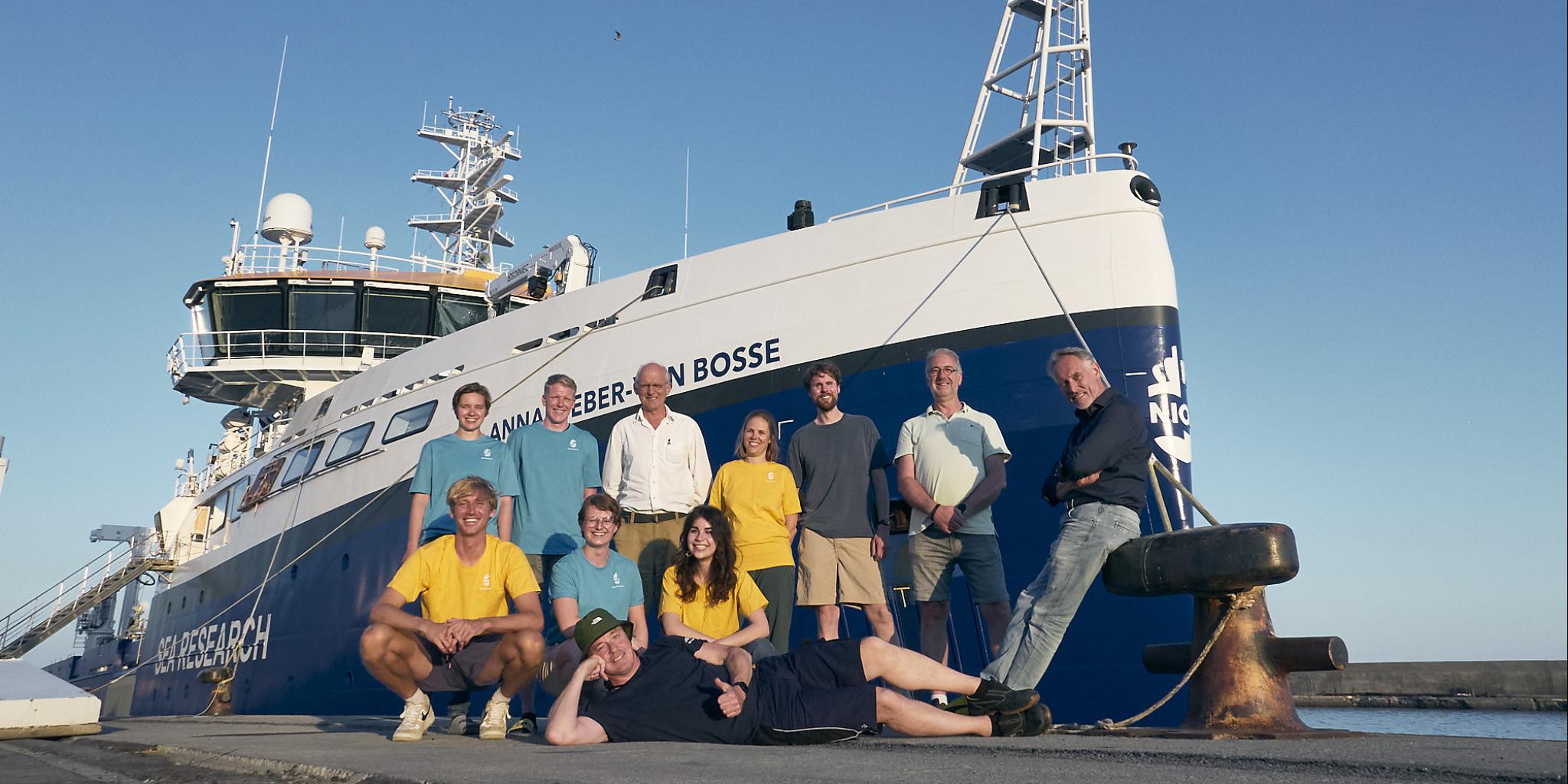
The MedDust 2026 team
Welcome to the MedDust 2026 expedition blog! Here you can follow RV Anna Weber-van Bosse and its crew of scientists as they continue their annual dust research in the Mediterranean. Sailing from Genoa, the RV Anna Weber-van Bosse will make her way to Catania to recover, service, and re-deploy the Mediterranean sediment-trap mooring that is part of a unique time series of Saharan dust collection dating back to the late 1980s. Joining the science team is a film crew, on hand to shoot short documentaries for NIOZ.
10 July - Until next time
Written by Leila Belkhiria, Stephie Verkooijen and Emily Havard
Today, at 9:00 am we arrived in the port of Catania, bringing this remarkable expedition to an end. Over the past days we have deployed dust collectors high above the bridge, sailed from Genoa into the Mediterranean, retrieved and redeployed the MedDust sediment-trap mooring, caught living foraminifera in a net, lowered the box core, explored the deep sea with the videoframe, sailed above ancient submarine volcanoes, watched the film crew capture life at sea, and shared spectacular sunsets and conversations on deck.
Dave found the best spot
Ciao tutti!
9 July - One last dive, one last sunset
Written by Leila Belkhiria, Stephie Verkooijen and Emily Havard
Our final day began, as so many had this week, with another beautiful sunrise slowly lifting itself above the Mediterranean. Before long, the ship turned into a well-organized puzzle of straps and containers as we packed away the last boxes, preparing the Anna Weber-van Bosse for her return to port.
Secrets of the seafloor
Before saying goodbye to the deep sea, we lowered the video frame. At a depth of around 2200 metres, the seafloor revealed a surprisingly lively world. A graceful pink, eel-like fish drifted through the darkness, while shrimps wandered across the sediment and small fish darted past the camera. One of the most fascinating sights, however, was the seafloor itself. Delicate, winding trails crossed the sediment like tiny snake tracks; bioturbation left behind by burrowing animals and other benthic organisms. Every movement stirred up fine clouds of sediment that slowly curled and drifted away before settling once more. Suspended throughout the entire water column was an endless fall of marine snow: tiny organic matter, continuously sinking towards the deep ocean. Although it looks almost magical, this gentle rain is a crucial part of the ocean’s biological carbon pump, transporting carbon and nutrients from the sunlit surface to the deep sea, where they can remain stored for centuries or even millennia.

Tension and excitement as we descend to the abyss
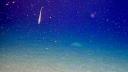
Can you name the species?
A final sunset: our barbecue
Between packing equipment and exploring life more than two kilometres beneath the waves, there was fortunately still time to enjoy one final evening together. We celebrated with a delicious barbecue on deck, accompanied by great music and remarkably calm seas. Slowly, Mount Etna became outlined against the horizon while the sky transformed almost imperceptibly. The white afternoon light faded into soft blues before the western horizon ignited in glowing bands of gold and deep, gradually melting into darker blues until the first traces of night settled over the Mediterranean.
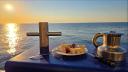
Hard to name a better place for a barbeque
As the evening continued, we cast out a few fishing lines. The fish proved considerably smarter than we were, so we returned empty-handed. The sea, however, still rewarded our patience. Schools of fish gathered around the Anna Weber-van Bosse, curious squid darted through the illuminated water, and, as a perfect farewell, a sea turtle glided next to the ship, moving through the water as if it had all the time in the world.
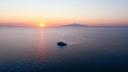
Home for the past week. Photo: Wander Andringa
8 July - Sediment, sea life, and a sweet celebration
Written by Leila Belkhiria, Stephie Verkooijen and Emily Havard
Retrieving the sediment trap
We started our scientific adventures bright and early, right after breakfast. At 7:30, we were ready to retrieve the sediment trap. Using an acoustic release system, we transmitted a coded sound signal through the water column to the release mechanism attached to the mooring. Once the correct signal is received, the mechanism disconnects the anchor from the mooring line, allowing the positively buoyant floats to slowly carry the entire system back to the surface.
Then came the waiting game. Around 35 minutes of scanning nothing but glittering blue water. With optimism running high, the bridge slowly transformed into a lookout post. Every white speck became a potential buoy and every wave deserved a second glance. Excitedly, we spotted a few tiny white buoys… until we remembered ours were supposed to be bright yellow. Slightly less exciting.
Just to be sure, we pinged the release again and apparently our sediment trap had decided it quite liked life at the bottom of the Mediterranean as it didn’t release the first time. We sent another acoustic command, and this time… success! About 40 minutes later, the unmistakable yellow buoys finally appeared on the horizon. Within no time, the deck crew expertly hooked the mooring on the very first attempt and carefully brought it back onboard to harvest a year’s worth of sinking particles.
Unfortunately, science does like to keep us humble. Some of the sampling bottles had not filled completely because the carousel had become stuck during deployment. The good news? We still collected sediment; just not distributed as neatly over the bottles as we had hoped. After giving the mooring a well-deserved health check with fresh batteries, new cables, tightened screws and a bit of extra care, it was lowered back into the deep Mediterranean. Behave yourself down there and see you next year.
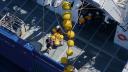
After a year of darkness the sediment trap finally sees the light again (photo: Sensu)
A sweet surprise
Lunch came with an unexpected surprise: a spectacular cake celebrating 150 years of NIOZ. Layers of soft sponge, creamy filling, crunchy pistachios, fresh raspberries, and just enough sweetness to convince even the “I’ll only have a tiny piece” people otherwise. Some may or may not have gone back for seconds. Purely, of course, in the interest of celebrating the next 150 years as well.
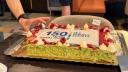
Celebrating 150 years of NIOZ in style!
The box corer
The afternoon was dedicated to box coring. A box corer is essentially a giant steel cookie cutter for the seafloor. It is lowered to the seabed, where it gently presses into the sediment and retrieves an undisturbed block of mud, preserving the delicate layering that has accumulated over years, decades, or even centuries. Those layers are like pages in Earth’s diary, recording changing climates, Saharan dust deposition, biological productivity, volcanic eruptions, and countless other environmental stories.
A net full of marine life
Later in the day, we carried out another plankton net haul. Down the net went to 206 metres, and once again it came back teeming with life. Tiny crustaceans, dinoflagellates, transparent gelatinous creatures, and, drumroll please, even living foraminifera! Tomorrow we’ll officially become their caretakers by feeding our tiny new shipmates.
There was more excitement under the microscope. For the first time during this cruise, we spotted quite a collection of particles on one of the atmospheric dust filters. Some appeared beautifully angular, with sharp edges and slightly glassy surfaces that could indicate tiny fragments of volcanic ash. Others were more irregular or mineral-like. For now they’re only suspects, we’ll need laboratory analyses to confirm whether these really are volcanic particles, but it is certainly an exciting first glimpse.
The last day!
Tomorrow already marks our final day at sea. We’ll record a few final scenes for the documentary, enjoy a barbecue together, and the film crew still has a few shots left on their wish list. And, if the Mediterranean cooperates, we certainly won’t object to collecting a few more rays of sunshine before sailing back to shore.
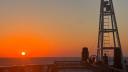
Is it a green flash kind of day?
7 July - Through the Strait and into the microscope
Written by Leila Belkhiria, Stephie Verkooijen and Emily Havard
Sunrise between fire and sea
The alarm went off long before sunrise. Around 4:15 am the horizon was still almost completely dark when flashes of orange briefly illuminated the silhouette of Stromboli. Every so often, another burst of glowing lava escaped from the summit, disappearing almost as quickly as it appeared. Watching a volcano erupt from the deck of a research vessel in the middle of the Mediterranean is one of those moments that makes you forget how early it is.
As daylight slowly spread across the sea, another surprise appeared. Several dolphins surfaced around the ship, leaping effortlessly through the calm water while the first sunlight colored the horizon. Between volcanic fire, glassy seas and dolphins greeting the morning, it was hard to imagine a better start to the day.
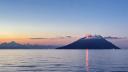
The early bird gets... a typical 'Strombolian' eruption
A painted landscape
By breakfast we had entered the Strait of Messina. The narrow passage between Sicily and mainland Italy is famous among sailors for its strong tidal currents, created as water continuously flows between the Tyrrhenian and Ionian Seas. Today, however, another challenge awaited us: a swimming event was crossing the Strait, meaning we had to navigate with extra care while sharing the water with swimmers and their support boats.
As we passed the Strait, the mountains rose almost straight from the sea, layer upon layer fading into soft blue tones with the dusky morning light. With a smokey Etna as the main character, spitting smoke (and volcanic dust) into the atmosphere. From the deck they looked like a watercolor painting, their reflections almost blending into the waves below.
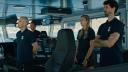
Navigating the Strait of Messina in between swimmers and small fisherboats
Chemistry before deployment
With Messina behind us, it was time to prepare the sediment-trap bottles for tomorrow’s deployment. Under the guidance of our very own “Stof Prof”, we learned how each bottle is carefully prepared before it begins its year-long journey around two kilometers below the sea surface. First, a small amount of mercuric chloride is added. This chemical prevents bacteria and other microorganisms from breaking down the particles that will eventually sink into the bottles. Next comes the filtered seawater mixed with borax, which acts as a buffer to keep the pH stable throughout the deployment, leaving the sediment traps ready to collect everything that sinks down through the ocean: dust, plankton remains, tiny shells and other particles.
We also made our Smoelenboek, our onboard face book. Besides name and photo, each person had to include one fun fact about themselves. Let’s just say that the expertise on board is matched by an equally impressive collection of hobbies.
Looking for tiny climate historians
Our final task of the day took us back onto the aft deck, where we deployed a plankton net using the ship’s winch. The goal was to collect living planktonic foraminifera. Unfortunately, today’s net did not reach the depth where we expected to find them. Under the microscope we instead discovered a lively collection of other planktonic life. The samples were filled with copepods, pteropods, and radiolarians among other surface plankton. Not quite the organisms we were hoping for, but certainly a reminder of just how much life exists in a single net haul.
Tomorrow will be our busiest day yet. The sediment trap will finally be retrieved and redeployed, a box core is planned, and we’ll have another chance to search for our elusive foraminifera. Moreover... a special surprise awaits us at lunch!
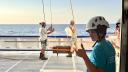
Emily is clearly excited by the foresight of catching foraminifera
6 July - A day of filming
Written by Leila Belkhiria, Stephie Verkooijen and Emily Havard
Getting the best shots
Today was a real film day, as the film crew moved from one location to the next: from the gym, to the engine room, to the bridge, and finally into the sky with their drone. After capturing some spectacular footage of the Anna Weber-van Bosse from above, the drone made one final graceful approach before being snatched straight out of the air by our very own drone catcher. Equal parts precision and courage, it was an impressive catch that looked far easier than it probably was.
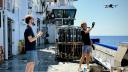
The drone returns to its home base, a moving ship
The engine room
One of today’s hidden gems was the engine room with all its batteries. Row after row of towering battery modules powers one of the ship’s smart engineering systems. Together they form part of the vessel’s hybrid-electric propulsion system, storing electrical energy so the diesel generators can run more efficiently. When extra power is needed, for example during maneuvering or other peak loads, the batteries step in instantly. The result is lower fuel consumption and fewer emissions. It is remarkable how much smart engineering is tucked away below deck.
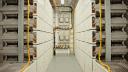
The hybrid-electric propulsion system is located below deck
A volcanic landscape hidden underneath
The multibeam echosounder was another highlight of the day. Once switched on, it transformed what looked like an endless stretch of blue into a surprisingly rugged underwater landscape. Rising from the seafloor were volcanic mountains and steep ridges, revealing that an entire mountain range lies hidden beneath the waves. We are currently sailing through the Tyrrhenian Sea, home to Europe’s largest submarine volcano, Marsili, together with several other underwater volcanoes such as Vavilov and Palinuro. These volcanoes were formed as the African Plate slowly sinks beneath the Eurasian Plate, making this one of the most volcanically active regions of the Mediterranean. It’s remarkable to think that while the sea above us appears perfectly calm, an entire volcanic landscape lies hidden below.
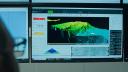
The onboard multibeam system mapping the seafloor of the Tyrrhenian Sea
And even more about volcanoes
And now that we’re talking about volcanoes, you’ve probably heard that Mount Etna has been erupting again. Secretly, we’re hoping our dust collectors might catch a little volcanic ash, as they haven’t collected Saharan dust yet. While they have very different origins, both are remarkable natural fertilizers. Saharan dust carries nutrients such as iron and phosphorus across oceans, helping fuel marine phytoplankton and even nourishing the Amazon rainforest. Volcanic ash, meanwhile, releases minerals like potassium and phosphorus as it weathers, creating some of the world’s most fertile soils. Two very different journeys, but both help sustain life
And to stay with the volcanic theme, we’ll be passing Stromboli on our port side at around 4 am tomorrow. If we’re lucky, we might even catch one of its famous bursts of glowing lava. Stromboli has been erupting almost continuously for around 2000 years, earning it the nickname the Lighthouse of the Mediterranean. Not a bad alarm clock. And who knows, by tomorrow morning our dust collectors might contain particles that began their journey either in the heart of the Sahara or deep inside a volcano.
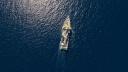
The RV Anna Weber-van Bosse and a hidden world beneath
5 July - Mediterranean, here we come!
Written by Leila Belkhiria, Stephie Verkooijen and Emily Havard
Getting ready for departure
On the Anna Weber-van Bosse, the days start early, with the first sunrays slowly finding their way into the ship. By 9 am, we set up the dust collector at one of the highest points onboard: the top of the bridge. A prime location for these curious mailbox-shaped instruments to vacuum up Saharan dust particles that have travelled hundreds to thousands of kilometers through the atmosphere. Unlike your household vacuum cleaner, however, these collectors are rather selective eaters: with a bit of clever engineering, they close automatically during rain events and only open when the wind comes from the right direction, measured by sensors mounted nearby. Dust deserves a grand entrance, after all.
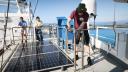
Jan-Berend Stuut showing the next generation of dust researchers how it's done
Departure from Genoa
With the collectors ready for action, the Anna Weber-van Bosse could finally depart. Around 10 am, the pilot arrived, and with great success our ship left the harbor of Genoa. Ciao, Genoa! The cameras waved enthusiastically, capturing what can only be described as a James Bond manoeuvre: the pilot gracefully climbed down the side of the vessel and stepped onto his speeding rubber boat, just close enough to avoid an unexpected swim in the Mediterranean. A perfect scene for one of the videos currently being filmed about the Ocean Climate Systems department, the Anna Weber-van Bosse, and NIOZ more broadly.
Shortly afterwards, an announcement from the captain, followed by seven short tones and one long one, summoned everyone for the evacuation drill. Portside, starboard, scientists, crew members, and even the cook, briefly abandoning the lunchtime steaks sizzling in the kitchen, gathered at their designated stations. Next came the fire alarm: a sound so impressively loud and high-pitched that we can confidently say it has now been permanently archived in our memories.
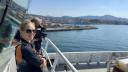
Ruta and Peter on the bridge during departure from Genoa
First observations
Properly prepared for any situation at sea, we spent the afternoon setting up equipment and making observations. Curious about the measurements continuously recorded by the ship, we noticed a salinity of around 38 PSU and a turbidity of just 0.15 NTU. Quite typical for the Mediterranean Sea, which is one of the saltiest seas in the world due to its intense evaporation, limited river input, and relatively restricted exchange with the Atlantic Ocean. In other words: the Mediterranean loses more freshwater to the atmosphere than it gains, leaving the salt behind.
We also prepared the microscope for work on collecting living foraminifera as one of the many parts of the EMBRACER project. These tiny shelled organisms may be only a fraction of a millimetre in size, but they are among the ocean’s most valuable storytellers. Their shells record information about temperature, salinity, nutrient conditions, and even past circulation patterns, making them tiny archives of environmental change hidden within marine sediments.
Dolphins and whales
And for those who have read this far: the highlight of the day was undoubtedly the abundance of dolphins and whales around the ship. Dolphins danced alongside us, rolled onto their backs, chased one another through the waves, and occasionally appeared to greet us at the bow. Whales, meanwhile, majestically revealed their tails, sent fountains of spray high into the air through their blowholes, and even what looked like offering temporary resting places for birds while floating at the surface.
The calm seas continue, and hopefully tomorrow, with a bit of luck and the right winds, we will wake up to a bit of dust waiting for us on the filters of our collectors. After all, every grain has quite the travel story to tell.
Dolphins playing at the bow
4 July - First day on the Anna Weber-van Bosse
Written by Leila Belkhiria, Stephie Verkooijen and Emily Havard
Arriving in Genoa
On a beautiful sunny day, with 30°C sizzling on our skin as we stepped out of the airport, the taxi was already waiting to take us to the harbor. Straight from the sky, we rolled onto the road and toward our new home for the next six days: the Anna Weber-van Bosse, ready to head into the Mediterranean Sea to retrieve and redeploy the MedDust sediment-trap mooring. This sediment trap has been collecting sinking particles from the water column, tiny traces of Saharan dust, marine organisms, and other sediments, to help understand how dust travels from the atmosphere into the ocean and how it influences marine ecosystems and biogeochemical cycles. Decades of patient observations, one particle at a time. Fascinating, right?
As if the expedition itself were not exciting enough, we also have a film crew on board, cameras at the ready, already curious about the scientific adventures that await us over the coming days.
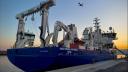
The RV Anna Weber-van Bosse in the harbor at Genoa. Photo: Peter Reese
Getting to know the Anna Weber-van Bosse
During our first tour of the Anna Weber-van Bosse, we quickly discovered that the ship is something of a labyrinth. With her impressive size and wonderfully powerful air conditioning, she almost made us forget that there is still a world beyond our floating metallic island.
Looking ahead
Now, sitting together in the common room, with conversations bubbling away in every corner, we are looking ahead to what lies before us: calm seas, plenty of sunshine, perhaps a little less dust than we had hoped for, and hopefully many successful scientific endeavors and great shots still to come.
Linked staff
Jan-Berend Stuut
Research Leader

Bob Koster
Senior Research Assistant
Dave Huijsman
Senior Sea Technician

Emily Havard
PhD student

Joppe Dubbeld
Communication Officer

Karel Bakker
Senior Research Assistant
Stephie Verkooijen
PhD student

Follow updates
Curious about last year's blog?
Read more about MedDust 2025 here
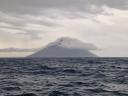
The typical volcano-shape of the Stromboli sticking out of the Tyrrhenian Sea.