PHYVIR expedition
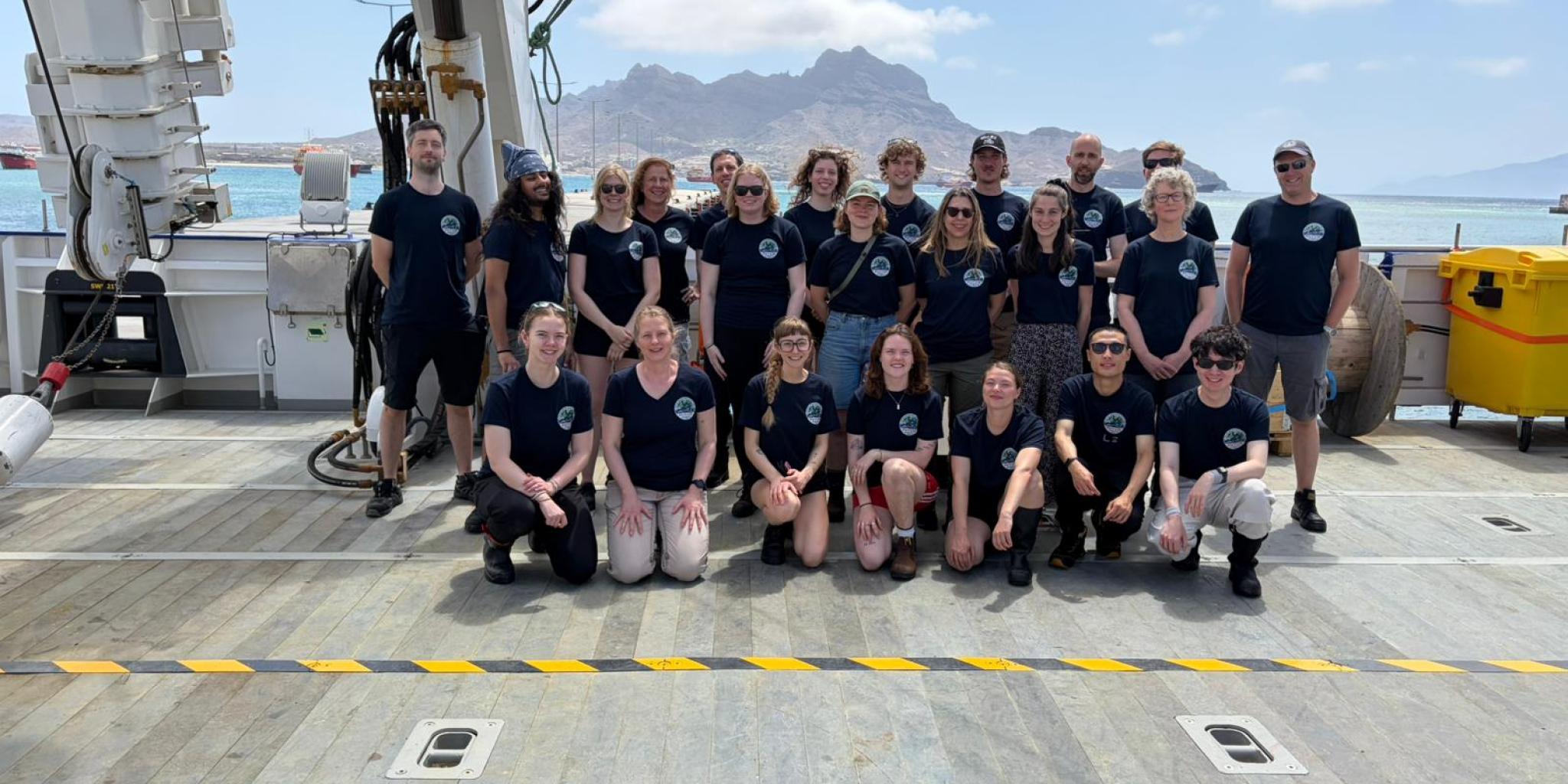
Team of the PHYVIR cruise aboard of research vessel Anna Weber - van Bosse.
Phytoplankton, microscopic organisms in the ocean, produce around half of the Earth’s oxygen and play a key role in global carbon cycles. Yet their interactions with viruses, and the impact on ocean health and climate, remain largely unknown. The PHYVIR project aims to change this through a combination of lab research, ocean expeditions and advanced modelling.
In this blog series, we follow the research at sea aboard the RV Anna Weber-van Bosse. From the preparations in the harbour to the first measurements in the Atlantic Ocean, we take you behind the scenes of the life and science on board.
RV Anna Weber - van Bosse during PHIVIR expedition (video: NIOZ)
31 May - Experiences with the new ship
By Corina Brussaard (chief scientist)
This was the first long science cruise with the new ship – I had my fingers crossed in the beginning. Hoping that the new ship will not have too many starting issues and that our cruise time will not be reduced or even cancelled. Things were looking good, all happy! Then, there was the news that airline companies started reducing the number of flights due to the high kerosine prices. We joked that while the ship would have made it to Mindelo, Cape Verde (harbor of departure) we would not be there. Luckily, also that worked out nicely and we all arrived in time to board.
Once onboard, there were all kinds of issues – what a stressful start! But we managed (the crew deserves a huge thank you!) and there we went. New ship, and a large group of scientists of which many had not sailed before. We were lucky with the weather at the start, and we have been lucky since, considering that it is spring and we are sailing to Iceland. We had occasionally stormy winds and high waves but never long. We had the wind in the back most of the cruise track, which also makes all the difference as the ship moves then more gently.
Having sailed on different ships before, but most on the former RV Pelagia, I compared how this new ship holds itself. I have to say that it moves a bit more but all in all it is very good sailing. And not only is the ship itself new, but also the ship’s layout and instruments. We got used to the layout sooner than I expected. We make good use of all ship’s labs and the additional four temperature-controlled lab containers. After all, we need to work at the temperature the algae grow. So, we have been adapting the temperature in the containers by 15 degrees Celsius already from 23°C just after departure down to 9°C now we are nearing Iceland. Wear layers and packed coats.
And again, lucky that we have not had a lot of rain so far. That just makes working so much easier. We need preferably iron-low water sampling (see earlier blogs) and therefore use the ultra-clean CTD. This one goes in a container for further subsampling, so those working in that are dry, but the one standing outside to give empty bottles and taking filled ones is not. With the increased wind and waves the last days we could not use the ultra-clean CTD and sampled with the “standard” ship’s CTD. This one is no longer standing outside (as on the former ship) when filled with water samples but brought inside. That is luxury!
The scientific group quickly became a large team and there is always somebody willing to help somebody else. A couple of social events and a game or movie here and there break the routine. Routine is good for science but not always so good for us!
Looking forward to the last stations and already the PHYVIR-2 cruise summer 2027 on the RV Anna Weber-van Bosse. Thank you for following our blogs this month!
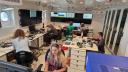
Team effort in the dry lab
29 May - Nature sightings
Naomi Bakken (PhD student)
“Big fish!” One of the crew members yells from the C-deck. A thunder of safety boots run up the stairs from our sampling areas as we all rush to check what he means. We have been sailing for eighteen days and in the past week have been teased by too-brief glimpses of whales – blows and just the curve of one’s back. As we peer over the railing, a dozen black cetaceans gracefully roll over the surface of the water a few dozen meters away. Sven informs us these are pilot whales. To our delight, we see pods of these whales several times across the following days, once with two juveniles just a few meters from our ship, sometimes remaining nearby for a few hours.
In the weeks prior, sightings of marine macrofauna were few and far between. During lunch on our first day of sailing, Liam stood up and pointed at dolphins outside the window swimming alongside the ship. Dedmer posted himself at the front of the ship over the next few days and witnessed more dolphins playfully riding the bow wave. Through the nutrient-limited regions between Cape Verde and the Azores, our main nature sighting was beautiful, small Portuguese man o’ war. Sadly, we also saw pieces of plastic drift by.
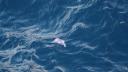
Portuguese man o’ war (Photo: Dedmer van de Waal)
At mealtimes we dream about what the next day will bring. “Humpback whales breaking the surface directly in front of the boat.” “And there’s a baby with them!” “If we look to the other side of the ship, there’s a blue whale blowing water out of its blowhole.” “And a pod of orcas will swim by, wearing salmon hats.” We all lay out our requests to the universe. Recent news that we have time to travel further north (west of Iceland) for the last sampling station has us all hoping for orca sightings.
Marine mammals are not the only cause of delight around the ship. We have a few avid birders, Karein and Dedmer. Binoculars are always kept at hand, hanging in our lab containers and around necks while on deck. A few days after leaving Cape Verde, a few people noticed a small sparrow flitting around the ship. We speculated that it might be hitchhiking. We stopped seeing it around the Azores and hoped it was able to make its way back to land. While we were still in Cape Verdian waters, we had an amazing sight of a Brown booby that was hanging out in the front of the boat. On the 23rd of May we saw an American Kestrel, which is a very rare bird to spot! Getting closer to Iceland we see more Northern fulmars that now keep us company every day.
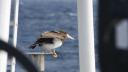
Brown booby. Photo: Dedmer van de Waal
Of course, being microbiologists, we also enjoy glimpses of the organisms we are studying – phytoplankton! Corina or Hisham concentrates seawater samples each day so we can have a peek under the microscope. The concentrated water samples differ daily in species composition, offering exciting surprises each time. Recently seen: Dinophysis, a phytoplankton species responsible for harmful algal blooms (potentially toxic), and the diatom (with glass-like frustule) species Pseudo-nitzschia, and a surprising coccolithophore bloom (phytoplankton with calcium carbonate scales on the outside). And any time a copepod (adult or juvenile) zooms past is cause for excitement, “Copepod!!”. These adorable zooplankton were even inspiration for a story written by Eva during the Talent Event night.
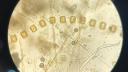
A concentrated water sample with different phytoplankton
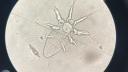
A copepod. Photos: Naomi Bakken.
28 May- Beyond the science
By Lea Simons (PhD student Groningen University)
There is a lot of science being done on board, but that is not all that is happening of course. Hard work also requires time for social activities after working.
After hours BBQ
When the weather and the waves were still good, we had the great opportunity for a “gezellige” BBQ! Accommodating all dietary requirements, it was really a feast like no other. Fresh salads, and more choices than you could count, ranging from fresh seafood, marinated meats, beet burgers, and veggie grillables. We also enjoyed the tropical sunset of course! And fun music, some karaoke sing-alongs, and dancing.
Cruise Quiz
Of course, we could not miss doing a pub quiz all about the cruise and marine themed pub quiz! Eva and Emma, two of the Master students (from University of Amsterdam) on board, designed questions that took us from the geography of countries we passed along our cruise track, to music questions, to marine animal riddles. Beyond the questions, the team with the most imaginative name was able to win a bonus point. The choice was tough. We had Dirty Drifters, Algae’s Angels, Virus Pirates, Barbrainians, Creative Talented Dreamers (CTD), Crapeaha (Cracker, Peanut Butter, Hagelslag). Who would you have awarded the point? Emma and Eva decided the Barbrainians would get the honour. However, in the end, the Virus Pirates quizzed the rest of us to the ground!
To be or not to be…
Assassins on board! We started a multi-day Assassin game of treacherous killings. Each player gets a card and an object with which they must kill someone (with a gentle tap of course) in the absence of any witnesses, carefully chosen by our appointed game master Melle. Not to be played when working. The game is especially funny as the chosen objects need to be kept close in case the opportune murder moment arises, leading to people walking around with ping-pong bats, brooms, buckets, pillows amongst many other things. Alliances were forged, non-players helping players, warnings were spread, and information exchanged among the dead and the living… and trust issues were growing! Some went for the obvious attacks while others were silent killers. Hiding behind doors, luring their victims away from the crowd, waiting out on someone switching a sample in the flow cytometer - brutal indeed. Everyone was patiently waiting for the murders to play out so we could uncover the last one standing.
Anna Weber’s Got Talent
Having many different people on board also means having a lot of talents around. The Anna Weber’s Got Talent Event was the perfect way to showcase our abilities - no matter how good (or bad) they may be! Dedmer (researcher), as show host, guided the evening and introduced all our participants. Starting off, we had Emma and Karein (two Masters students from the University of Amsterdam and from Groningen) introducing us to “What kids get up to on a Saturday night” where we played a series of mini-games, bringing out all our competitive sides. Next, Chief Officer Meile who showed off his do-it-yourself work skills using a card-board box on his head, received hilarious applause from all participants! Next, Eva (Master student at the University of Amsterdam) displayed her creative writing skills by sharing a story of Kevin the Copepod and his rise to fame on board the Anna Weber van Bosse - we want the printed edition! Then, before the break, we had our special guests that had been waiting for the shining moment in the VIP corner all evening - Without Temptation! They shared their newest single “Heave up the CTD frame” which had a strangely familiar tune… it could have been a shanty cover of “Drunken Sailor” but who would dare to accuse these legends of copying! After this, we had Yael (researcher) and her creative “Running Ants” workshop. Exploring the famous Escher “Mobius Strip II”, we learnt what happens when you cut this shape in half and thirds… you should try it at home!
Then our chief scientist Corina recited a poem she wrote about all cruise participants, emphasizing prominent personality traits, highlighting all cornerstone roles, and applauding all the hard work done by everyone on board. Next, we had Liam (Master student at the University of Utrecht) showing off his “devil sticks” tricks while telling jokes which sent us into a hysterical fit of laughter. The closing act of the night was another musical act, heading into the world of rap with Run-CTD and their new hit that happened to be all about viral ocean science - strangely fitting to the audience!
The unplanned…
Besides organized activities, we get up to a lot more things to wind down. We set up a jigsaw puzzling table next to our flow cytometers to relax in between sample processing at the end of the day, especially with some nice background music to relax. We also have opportunities for some wildlife spotting during the day with many always readily carrying binoculars around their necks. Most of our social activities happen in the evening. After our nightly 7 PM meetings, if there is no work to be done, many of us stay behind in the lounge for spontaneous game nights (with Catan being a popular option lately although the wave action rearranges the board regularly). Sometimes we watch movies, or have ruthless ping-pong and foosball tournaments, or wind down with some creative activities such as knitting and drawing. So, the cruise activities definitely go beyond the science!
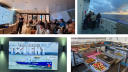
Leisure activities on board during the PHYVIR cruise
27 May - Drifting traps
Written by Hisham Shaikh (Post-doc NIOZ)
To kick off the final week of the PHYVIR I cruise, we retrieved the fourth - and last - drifting trap of the expedition. We were able to borrow this device from our NIOZ colleague Jan-Berend Stuut and it is an interesting addition to our research cruise across the North Atlantic. While Dorien Hoexum and I enjoyed working with these traps, we were not the only ones as the trap recoveries typically attracted some audience: people taking a break and interested in the occasional small animals in the traps. This final recovery came with very special visitors. A pod of long-finned pilot whales, including at least two calves, approached the ship with obvious curiosity. It was the closest these whales have come to our floating home for the past few weeks, the research vessel Anna Weber-van Bosse. A pretty incredible send-off as we lifted the final traps from the ocean.
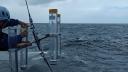
Drifting trap tubes being retrieved with surprise visitors - a pod of Pilot whales. (Photo: Hisham Shaikh)
So, what exactly are drifting traps and why did we deploy them?
Drifting traps are a set of tubes at different depths that collect sinking particles from the sunlit surface waters. We deployed four drifting traps during this cruise, each carrying tubes positioned at 100, 200, and 400 m depth. As particles sink through the ocean, they are captured in these tubes. Our goal is to understand how viruses may influence the sinking of phytoplankton, that form the base of marine food webs and play a major role in removing carbon dioxide from the atmosphere. Sinking or sedimentation transports this carbon to the depths of the ocean. On its way down these particles are also degraded so finally there is only a very small percentage reaching the seafloor. We determine the sinking potential of the different phytoplankton populations (see earlier blog by Li Zhao) and the drifting traps is a natural extension of that. As there are indications that some phytoplankton groups are prone to aggregating upon viral infection, we specifically like to study which phytoplankton can be found in these sinking aggregates.
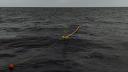
The floating part of the drifting traps (photo: Hisham Shaikh)
Some tubes preserve the fragile aggregates in a gel on the bottom of the tube so we can study their shape and abundance. Others are used to do so-called bulk measurements on; the abundance and genetic composition of phytoplankton, bacteria and viruses; the total concentration of chlorophyll, and the transparent exopolymeric particles (TEP) that forms sticky precursor of aggregates and make them sink faster. By sequencing DNA and RNA from the traps, we aim to uncover which viruses are infecting these sinking phytoplankton communities, and how these microscopic interactions may influence the ocean’s ability to store carbon in the deep sea.
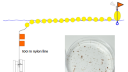
A diagram of drifting traps and gels with aggregates collected at 100m, 200m, and 400m in the North Atlantic Ocean. (Photo: Hisham Shaikh)
25 may - Tossing and turning, fasten your seatbelts!
Written by Thomas Cupido (Msc-student RUG) and Melle Versluis (PhD-student PHYVIR)
Rolling in bed and sliding plates
After twenty-two wonderful days, we have to face the facts: the weather in the northern ocean has changed significantly. The wind has picked up considerably, resulting in waves as high as six meters. Fortunately, the RV Anna Weber-van Bosse was built for these kinds of conditions, but the scientists are being tested.
The waves suddenly make our daily activities a lot more challenging. During meals, we have to brace ourselves firmly with our legs and hold our plates with one hand. This makes eating a lot harder, but we’re getting used to it quickly. During our daily game of ping-pong, the waves also add an extra dimension, but this only makes it more fun. In addition, falling asleep is sometimes a challenge, because the waves cause you to roll out of bed. Fortunately, the helmsmen take this into account by sailing a slightly different course at night. This is also reflected in our route.
The weather does as it pleases
The weather also affects how we conduct our research. Everything has to be lashed down, and you have to brace yourself while working. It also impacts how we sample the water. Every morning, we wait for the captain and our research leader, Corina, to make a decision. Will operations continue as usual, or will the plan be adjusted?
If the waves are too high, the crew is briefed, and the researchers know immediately what will happen. Instead of the clean CTD (UCC), we’ll work on the port side with our rosette CTD. Because this CTD is part of the ship and doesn’t need to be in a special container, we can continue longer in deteriorating weather, and it poses fewer risks during hoisting. An added benefit is that each researcher can immediately collect their own samples, making the process much faster.
You might wonder why we don’t always use this CTD. The main reason is that this CTD contains iron components, which could potentially lead to contamination of the samples. Fortunately, a very large portion of the measurements can continue as usual with the “standard” CTD, allowing us to still gather a great deal of important information about these more northerly waters. And due to the mixing, we do not expect to encounter (severe) iron limitation here either.
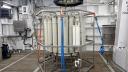
The CTD is buckled up against the waves (photo: NIOZ)
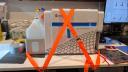
Doing research on board requires some extreme measures (photo: NIOZ)
21 May - Settling down in the sea
Written by Li Zhao (NIOZ)
Phytoplankton do not always float
Marine phytoplankton account for only 1% of the global biomass, yet these tiny organisms contribute to around half of the Earth's primary production. Their name says it all (phytoplankton; from the Greek phyto for plant and planktos for wanderer/drifter); they usually float around in the surface layer of the ocean where they photosynthesize. However, that’s not always the case. They may also sink toward the deeper ocean and even reach the seafloor. This has great impact on key processes of global biogeochemistry cycle, contributing directly to carbon sequestration.
Phytoplankton sink for different reasons. Some of them are simply big and heavy, like large diatoms that have a glass-like house to protect them. And although they can regulate their buoyancy to some extent, when the water column becomes less mixed, they may sink out of the sun-lit upper ocean. Most diatoms also produce transparent exopolymeric particles (TEP), which is the precursor of aggregate formation. It has been shown recently that viral infection enhances this process, and cells are more likely to sink collectively. During the current expedition, we aim to figure out who are sinking, how fast they sink and examine if viral infection enhances the sinking of phytoplankton cells.
SETCOLs onboard
To answer these questions, we use SETCOL assays onboard and deploy drifting traps (more on that in another blog). SETCOL is the abbreviation of settling column, a transparent vertical cylinder that we fill up with seawater sample and leave hanging for a couple of hours at the natural temperature. The column has three taps: one some centimeters under the top (3% of total volume; to determine if cells float), one about 10 centimeters from the bottom (88% of total volume) and the last one on the bottom (9% of total volume; to determine if cells sank).
SETCOLs have been primarily used in laboratory studies, where they can stand still. To perform the settling onboard, we must overcome the impact of the ship’s movement, otherwise settled cells will be easily resuspended. Thanks to the NMF (national marine facility) workshop at NIOZ, we could go onboard with six SETCOLs that are tailored to cruise conditions. They are designed to swing freely with the movement of the ship, meaning they can stay perfectly vertical. This creates a stable environment for the phytoplankton to settle down, almost entirely unaffected by the waves.
First glimpse of results
To avoid harming or stressing the delicate cells, we carefully siphon the water into the columns using tubing rather than pouring it. After six hours of settling, we drain the three sections, with the bottom one last so it stays undisturbed. We sample for phytoplankton composition in each of the SETCOL’s sections, counting the various phytoplankton populations but also determine their identity (and that of the viruses inside) by genetic techniques back in the home lab. We furthermore sample for TEP and aggregates. The counting onboard (using flow cytometry) already shows exciting hints: some of the larger phytoplankton groups are sinking. We look forward to the rest of the expedition and all results.
21 May – Are the cells feeling alright?
Written by Xiaonan Cai (PhD student at NIOO)
Tiny cells, big clues
The ocean is full of phytoplankton. These tiny organisms form the base of marine food webs and help take up CO₂ from the atmosphere. But phytoplankton are not all the same: different species have different sizes, shapes, and ways of using light and nutrients.
Because of this, phytoplankton communities can change strongly from one place to another. A community in warm, nutrient-poor subtropical waters may look very different from one in colder, nutrient-rich sub-polar waters. During our transect across the North Atlantic Ocean from south to north, one of the questions we are interested in is: how healthy are these phytoplankton cells, and does their photosynthetic capacity and cellular composition change along the way and is that related to external causes such as changes in environmental conditions or viral infection?
Phytoplankton cells carry chemical clues that help us decipher this. One important clue is elemental stoichiometry: the balance of carbon, nitrogen, and phosphorus inside the cells, often written as the ratio of C:N:P. These elements are essential for growth, metabolism, and energy transfer. When the C:N:P balance shifts, it may suggest that cells are adjusting to their environment, experiencing nutrient stress, or changing how they grow.
This is also important for understanding phytoplankton–virus interactions. Being parasites, viruses depend on their hosts to reproduce, so the condition of the host may influence how successful the production of new virus particles will be. A nutrient-stressed cell may not provide the same resources as a healthy cell.
Health across different size groups
Phytoplankton are often grouped into different size classes: microphytoplankton are about 20–200 µm, nanophytoplankton about 3–20 µm, and picophytoplankton 0.3-3 µm. These size classes do not always respond to environmental stressors in the same way. Smaller-sized cells often do well even in nutrient-poor waters because they are efficient at taking up nutrients, while larger cells may become more abundant when nutrients are more available.
During the cruise, we collect seawater and filter it step by step through filters with different pore sizes. This allows us to separate the phytoplankton community into these different size fractions. Sometimes, the filtration itself already gives us a first impression of the water: if the filters clog quickly and the water passes through very slowly, there is probably more particulate material, including phytoplankton biomass. Later, back in the laboratory, we will analyse the filters for elemental composition and the main pigment that phytoplankton contain, i.e., chlorophyll-a. Together, these measurements help us see not only how much phytoplankton material is present, but also how their chemical compositions differ.
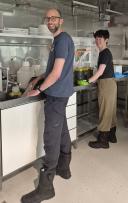
Dedmer Van de Waal (NIOO) and Xiaonan Cai (NIOO) filtering seawater samples on board (photo: Yael Artzy-Randrup).
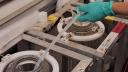
Filling up the SETCOLs using tubing – and it shows the systems how the column stay vertical (by Dorien Hoexum, NIOZ)
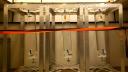
SETCOLs ready to be used, made by NMF workshop at NIOZ (Photo by Li Zhao, NIOZ)
20 May - Entering rougher waters
Written by Melle Versluis (PhD cndidate UvA), Xiaonan Cai (PhD candidate NIOO) and Amelie Wittig (masterstudent UvA)
We started our expedition in tropical waters, where everyone could get used to the daily routines on a research ship in calm and sunny weather. But since we are heading towards Iceland, we were all aware that we cannot count on such calm and flat conditions throughout our entire journey. Yesterday we finally got to experience rougher seas for the first time and the whole experience changed immediately.
Having seen the predicted wave height in advance, we adjusted the scientific program accordingly. For our team this meant sampling our experiment earlier in the day. The sampling involves carrying 20L cubitainers, in which we incubate water for our experiments, from the incubators in the front of the ship to the ultraclean container (where we sample under clean conditions to avoid contamination) in the back, with two flights of stairs in between. We brought special backpacks to be able to do this safely, and it is a team effort to carry 18 cubitainers back and forth. But in rough seas walking straight becomes close to impossible even without 20kg of extra weight. Thus we rushed to sample earlier in the day and with extra support from the crew we managed to do it faster than ever before. Luckily so, because once the heavy lifting was done and we could focus on processing our samples in the lab containers, keeping the balance became more difficult. Before we knew it, we found ourselves clinging to a lab table or leaning to a wall in order to stay on our legs. Luckily, we had strapped down every single item in our lab container well in advance and sample processing proceeded smoothly.
However, when sitting down for dinner after a long day of work, coordination became even more difficult. On the long dinner tables plates with food were sliding from one person to the next and soon after, even people started sliding sideways while sitting on their chairs. Holding on to the table while also keeping plates and glasses in place did not allow for comfortable eating, and most of us quickly gobbled down some food, to seek a more stable place as soon as possible. Yet such places were not to be found on the ship anymore, instead we had to rush back to the lab to secure the last pieces that could still move: lab chairs, computer screens and fridge and freezer doors all needed some extra straps, before we could call it a day. And even then, rest is hard to find when moving sideways with each wave while trying to fall asleep…
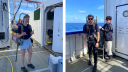
Melle Versluis, Xiaonan Cai and Amelie Wittig carrying cubitainers in good weather. During the rougher conditions no hands were free to take pictures anymore (photo: Emma Hynes)
18 May - Following the flow: studying phytoplankton at sea
Written by Emma Hynes (UvA MSc student 2026 at UvA)
As we get closer to our half-way mark on board, my group is beginning the second set-up of our experiments. These experiments consist of so-called microcosms and in my case flow cytometry, a method used to detect and count the different populations of phytoplankton. We take water from the upper water column and incubate them in containers on board to be able to look at live interactions and changes in the populations of phytoplankton in response to us adding nutrients (nitrogen, phosphorus, iron) that potentially limit that growth of the algae.
Counting fresh samples is a very exciting opportunity as many earlier phytoplankton studies used ‘fixed’ samples. Fixing meaning adding a fixative (e.g., formaldehyde or glutaraldehyde) followed by freezing the samples and stored them at -80°C for analysis when back home. This is nice as it gives us the ability to take also samples when we do not have the flow cytometer at hand, but it also has a downside. Fixing samples can lead to reduced pigment (chlorophyll) fluorescence, making it harder to discriminate all phytoplankton groups that we see when counting fresh. Especially a specific group of algae found in the warmer waters and where some of my experiment focuses on. When using live samples on board we can see the entire composition with no degradation.
As mentioned in a previous blog post, iron is ‘micro’ nutrient that is important for all life, including phytoplankton. It is generally found in very low concentrations (hence micro- or trace-nutrient) and can be particularly limiting in certain areas in the global ocean. If we think of how much iron is found in the nutrient poor waters we are in now, it’s the same as a paperclip in an Olympic sized swimming pool.
We incubate 1L and 20L incubations and in these experiments, we’re focusing on which nutrients limitations affect the population composition over a 4-day period. After all, like how plants need fertiliser to grow, algae need nutrients too.
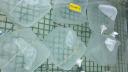
20-litre incubation cubitainers, or microcosms (photo: NIOZ)
16 May - Life inside container #21
Written by Naomi Bakken (UvA) and Lea Simon (RUG)
Hello… Who is there?
Phytoplankton may be tiny, but they are some of the most important organisms in the ocean. These microbes form the foundation of almost every marine food web and even help regulate Earth’s climate by absorbing carbon dioxide. Understanding what helps them thrive, and what threatens them, is therefore incredibly important.
One major threat comes from viruses. When a phytoplankton cell becomes infected, it usually dies. Across the oceans, countless invisible battles between phytoplankton and viruses are constantly taking place, shaping marine ecosystems in ways we are only beginning to understand. This interaction is exactly what the PHYVIR project aims to explore.
The challenge is that these organisms are far too small to see easily, even with standard microscopes. So instead of identifying them by sight or pigment composition, we use something we – the writers of this blog - think is way cooler… their DNA. This is the genetic information that most microbes have which can be used to identify them, think of it as a molecular fingerprint. We filter a lot of seawater onto a filter which we store and take back to the laboratory. There, we can extract the DNA from the sample, sequence it and puzzle it back together to identify which phytoplankton, and using another filter type also which viruses, were present at our sampling stations.
But what are they doing?
But it does not stop there. Knowing who is present is useful, but we also want to know what they are doing. We can investigate this by looking at another molecule called RNA. Why is that? RNA gives us information about which parts of the DNA are being used at a given time. Responses to changing conditions may for example result in reduced photosynthesis, also to focus their energy towards responding to the stress induced.
Viral infection can also be considered a stressor. Viruses are obligate parasites, meaning they depend on their phytoplankton hosts’ cellular machinery to reproduce. Some of this reproductive activity is reflected in the RNA during infection. Using these signals, we can identify active viral infections.
We are also interested in phytoplankton RNA during viral infection because viruses can sometimes alter how their hosts function beyond basic replication. For example, a virus might require different nutrients than its host normally uses and can influence the host’s RNA to activate pathways that increase uptake of those nutrients.
Finally, some viruses have RNA as their only genetic material, which is relatively uncommon in biology. Because of this, DNA-based methods are not sufficient to detect all viruses present, but we can still gain insight into their presence by studying RNA. The analysis of viral genes expression (including RNA viruses) will be done in collaboration with others in the PHYVIR project.
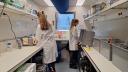
Sorting: connecting who infects who (photo: Dorien Hoexum - NIOZ)
Where do we work?
We work together in Lab Container 21, which is exactly what it sounds like: a converted shipping container set up as a laboratory. Having separate containers for different types of research is useful because conditions inside can be carefully controlled. For example, we adjust the temperature every day to match the seawater, so that the microbes experience as little stress as possible when we bring them inside.
We need to work clean to avoid contamination. This can be challenging, especially when equipment such as filtering systems can leak, but there are strategies to manage this. The main sources of contamination we worry about are enzymes called RNases and DNases, which break down the RNA and DNA we collect. These enzymes are widespread in our environment: in seawater, on our skin, and on lab benches. As a result, we spend a lot of time cleaning.
Wearing gloves is a must. The goal is to avoid contaminating our samples with genetic material from our surroundings, including our own.
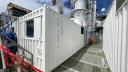
Lab container 21 on board of RV Anna Weber - van Bosse (photo: NIOZ)
13 May - Eavesdropping to the chemical language of marine microorganisms
Written by Guy Schleyer, NIOZ
One great advantage of having a (new) big boat is the ability to bring on board a diverse group of scientists with complementary expertise and interests. Together, we study both the phytoplankton in the water and the environment in which they live and die. Each team of scientists is responsible for different measurements and analyses – some of them are performed live using dedicated instruments on board, however, many require instrumentation only available in our home institutes. We all collect samples. A lot of samples.
Chemical communication at sea
Seawater contains not only microorganisms in high abundances, but also many chemicals that they produce, consume and process throughout their existence. Together, marine microorganisms are responsible for cycling huge amounts of carbon and other nutrients (like nitrogen and phosphorus). These chemicals, also called ‘metabolites’, are furthermore used by microorganisms to interact with each other. Eavesdropping to this mostly unknown ‘chemical language’ of marine microorganisms helps us understand their physiological status as well as the intricate relations they have with each other.
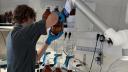
Filtering seawater to collect microorganisms and microorganism-free water (photo: NIOZ)
Studying metabolites of microorganisms at sea is, however, challenging: their amounts can be minute and some of them are processed so fast that it is hard to capture them. In addition, the salts from the seawater can harm the instruments used for analysis. So how do we collect and study these metabolites then? First, we remove all microorganisms from the seawater using different filters. Then, we load this microorganism-free seawater to special cartridges that capture metabolites while letting the salt go through. This allows us to collect metabolites from large volumes of seawater and concentrate them. Once the cartridges are loaded with metabolites, we can release them using chemical solvents, dry them and store them until they are analyzed back in the home lab. And of course, all of this is done in a secure way – we do not want any glass to break while the ship is moving.
Our team starts the day with two containers of 20-liter seawater and ends the day with 50 different samples that are stored frozen until they can be analyzed in the lab. With more than 20 stations, this sums up a lot of samples that for sure will keep us busy in the months after the ship returns to Texel to unload.
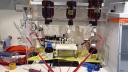
Capturing seawater metabolites using dedicated cartridges and a secure setup. Water pass from the glass bottles through the cartridges (photo: NIOZ)
10 May - Creating perfect conditions
Written by Jitske Luttikholt (HBO student) & Amelie Wittig (MSc student University of Amsterdam)
By now we have gotten into our daily routines on board. Getting up early, grumpy or not, after putting on our safety shoes and helmet, we are sometimes treated with a beautiful sunrise above the sea. Once we receive the first water samples of the day, we start our assays (incubations to measure growth and mortality rates). We have by now adapted to our routines related to the organisms we work with. During the experiments we are working with live algae, bacteria, and viruses on the ship, so we want them to be as happy as possible. The light conditions at the different depths we sample varies, logically decreasing when deeper in the water column. To get enough nutrients (nitrogen and phosphorus) in the current low-nutrient ocean surface waters, the algae hang out a little deeper where they still have access to the higher nutrient concentrations from the deeper water. But algae need light (for photosynthesis) and therefore cannot go too deep. Therefore, one can find an increased concentration in chlorophyl (important pigment for algae) between 50 and 100 m, the so-called deep chlorophyll maximum (DCM). There the algae have very little light, but they are adapted to it. To avoid exposing them to bright daylight when brought up to the surface will cause stress and impact our experiments- just like we protect ourselves from the sun with sunscreen and hats- we also protect these unicellular algae from “frying” at too high light.
This begins when we get the water: it is tapped from the CTD sampling bottles into containers that are wrapped in several layers of dark bags (renewed regularly). Secondly, the light in our laboratory container is dimmed, with the windows and lights covered as much as possible. We then prepare what is needed: we filter out viruses and grazers (predators), to be used to dilute the phytoplankton to see how reduced mortality pressure affects algal growth. We prepare bottles that are placed in an incubator on deck. To bring the bottles there, we use backpacks that shield the light as much as possible. Doing this makes us feel like mountaineers, climbing across the deck and up several flights of stairs to reach the other side of the ship. There, we use a cover while we place the bottles on a wheel in the incubator that has screens to mimic the natural (at the depth they were sampled from) light condition. After doing this routine, the algae can survive happily during our experiments, and hopefully we’ll have some fascinating results!
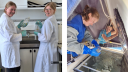
Cleaning equipment (photo left by Dorien Hoeksum) Putting our samples into the incubator requires shading (photo right by Dorien Hoeksum)
10 May - Funnels at 5 kilometres deep
Written by Dorien Hoexum, PhD candidate NIOZ and UU
Letting go isn’t easy
Last year, I deployed three large funnels attached to a mooring in the Atlantic Ocean for my PhD project. Now it is time to haul them up and see which nutrients sink down in the ocean. The funnels are located along the route of the PHYVIR-expedition, which makes it possible for me as the sole geologist to join this algae adventure!
Collecting the funnels starts with tracking them down. All three are connected to a long cable, attached to a block of iron on the sea bottom weighing 800 kilograms. First, the deck crew sends a signal to the cable, so it releases itself from the block. We are supposed to be at the exact spot of the funnels, but the return signal comes from over 12 kilometres away! If you leave equipment on the sea floor for over a year, there is of course a lot that can go wrong. Are the funnels still attached to the anchoring block? Have they been moved by the current? Luckily, the crew from the RV Anna Weber-van Bosse is very experienced with these kinds of jobs!
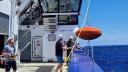
Crew collects the beacon attached to the funnel (photo: Dorien Hoexum/NIOZ)
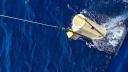
The funnel coming up above water (photo: Dorien Hoexum/NIOZ)
A well-oiled machine
Once we arrive at the spot from the signal, I receive an e-mail from the beacon. This only works when it’s above water, which means the release has worked! Looking out from the bridge, after some time we spot the orange buoy so the crew can start on hauling the funnels in. Immediately it becomes clear that I am the only who is nervous about this: the crew handles it like a well-oiled machine. Getting the funnels on board takes all morning: they were located 1500, 3500 and 5000 kilometres below sea level which means there is a lot of cable to reel in.
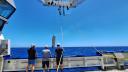
The crew hauls one of the funnels on deck (photo: Dorien Hoexum/NIOZ)
Roll up your sleeves (or maybe not)
With the funnels on deck, it’s time for me to get to work. The ship remains at it’s position for a while longer to allow the biologist to carry out their work, which is rather convenient for me. Working in the full sun in a rain suit might seem strange, but it is the safest. Every funnel has 12 bottles, one for each month, in which they collect everything that sinks down in the water. Each bottle contains a bit of mercury, to kill everything that lives in these samples. I am a geologist after all: I am only interested in the chemical composition of the material. Once I’ve closed and cleaned all the bottles, they are stored in the refrigerator for me to analyse them once I’m back at the lab.
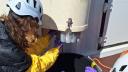
Dorien Hoexum collecting the sampling bottles from the funnel (photo: Dorien Hoexum/NIOZ)
8 May - Into the ocean, before breakfast!
Written by Jasmin Stimpfle (marine biologist Alfred Wegener Institute), Thomas Cupido (master student RUG), Melle Versluis (Phyvir PhD candidate UvA) and Yael Artzy-Randrup (assistant professor UvA)
Now that we’ve waved our goodbyes to the last view of land we will see for the next month and have officially entered international waters, the real adventure can begin: collecting water samples from the depths of the ocean.
Every morning at 5 AM, the ship’s thrusters gently rumble us awake. They keep the ship perfectly steady so we can begin sampling with the Ultra-Clean CTD (UCC) system, which allows us to collect seawater from different depths (down to the deep sea). We, the UCC team (Jasmin, Thomas, Melle, and Yael), go to the changing room, pull on our safety boots and helmets, and gather on deck. There are the deck crew members already.
For a brief moment, everything is calm. The ocean is still dark and endless, while the sky slowly turns pink and orange around us. We get a spectacular view before it all begins. The crew lowers the UCC into the water, a heavy frame weighing over half a ton.
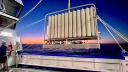
Early morning Ultra clean CTD PHYVIR (photo: NIOZ)
Exploring the deep
Once the UCC disappears beneath the waves, its sensors begin recording temperature, salinity, water density, chlorophyll fluorescence (indicator of the algae in the seawater), oxygen concentration, and more, creating a vertical profile of the ocean below us. Our chief scientist, Corina, watches the incoming data closely as the profile appears on her screen in real time.
As the instrument ascends through the water column, Corina pinpoints the depths at which seawater samples will be collected. Meanwhile, two of us scrub down the clean room where the samples will later be processed. Once the UCC returns to the surface, things move quickly. The instrument is transferred into our clean-room laboratory container, equipped with an air filtration system designed to keep contamination out. Here we are waiting already in full clean-room gear: coveralls, hair nets, and rubber boots, somewhere between a hospital ER and a low-budget space mission.
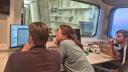
Watching the incoming data closely as the profile appears on screen in real time (Photo: NIOZ)
Heavy metal in the clean room
One contaminant we work especially hard to avoid is iron. The microorganisms we study here come from extremely iron-poor environments, so even tiny traces of iron contamination could affect the experiments. That means everything has to stay meticulously clean: no shortcuts, no stray dust, and no rusty equipment anywhere near the samples. Even the UCC frame is made of titanium to minimize trace-metal contamination during seawater collection. Nonetheless, while seawater samples are being processed, upbeat rock and light metal music fill the container walls. Between the sterile suits, filtered air, and heavy guitar riffs, the clean room has developed a very particular atmosphere.
As soon as each sampling bottle is filled, the UCC team distributes it to the small hallway in the UCC container where it is brought out by another dedicated member of the scientific party on board. They distribute the water samples to different research groups waiting patiently in line outside the container. Everyone is eager to begin measuring different parameters or setting up incubation experiments (more on those in future posts). It is a carefully coordinated operation, and every team depends on these samples for their work. By the time the last bottles are handed off, we are just in time for breakfast (the program is carefully planned to make sure all can have their meals in time).
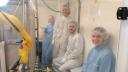
The cleanroom UCC team (photo: NIOZ)
An orange a day keeps the scurvy away
Breakfast always comes with eggs (e.g., fresh omelet), oatmeal porridge and then there can be pancakes, cut fruit – all that in the middle of the ocean. And while we try not to finish all the fresh oranges too early in the voyage, morale remains high and scurvy remains low.
Right after breakfast, the UCC heads back down for a second round of sampling so all teams can collect everything they need. By the time we finish processing the second deployment and finally step out of the lab container, one of us checks the clock. It is only 10 a.m…
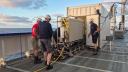
The UCC is being led to the cleanroom lab (photo: NIOZ)
3 May - Get your sea legs ready for a safety drill!
Written by Eva Hekma
Flying fish and wobbly sea legs
Yesterday, we left the harbor. As the coastline slowly disappeared from sight and the waves grew higher, we all stood on deck watching flying fish shooting out of the water right alongside the ship. Not everyone was simply enjoying the view, though. Many of the researchers still had to find their sea legs. Fortunately, by this morning things already looked very different.
All equipment has been secured for the first wave
Fortunately, by this morning things already looked very different. By morning, most people found their balance, and the real work could begin. Working at sea comes with just a few more safety measures than working on land. Before we departed, we had already secured all of our lab equipment and crates to prevent our lab from suddenly deciding to conduct its own research at the first decent wave.
Seven short ones and one long one
After almost a day at sea, it was time for our first safety drill. Everyone was busy preparing for our first water samples when we paused our work. The ship’s horn sounded seven short blasts followed by one long blast, while the alarm systems inside joined in with loud, unmistakable beeping. That signal means only one thing: report to the muster station, the designated assembly point on deck. At first, that did not go entirely smoothly. A large part of the group was standing enthusiastically, but in the wrong place. Luckily, that is exactly why you practice.
Sea survival in practice
Once everyone had finally found the correct spot, the crew explained what to do if we ever had to abandon ship for real. Fortunately, much of this was already familiar thanks to the sea survival training we had completed beforehand. The specific procedures for this vessel were reviewed once more, but it was all a refresher. With safety once again fresh in our minds and our sea legs finally found, we were ready to get back to work with confidence.
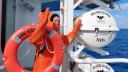
Practice for abandoning ship: survival suit on, and head straight for the life raft. The lifebuoy is just for fun.
2 May - Ready to set sail, but we’ll have to wait a little longer
Written by Dedmer van de Waal
Arrival
There she was, the RV Anna Weber-van Bosse, the newest research vessel in the Dutch scientific fleet. After a seven-hour flight from Amsterdam, we arrived on Thursday 30 April in tropical Mindelo, the capital of the island of São Vicente in Cape Verde, off the African coast. After going through customs at the international port (well, we’re leaving the country again straight after arrival), we were able to board the ship. There we were introduced to our brand-new home for the next four weeks.
Who’s on board?
We are a diverse group comprising senior researchers, research assistants, post-docs, PhD students and undergraduates from various universities and colleges. In total, our scientific team is a colourful mix of 22 people from 7 countries. We are joined by the ship’s 15-strong crew, whose capable hands ensure that we can sail, eat and carry out our research.
Laboratory at sea
For our research, we need laboratories where we can process water samples. There are three permanent laboratory spaces on board, but that's not enough. Which is why we also have containers that are fitted out according to the researchers’ requirements. For example, there are labs equipped for filtering water samples. The suspended material (such as plankton) is retained on the filters, which we can then analyse. We use these to measure, for example, the total amount of algae in the water. We also use filters to analyse the DNA so that we can see which algae and viruses are present in the water.
Oh no, a delay…
Whilst we were busy setting up the laboratories, we received word that we couldn’t leave just yet. A number of formalities had caused a delay, whilst 1 May is a public holiday in Cape Verde. The advantage for our research team, however, was that we were able to set everything up and secure it properly in the calm waters of the harbour. Because the laboratories at sea… they’ll soon be moving with the waves!
…but we’ve set off!
The time has come; we can set sail! On Saturday 2 May, we received word that we were cleared to sail. After casting off from the jetty, we sailed towards the harbour mouth, out into the Atlantic Ocean and the real start of our adventure.
Linked staff
Corina Brussaard
Senior Research Leader

Guy Schleyer
Tenure track Scientist
Anna Noordeloos
Senior Research Assistant
Li Zhao
PhD student