SUBES research programme investigates the species composition of the subtidal Wadden Sea
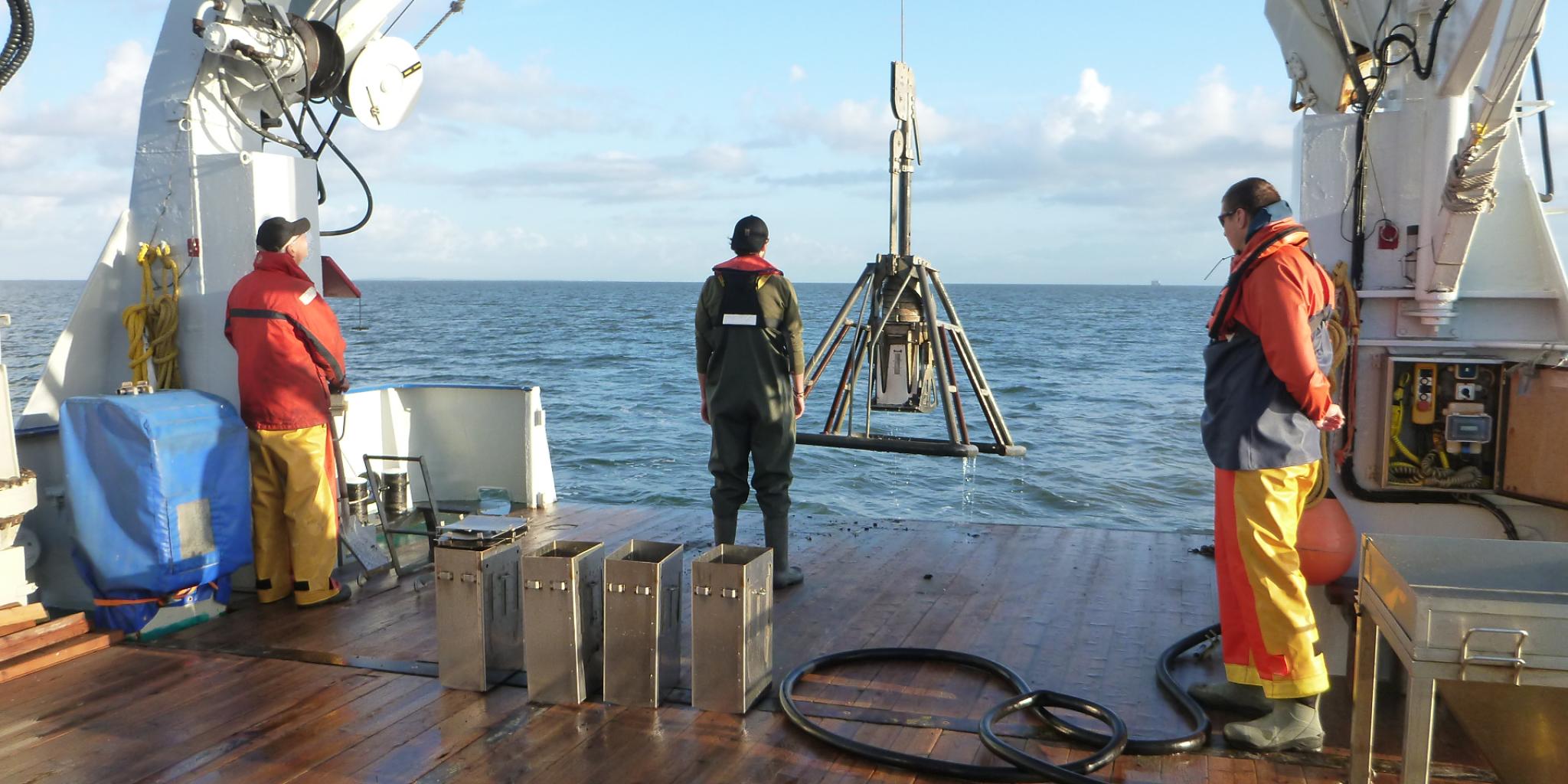
Waddenmozaiek taking samples with box cores
NIOZ will conduct research on behalf of Rijkswaterstaat into the soil inhabiting animals and soil composition in the deeper parts of the Dutch Wadden Sea: the areas that are permanently under water. The research consists of collecting and processing sediment samples, from which all animals larger than 1mm are named, counted and weighted. Think of shellfish species, but also marine worms, crabs and starfish. The Directorate-General for Public Works and Water Management wants to use the Synoptic Subtidal Benthic Survey (SUBES) monitoring programme developed by NIOZ for the study. The study should be completed by the end of 2025 and can help Rijkswaterstaat with evaluating and improving management of the Dutch Wadden Sea.
Research programme
SUBES is an applied scientific research programme in which samples are taken from the bottom every 1000 meters in the area of the Wadden Sea that are permanently submerged. All animal soil organisms larger than 1 mm are collected from the standardised samples. These are identified, measured and weighed one by one in a laboratory. Oscar Franken explains that this sampling is actually a continuation of the sampling campaigns that were previously carried out as part of the Wadden Mosaic project. The samples are taken with a box core from a research vessel or from a rubber dinghy with a manual corer. In total, samples are taken at over 1000 points. In addition, the grain size of the various soil fractions is determined. SUBES is the only study that is extensive enough to perform Wadden Sea-wide analyses in the submerged parts. ‘It is important to know what is happening in the channels. That is why the study is being continued,’ says Tjisse van der Heide.
Waddenmozaiek Sampling
Role as nature manager
As the nature management organization of the major water bodies, Rijkswaterstaat wants to gain insight into the ecological water and sediment quality of the Wadden Sea. Important changes in the ecology of water systems begin with changes in the composition of the soil (sediment) and soil life (benthos). This requires scientific research in the submerged part of the Wadden Sea. Since 2008, the NIOZ, partly funded by Rijkswaterstaat, has also been conducting scientific research into the benthic species and the composition of the seabed in the intertidal part of the Wadden Sea. This research is being conducted under the name Synoptic Intertidal Benthic Survey (SIBES): Sampling the intertidal macrofauna with SIBES - NIOZ
Opens in a new tab.
Waddenmozaiek sampling shellfish
Linked staff
Tjisse van der Heide
Senior Research Leader

Oscar Franken
Head of Analytical Laboratory