Oceanographic data-management 20 years ahead of most other disciplines
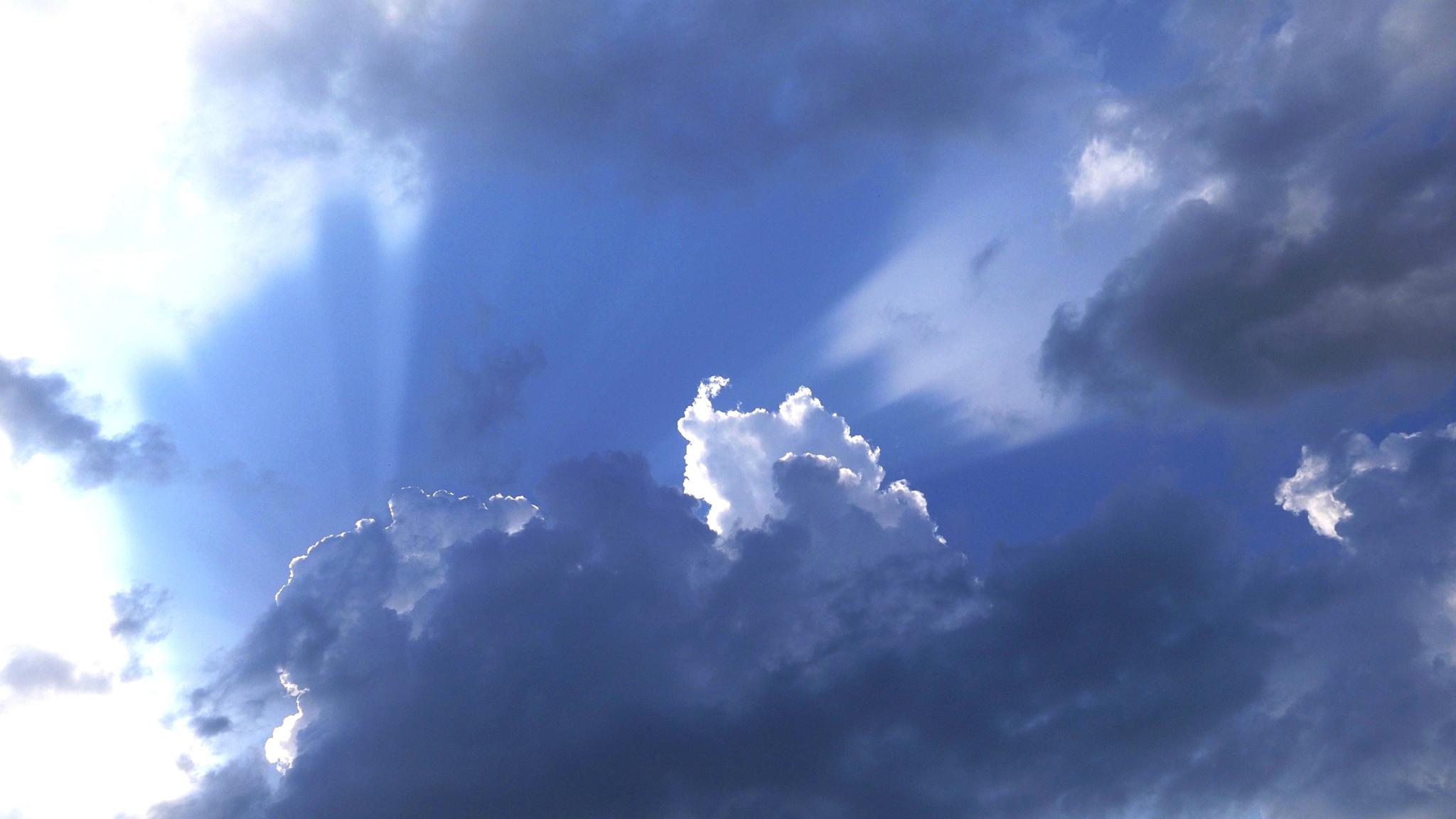
What would I see if I could stand on top of a cloud? (Photo: Taco de Bruin)
Meteorologist Taco de Bruin began his career taking measurements from research vessels. As he retires, he looks back on a career at the heart of ocean science. From the NIOZ to the United Nations, he helped establish systems enabling all researchers to share their measurements with one another. ‘We are 20 years ahead of other disciplines.’ Yet there is still much work to be done for the new generation.
What would I see if I could stand on top of a cloud? I always wondered that as a child. I already loved clouds back then,’ says Taco de Bruin. He is clearing out his office at the NIOZ on Texel; behind him stand empty bookshelves. ‘Driven by that interest, I studied experimental physics in Utrecht, specialising in meteorology.
Above the clouds and at sea
At the age of 25, De Bruin went above the clouds for the first time. ‘My first flight was to Jakarta, where I boarded the research vessel Tyro to conduct research into atmospheric electricity.’ After a short period as a researcher at Utrecht University, he moved to the NIOZ in 1989. ‘There, I spent about five years researching the application of satellite remote sensing during research expeditions. We wanted to guide the ships from space to optimize marine research, but the difficulty is that those beautiful clouds get in the way.’
'I already loved clouds back then' (photo: Taco de Bruin)
Turning point
A major turning point in De Bruin’s career came around 1995. ‘I was asked to help set up data management at the NIOZ, together with Ronald de Koster, Margriet Hiehle, Jan Nieuwenhuis and Jan Derksen, among others. We started managing the data streams on board the research vessel Pelagia. It was a great opportunity for me, as I’m interested in measurements at sea in general.’
From paperwork to the internet
By that time, the computer had established itself in science. Research data was no longer made available primarily via paper data reports in libraries, but exchanged via CD’s, DVD’s and later the internet. ‘Agreements were needed on standards and formats, so that all that measurement data on temperature, weather, water composition and countless plant and animal species could be made accessible.’
An eye-opening visit
De Bruin recalls an eye-opening visit to colleagues at the British Oceanographic Data Centre in the UK, where they were further ahead in this field around 1996. ‘The most important lesson I learnt there: Don’t reinvent the wheel. New research consortia with generous grants must, above all, align with existing data systems.’ If they think others will simply adapt to their new system, they’re in for a rude awakening. De Bruin saw this happen frequently worldwide.
De Bruin’s field of work expanded. For example, he served as chair of the National Oceanographic Data Committee
Opens in a new tab for ten years. He was also a key player at European and UN level: from 2019 to 2023, he was co-chair of the International Oceanographic Data & Information Exchange committeeOpens in a new tab of UNESCO’s Intergovernmental Oceanographic CommissionOpens in a new tab.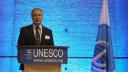
Taco de Bruin during an UNESCO meeting
Pelagia is 64PE
For these standards, the internationally recognised NERC Vocabulary Server was chosen, which has vocabularies for everything used in marine research, such as measuring instruments, units, ports and ships. ‘The Dutch research vessel Pelagia, for example, has the code 64PE. This is because there is another Pelagia in France. Each voyage with the Pelagia is then given its own unique number, for example 64PE432. If an analyst in the on-board nutrient lab wants to label seawater samples, that is measurement X on voyage 64PE432.’
Nowadays, all NIOZ data is entered into its own closed data system, DAS. ‘You don’t want raw data to be immediately available, because it first needs to be checked and converted. Even more important: our scientists must be able to conduct original research with it. They need to be the first to publish their findings; otherwise, journals may reject the work.’
A solid framework
A solid framework was established, giving Europe an overview of marine measurements and ensuring that gaps were filled. This network (EMODnet
Opens in a new tab) aggregates data from 145 partner institutions and uses it to produce relevant data products. ‘Annual overviews of the average phosphorus content per season in European waters, for example. Another example is a high-resolution depth map of the seas around Europe.’ In this way, the EU defined a few hundred data products, according to De Bruin. These then serve as the basis for European policy on issues such as the environment or fisheries.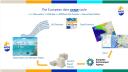
The European data usage cycle (EMODnet)
In EMODnet Open Sea Lab Hackathons, teams of (data) scientists, software developers and ‘social innovators’ from across Europe and beyond tackle pressing challenges. ‘These relate to the sustainable economic use of the ocean, marine resources and coastlines.’
‘The best thing about my work was the collaboration at all levels, within the NIOZ as well as nationally and internationally. And that you could see the results. You can clearly see the progess.’ In addition to data management for oceanographic research, De Bruin also played a role in the data management of polar research. ‘By being active in both scientific fields, I was able to make connections and collaborate across disciplines.’
Twenty years ahead
Looking at scientific fields other than these two, he notes that oceanographic data management is twenty years ahead of many other disciplines. ‘People have always been very aware that with a ship, you can only take measurements at a single point in time and in a very small part of a vast ocean. To be able to say anything meaningful about the entire ocean and over a longer period, you will need to collaborate and exchange data.’
However, De Bruin puts this into perspective: ‘Data exchange within meteorology is, in turn, far ahead of that within oceanography. In every country in the world, the exchange of meteorological data is laid down in law. That is not the case in any other field.’ Other fields are now taking steps that oceanography took twenty years ago, De Bruin observes. They can make great strides quickly, according to De Bruin: ‘The technical possibilities are far greater than when we started, and they have an example in oceanography. That way, they don’t have to reinvent the wheel,’ says De Bruin with a wink, referring to the lesson he learnt 30 years ago.
Other fields are now taking steps that oceanography took twenty years ago. The technical possibilities are far greater than when we started, and they have an example in oceanography. That way, they don’t have to reinvent the wheel.
Visits to primary schools
De Bruin sometimes used to travel weekly for his work, both within and outside Europe. Since the covid pandemic, meetings have increasingly taken place online. In recent years, De Bruin has also been doing other things closer to home. As programme manager of the Dutch Argo Programme
Opens in a new tab, for example, he visited primary schools. ‘Schools can adopt a two-metre-long transponder that takes measurements at sea. Every few days, it surfaces and sends data to a satellite. Pupils can see this and thus become acquainted with oceanographic research.’Work for the new generation
De Bruin is delighted to see his robotics colleague Yetzo de Hoo taking over the Argo programme. There remains plenty to do in the field of data management for others of the new generation too. ‘Within NIOZ, it is important that we continue to ensure all research data is entered into DAS. To do this, you have to keep reminding researchers. And the data must be made accessible and used in international systems.’
Clouds, bridges and cities
Keeping pace with new developments remains important, from new measurement methods to cybersecurity. Since his departure on 12 May, De Bruin has popped in a few times to clear out his office and hand over his projects, but he is truly winding down his activities. He is returning to his old fascinations: clouds, bridges and cities. He is taking time for his other great passion: photography.