NIOZ and Texelse bierbrouwerij limited edition anniversary beer: Skelpeteller
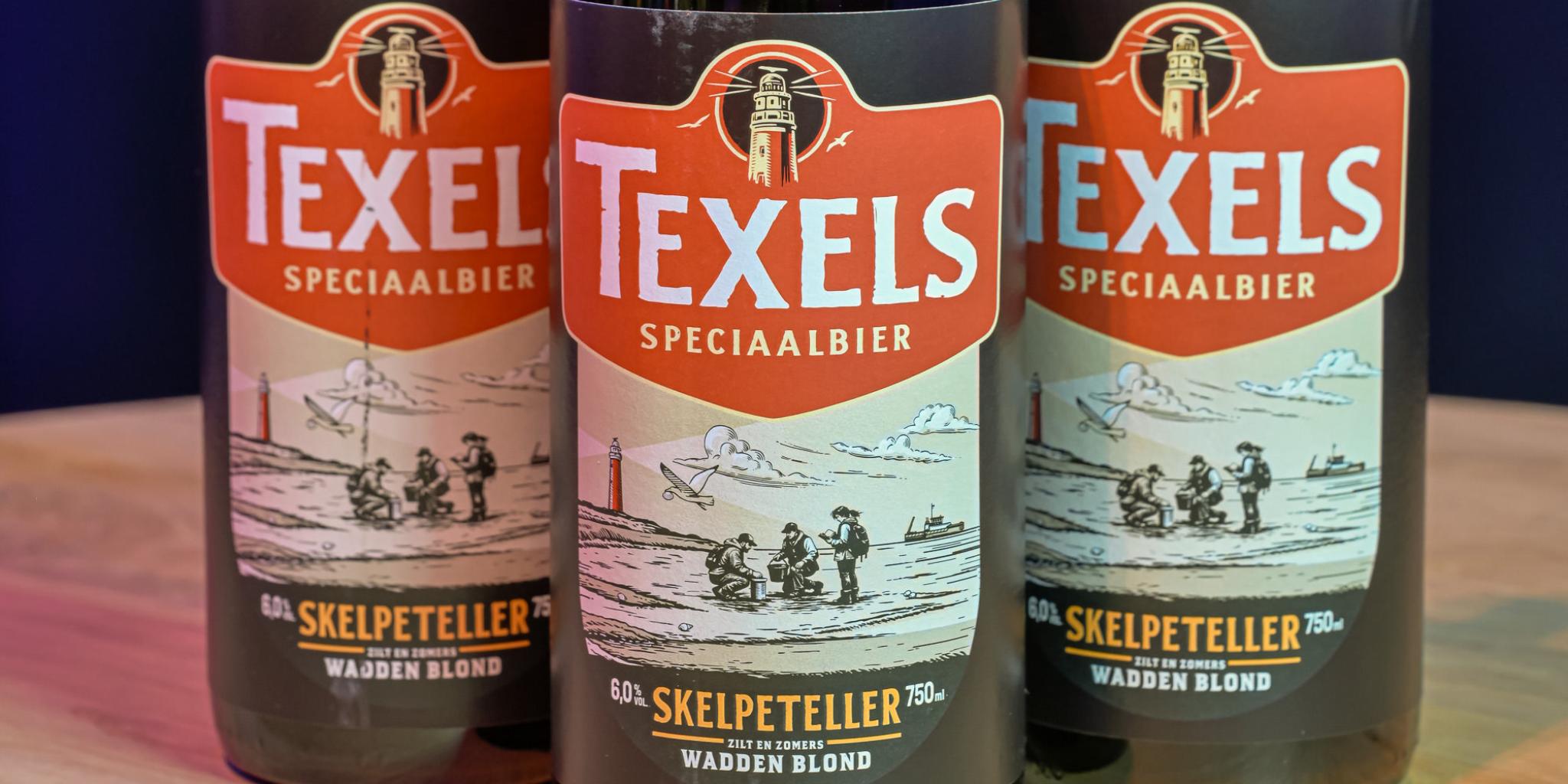
Skelpeteller, brewed in honour of 150 years NIOZ by the Texelse Bierbrouwerij (photo: Roel Ovinge/NIOZ)
The character of the Wadden Sea, captured in a summery, zilty beer. That is Skelpeteller: a beer that the Texelse Bierbrouwerij and the Royal Netherlands Institute of Sea Research made together, in honour of the 150th anniversary of the research institute. The beer is produced in a limited edition, and was first poured for all NIOZ staff on 9 June.
For 150 years, the NIOZ studies live on the mudflats and the sea, from the main location on Texel and a second one in Yerseke (Zeeland province). To celebrate this anniversary year, the institute teamed up with another party with strong roots on the island: the Texelse Bierbrouwerij. Together, they brewed a summery, slightly zilty beer: Skelpeteller.
Connection to the Wadden Sea
NIOZ director Han Dolman: "We wanted to honour the grounds that our institution was founded on, and where so much of our research takes place, the Wadden Sea, with a local and special collaboration. With this anniversary beer, we celebrate the Wadden Sea, the island and our rich, connected history."

The first Skelpetellers, draughted by brewer Tom van der Veen and NIOZ director Han Dolman
Hyperlocal collaboration
Brewer Tom van der Veen of the Texelse Bierbrouwerij: “We named this beer a ‘Wadden Blond’ because it really reflects the character of the Wadden Sea. We brewed the Skelpenteller with sea fig, also called beach bananas, and sea lettuce, which give the beer it’s zilty, savoury taste. Both plants are grown and harvested on Texel, by the company Waddenwier. ‘Which makes this a really hyperlocal beer!’
“Skelpen tellen”
The name ‘Skelpeteller’ is a word in the dialect from Texel, meaning ‘someone who counts shells’, and it’s sometimes used as a name for people who work at NIOZ, explains director Dolman. And it does have a link to the work we do, he says. By monitoring the types and numbers of shellfish, fish and all other organisms living in and around the Wadden Sea, we gain insight into the health of this unique ecosystem. Because only by understanding the sea, we can safeguard it in the future. “And we make a bit of fun with our pet name as well: on each bottle of the beer, you find a shell with a number on it. So that everyone who drinks it, can also help us count the shells!”
The first glass of Skelpeteller was poored on Tuesday 9 June, during the NIOZ Day with all employees of the institute. After that, the beer will be available in a limited supply at the Texelse Bierbrouwerij shop and café on Texel.
Limited edition
Skelpeteller is brewed as a limited edition, and can only be bought and tasted at the Texelse Bierbrouwerij Café.

The Skelpeteller beer is brewed with sea lettuce and beach banana, grown and harvested on Texel, giving it a zilty, summery flavour (photo: Roel Ovinge/NIOZ)