Bringing small fish in the North Sea into clearer view
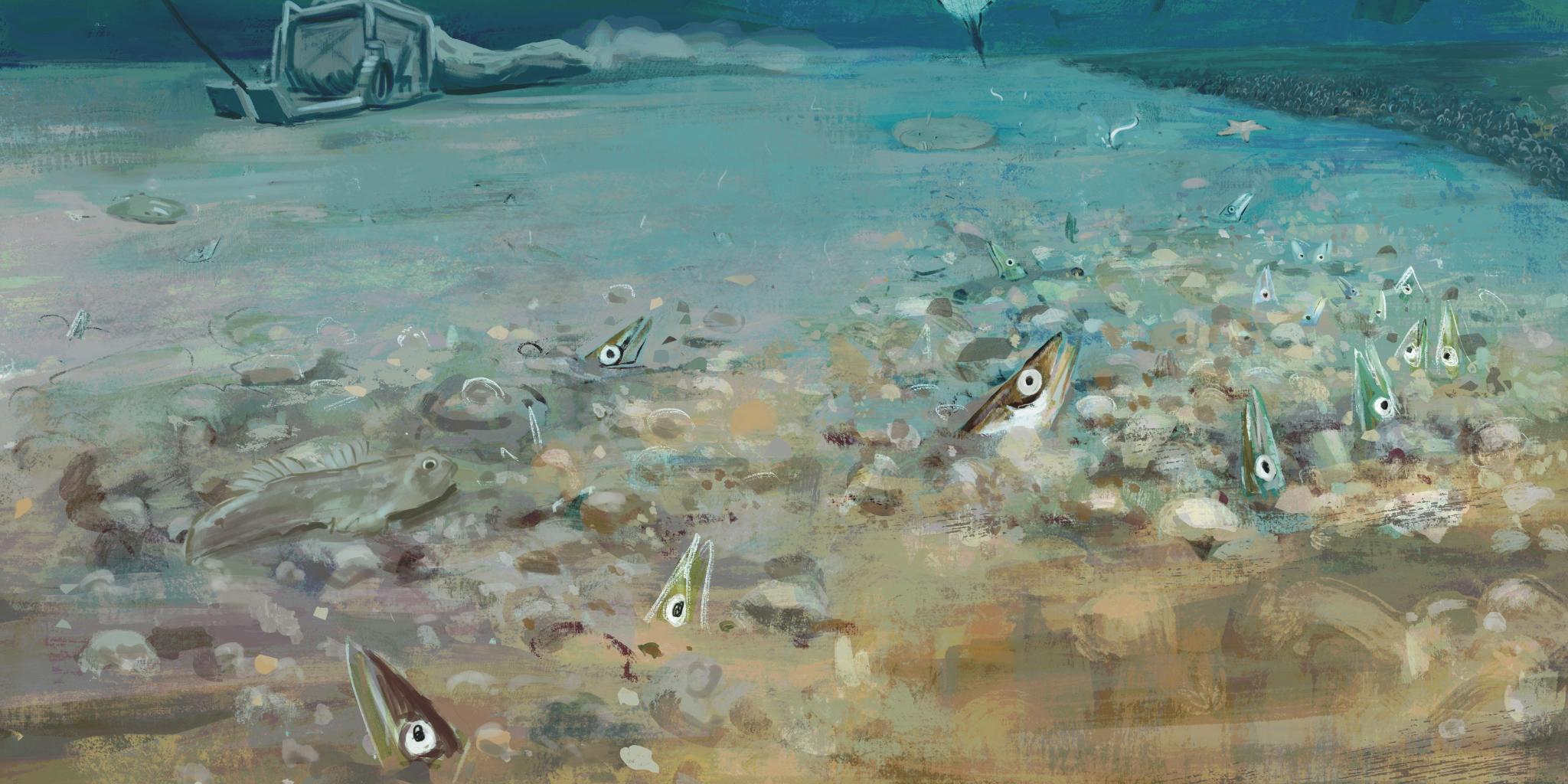
'Getting to the bottom of demersal fish', thesis cover Bram Parmentier
Small fish such as sandeels are food for seabirds, harbour porpoises and larger fish. Yet we still know relatively little about where they live and when predators can reach them. NIOZ PhD candidate Bram Parmentier studied these fish using fine-meshed seabed dredges. He will defend his PhD thesis titled 'Getting to the bottom of demersal fish - Distribution, diurnal behaviour, and energetic characteristics of sandeel and other prey fishes in the Dutch North Sea' at Wageningen University & Research on 7 October.
Many North Sea fish surveys use nets designed primarily to catch larger, commercially important species. Small fish living on or in the seabed are less effectively sampled by these nets. Bram used data from fine-meshed seabed dredges to study their distribution in the southern North Sea.
His estimates of small fish biomass on the seabed are higher than earlier estimates based on trawl surveys. This difference shows how much the choice of sampling method matters. It does not mean that fish populations have increased, or that predators have enough food everywhere.
Bram also studied two sandeel species. One was found mainly farther offshore, while the other was more common closer to the coast. Both were less often found in the seabed around midday than in the evening. This matters, because some predators catch sandeels in the water, while others forage for them at the seabed. The amount of energy these fish provide as food also changes with the season.
The research gives us a more detailed picture of small fish within the North Sea food web. It can help researchers investigate how changes in these fish affect the animals that depend on them.
Linked staff
Rob Witbaard
Scientist


Practical information
Bram Parmentier will defend his thesis on 7 October 2026 at 13:00, at Wageningen University and Research.
'Getting to the bottom of demersal fish', thesis cover Bram Parmentier