7.4 million euros for research into the interplay between life and our planet
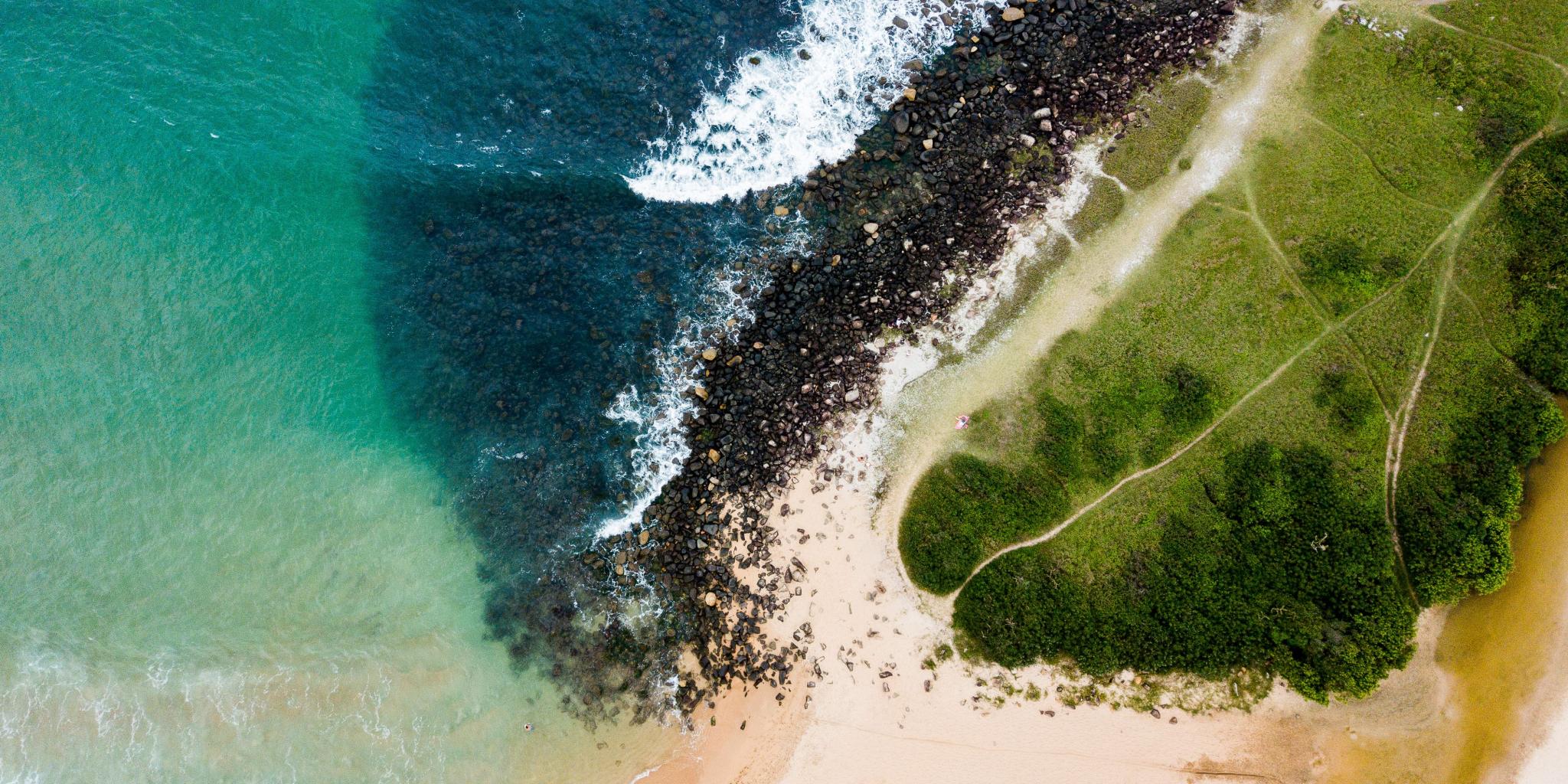
(photo: Pexels/Riccifilm)
A large Dutch research consortium in which NIOZ participates, has received an NWA-ORC funding of 7.4 million euros. The consortium, under the name ‘Living Planet’ and led by Prof. Dr. Martijn Egas (Groningen University), will focus on interdisciplinary research into the past, present and future of life and the Earth. NIOZ researchers Sabine Gollner and Anja Spang will be involved in leading different work packages in the project.
Life and the Earth have shaped one another throughout history. Whilst conditions on Earth influence how life evolves, living organisms also alter the climate, the atmosphere and the geology. The Living Planet consortium aims to study this reciprocal relationship in the past, present and future.
By combining biology, geology and planetary science, the researchers in the consortium aim to understand how Earth’s conditions affect the element cycles of organisms and communities, how life influences chemical and rock cycles, how this alters planetary conditions, and what traces of life this leaves behind. This knowledge helps to predict the future of the Earth and to search for life beyond Earth.
Within Living Planet, two NIOZ researchers are leading work packages focusing on different subjects within the consortium. Anja Spang leads a project on the coevolution of life and earth, in which the researchers will study the evolution of key transitions in cellular evolution in light of Earth history. One of the main outcomes shall be a geologically dated tree of life comprising all major archaeal, bacterial and eukaryotic lineages.
Sabine Gollner will co-lead a study together with Antony van der Ent (WUR) a study on the role of metals in animal evolution. In this study, also NIOZ researchers Peter Kraal and Pierre Offre are involved. They use metal rich deep-sea hydrothermal vents as natural laboratories to investigate how metal accumulation varies among marine animals and how environmental conditions and associated microorganisms influence this process. This will help to better understand the role of animals in metal cycling and the resilience of animals to metal pollution.
Consortium partners
The Living Planet consortium is led by Prof. Dr. Martijn Egas from Groningen University, the other partners in the consortium are Firma Kluit, Leiden University for Applied Sciences, Amsterdam University for Applied Sciences, Windesheim University of Applied Sciences, Royal Netherlands Academy of Arts and Science (KNAW), Maastricht University, Naturalis Biodiversity Centre, Next Nature, NWO-I, Radboud University, Taxon Expeditions, Delft University, Leiden University, Utrecht University, University of Amsterdam, Vrije Universiteit Amsterdam, WAAG Technology and Society, Wageningen University and Research.
About NWA-ORC
The National Science Agenda (NWA) arose from questions posed by members of the public about the world and the societal challenges of today and tomorrow. In the NWA programme, the connection between science and society is essential. The ‘Research on Pathways through Consortia’ (ORC) programme encourages researchers to collaborate with knowledge institutions and societal partners. In this way, knowledge derived from research is channelled into policy and practice. In this round of funding, eleven consortia received approximately 7.4 million euros each.
Linked staff
Anja Spang
Senior Research Leader

Sabine Gollner
Senior Scientist
Peter Kraal
Senior Scientist
Pierre Offre
Senior Scientist