When scientists meet chefs: talking about sustainable fish in restaurants
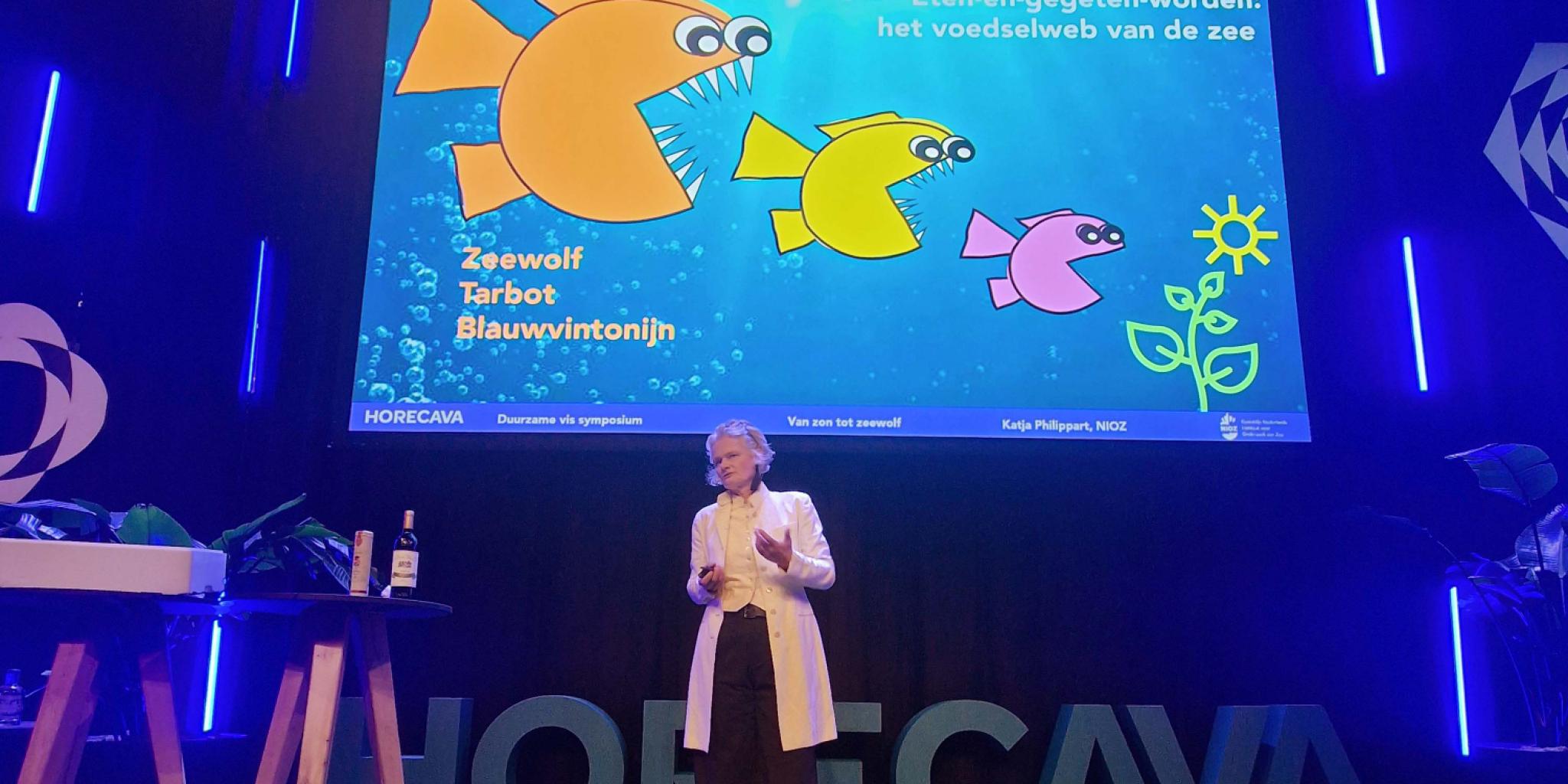
Katja Philippart giving a lecture about the food web.
Ask a chef how old the fish is that he serves, and chances are the answer will be something like ‘2 days’: that’s when the fish was caught. More often than not, both the chef and dinner guest don’t know that that piece of sole or turbot can easily be 20 years old! At the Dutch hospitality conference Horecava, NIOZ researchers and chefs discussed how to work towards more sustainable fish in the culinary world.
On Monday 13 January, NIOZ researchers Anieke van Leeuwen, Katja Phillipart en Kees Camphuijsen shared their knowledge with chefs and others from the aquaculture and culinary industry at Horecava Sustainable Fish Symposium. Joining forces with Michelin star chef Jef Schuur, they urged their audience to ask more questions about the fish they use. Serving something like turbot, blue fin tuna or sole that take so long to grow and also to reproduce, is not very beneficial to sustaining the population. And that is something we are already seeing in fish stocks worldwide.
Sustainable options
So, what should chefs do, which fish species should and shouldn’t they serve? There’s no clear answer to that question. But you can make more sustainable choices, explained Camphuijsen, Philippart and Van Leeuwen in their lectures. In short:
- Use species that have a faster life cycle more often, so the fish will have had the chance to reproduce a few times before being caught.
- Choose species lower in the food web, so shellfish or plant-eating fish over predatory fish
- When using fish from aquaculture, think about what those fish have been fed: a farmed salmon still has to eat fish protein, which can still come from wild fish.
- Be creative: think if you can maybe use some of the bycatch as well!
Luxury versus sustainability
After the presentations by the researchers, a lively discussion ensued with the audience. A challenge for chefs, especially in fine dining, is to strike a balance between guests who expect those ‘luxurious’ fish species, often the long-lived predators or even the endangered eel, and making a more conscious, sustainable choice for less-known fish. But, as organizing chef Schuur put it: ‘If all of us become more aware, and take just one small step, look at how many are taken!’
Inspirational dishes
To give an example what you can do when you opt for more sustainable seafood, Jef Schuur and his colleague Edwin Vinke prepared two small dishes, using razor clams and whelks: both shellfish, so low in the food web, and species that are not overly fished on so there still is a healthy population. And not very expensive, which is, of course, for restaurants also an important factor when setting a menu.
Camphuijsen, Philippart and Van Leeuwen, together with chef Schuur, look back on a successful first edition of the symposium. They left a room full of culinary professionals with their bellies full, aware of the complexity of fish life cycles and the urgency to look at the fish on our plates differently, but also inspired to make more sustainable choices.
Linked staff
Anieke van Leeuwen
Senior Scientist

Katja Philippart
Research Leader
