Veni grant for research into evolution of archaea

(photo: Pexels/Markos Torpillas)
Julian Vosseberg received a Veni grant to study the evolution of archaea. By characterizing similar genetic changes in their evolution, he aims to enlighten the predictability of the evolution process. Vosseberg currently works at Wageningen University, but he will execute the Veni research project at the Royal Netherlands Institute for Sea Research (NIOZ).
On 16 July, Dutch Research Council NWO announced this year’s round of Veni grants. The Veni is a personal scientific grant aimed at researchers who have recently obtained their PhD. Each researcher receives up to 320,000 euros. The grant is designed to encourage adventurous, talented and pioneering researchers to further develop their own research ideas over the next three years.
Predictability of archaeal evolution
Julian Vosseberg receives his grant to start a research project at NIOZ, focussing on the evolution of archaea. Relatively little is known about this, even though these microbes include the ancestors of complex, eukaryotic cells. Vosseberg will study the predictability of the evolution of archaea by characterising the same genetic changes that have occurred multiple times independently. The role of the environment in these recurrent events will be illuminated by combining these with a reconstruction of major ecological transitions. The project will thus provide insights into the adaptability of microbes, their deep evolutionary roots and the origin of complex organisms.
Vosseberg: “This grant enables me to establish my own research line on more ancient events than I have studied before. My research is driven by fundamental questions how life on Earth has evolved into the breathtaking diversity that we see today. I am looking forward to working together with leading experts in marine microbiology at the NIOZ.”
About the Veni grants
The Veni grants are awarded annually by NWO. The 205 grants from the 2025 Veni round are divided between 59 in Science (ENW), 81 in Social Sciences and Humanities (SSH), 30 in Applied and Engineering Sciences (AES), and 35 grants at ZonMw. The range of subjects for the awarded projects is large: from research into how to get the brain working again in Alzheimer’s patients to the development of special molecules that convert plastic into soap. But this Veni round also addresses issues such as bridging the gap between AI theory and practice, or the protection of displaced cultural heritage under international law.
About Julian Vosseberg
Julian Vosseberg will start his Veni project on predictability in archaeal evolution at NIOZ. He is currently working at Wageningen University & Research.
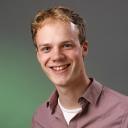
Julian Vosseberg