Strategic Funding Boosts Marine Robotics at NIOZ
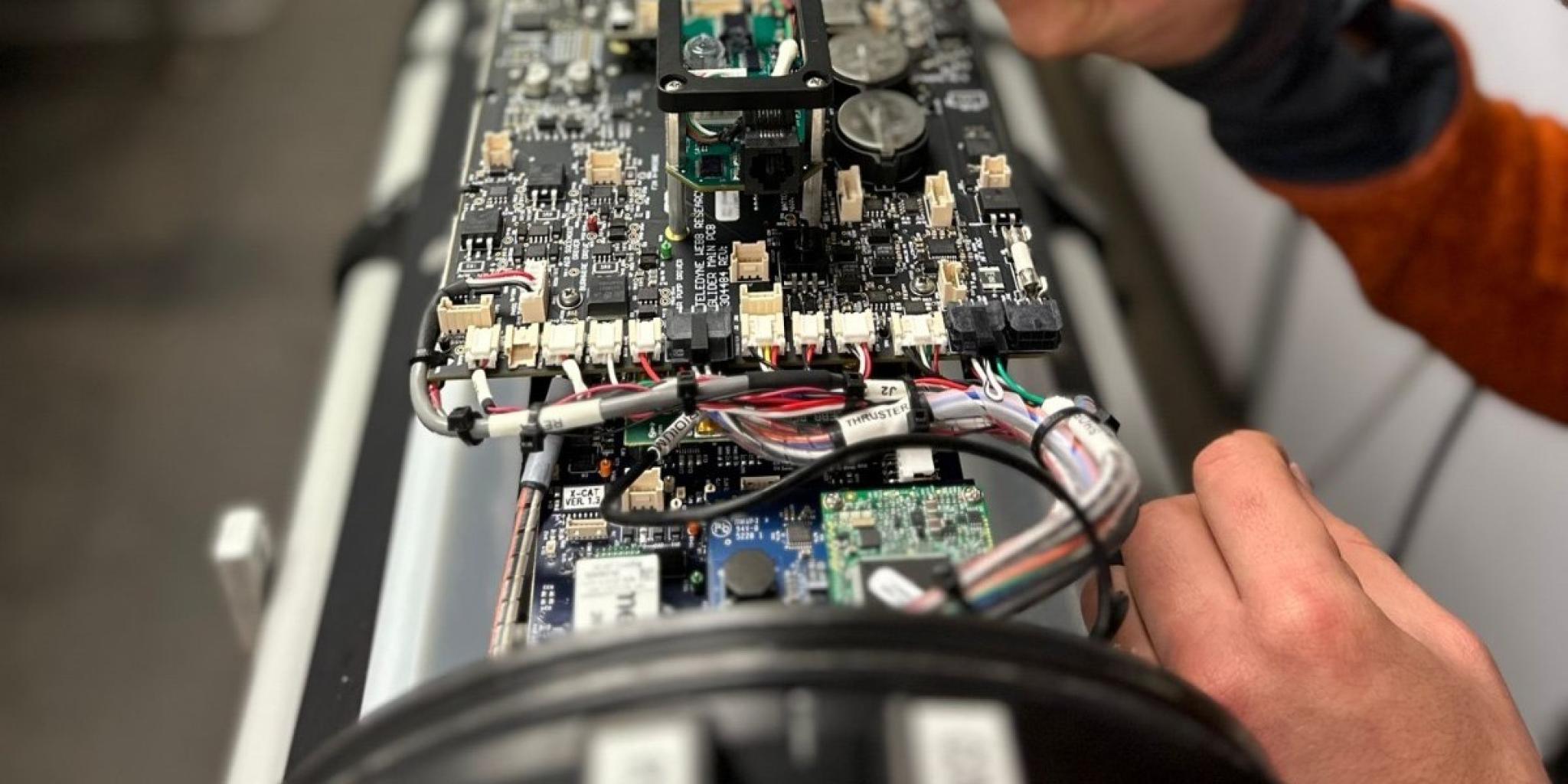
NIOZ glider from the inside. (photo: NIOZ)
The NIOZ has been awarded €2,891,000 from the NWO-I Strategic Innovation Fund 2025. This funding is a significant step forward in the project "Transitions in Oceanographic Research: A New Ship and Autonomous Vessel Development", which aims to strengthen the Dutch marine research community through innovation and collaboration.
Marine Robotics center
At the heart of the project is the establishment of a new Marine Robotics Center within NIOZ. This center will focus on further developing and deploying innovative technologies such as gliders, an Autonomous Underwater Vehicle (AUV), a Remotely Operated Vehicle (ROV) and an Uncrewed Surface Vehicle (USV). These new autonomous technologies will facilitate a major transition in how oceanographic research is performed.
The Marine Robotics Center will also support the integration of autonomous capabilities in the operations of RV Anna Weber-van Bosse, the new national state-of-the-art research vessel that will become operational in 2026. Together with autonomous vehicles such as gliders and an Autonomous Underwater Vehicle, the ship will form the core of an innovative research program aimed at studying oceanographic processes and climate change.
Gert-Jan Reichart, department head of Ocean Systems says:
“The establishment of a Marine Robotics Center represents a strategic investment in innovative technology that enhances our ability to study the ocean while reducing the environmental footprint of our research. By integrating autonomous vehicles into our work, we are setting a new standard for conducting marine science in a more sustainable way.”
Interdepartmental collaboration
NIOZ’s National Marine Facilities (NMF) department, which plays a key role in managing the research fleet and equipment, will provide technical support for the program. Together with the scientists, in the new center NMF ensures that the infrastructure and expertise are ready to fully leverage these new technologies.
“By providing the tools and support for these cutting-edge technologies, NMF enables more efficient and innovative research at sea. Together with the scientists, we are making the next generation of marine science possible”, explains Aarnoud van de Burgt, head of NMF.
Joint programs with universities
This funding underscores the importance of collaboration and innovation in oceanographic research. The project also offers opportunities for universities to engage in joint projects and expedition programs.

NIOZ glider from the inside. (photo: NIOZ)
Linked staff
Gert-Jan Reichart
Head of Ocean Systems

NIOZ gliders
NIOZ gliders