Shrimp fishing may be harmful to protected nature after all
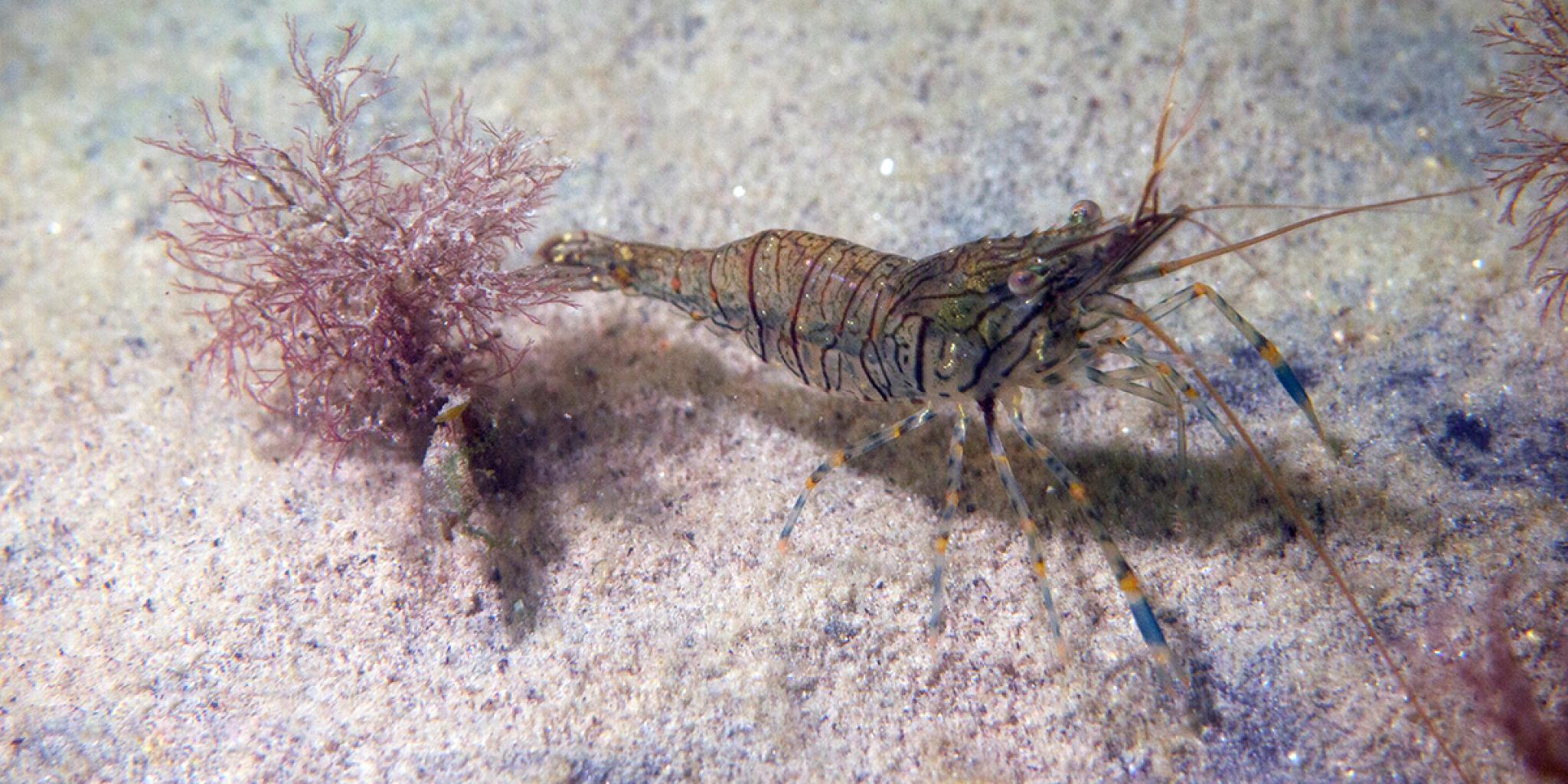
Picture of a shrimp (photo: Annette Bouwels)
Five questions and answers about fishing in Natura 2000 areas and the role of science in this regard.
Why is there concern now about fishing that has been taking place in the Wadden Sea and the North Sea coastal zone for many decades?
In 2016, Dutch shrimp fishermen were granted a six-year license to fish in various Natura 2000 areas, including the Wadden Sea. This license expired on 31 December 2022. The Ministry of Agriculture, Nature and Food Quality intended to grant the fishermen another six-year license. However, Rijkswaterstaat, the administrator of the Wadden Sea, among other areas, questioned the so-called Appropriate Assessment that the fishermen had submitted with their license application. Rijkswaterstaat had an evaluation by Ecological consultancy Altenburg en Wymenga, which did not correspond with this Appropriate Assessment. This evaluation describes the harmful effects of shrimp fishing on the bottom life in the Wadden Sea.
The ministry has now decided not to grant a new license for shrimp fishing, but to tolerate it for nine months. During this period, the sector must reduce its nitrogen emissions. The “tolerance decision” says nothing about the ecological effects. A coalition of 15 nature conservation organisations has now also lodged an objection to this tolerance decision.
What is the role of science in this dossier?
Because the reports from A&W and the shrimp fishing industry contradict each other, Rijkswaterstaat has asked the independent scientists of the Wadden Academy to reflect on the Appropriate Assessment. The Wadden Academy has asked scientists from NIOZ, the University of Groningen, Tilburg University and the Flemish Institute for Agricultural, Fisheries and Food Research, with expertise in the fields of seabed ecology, fisheries and law, to examine whether all available scientific data had been included in the Appropriate Assessment and whether that data had been correctly interpreted in accordance with current scientific standards.
In their reflection, these independent scientists conclude that there are significant gaps in the Appropriate Assessment.
What is the objection to a new license for shrimp fishermen?
In the Appropriate Assessment, the shrimp fishermen argue that it has not been demonstrated that fishing with shrimp gear – a fine-meshed net with a so-called bobbin line in front of it – causes damage to the nature of the Wadden Sea or the North Sea. In their reflections on the Appropriate Assessment, various scientists question this assertion. The main objection is that the burden of proof has been reversed. The Appropriate Assessment states that there is no evidence that shrimp fishing is so harmful that it threatens the preservation of the Wadden Sea's natural environment. However, in order to be allowed to fish in protected Natura 2000 areas, fishermen are required by law to prove that their activities are harmless to nature and do not jeopardise the achievement of nature conservation objectives in the area. Moreover, scientists do see evidence that shrimp fishing is harmful.
What are the specific risks of shrimp fishing?
The scientists consulted by the Wadden Academy have particular concerns about bottom disturbance and bycatch. Although shrimp gear is relatively light, it repeatedly drags across the bottom of potentially vulnerable nature areas. Among other things, the scientists express their concerns about the effects of trawl nets on the establishment of new mussel beds or seagrass beds. According to European regulations, both are subject to a “restoration task”. It cannot be ruled out that shrimp fishing will hinder this restoration task.
There are also concerns about the possible positive effects of fishing on the American razor clam, an invasive exotic shellfish species. The razor clam seems to appear more frequently in areas of the seabed that are disturbed by shrimp gear. In this way, shrimp fishing could indirectly harm native shellfish species such as cockles and nonnetjes, as they may face competition from the razor clam.
What does legal science say?
In their reflection on the Appropriate Assessment, the scientists mainly ask questions. Questions to which there are no clear answers in the Appropriate Assessment. It is therefore impossible to say with certainty whether shrimp fishing is harmless to the seabed of the nature reserves concerned and the associated natural values. Nor can it be said with certainty that by-catches from shrimp fishing have no impact on the conservation of other animal species. In that case, the law states that there is “reasonable doubt” about the effects. As long as that doubt remains, according to the same law, no license should be granted.
Linked staff
Tjisse van der Heide
Senior Research Leader