Shifting Sand: benthos-sediment interactions in coastal ecosystems
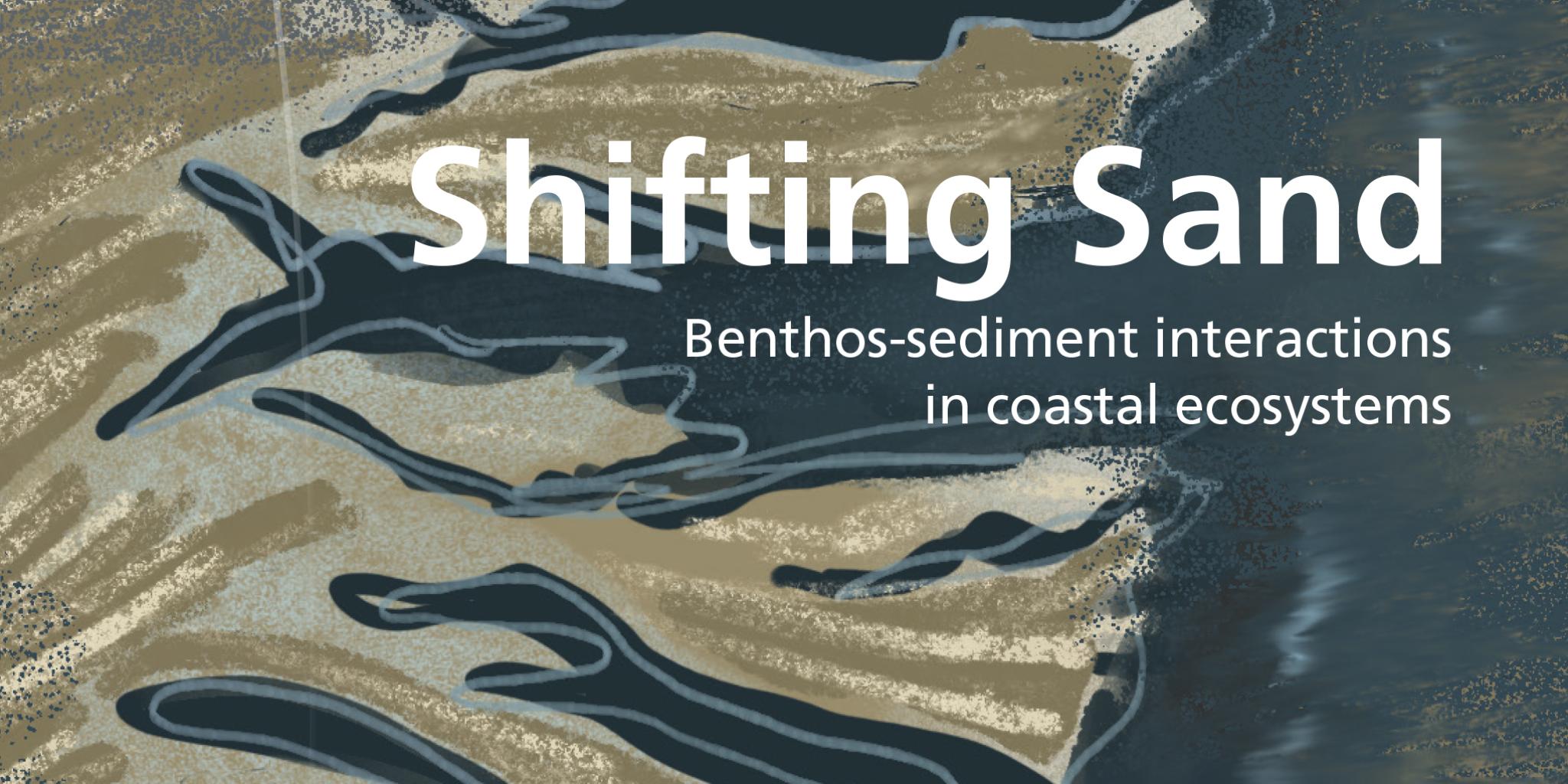
Thesis cover by Tjitske Kooistra
Sand nourishments are often used to control the constant reshaping of coastlines, and thus protect our coastal areas. But how does adding sand on and near beaches influence the ecosystem, specifically the organisms living in the sea floor? And vice versa, since these animals also act as engineers of their environment. In her PhD research, Tjitske Kooistra focused on this mutual influence between benthic animals and the sediment they live in. She will defend her thesis on 26 June at Utrecht University.
Short summary
Coastlines are constantly reshaping. This dynamic can partially be controlled by adding sand on and near beaches. But how do such sand nourishments interact with the ecosystem? The invertebrate animals living in the sea floor, or benthos, fulfil important roles in coastal marine ecosystems, such as the Wadden Sea. They are strongly linked to the sediment composition of the seafloor. But the relationship goes both ways: these animals aren't just passive residents; they can also actively engineer their environment.
So, how sensitive are benthic animals exactly to changes in sediment composition? Does this change when they also experience additional stress, for instance by heatwaves? And how much do benthic animals influence the horizontal and vertical transport of sediment particles? These questions were central to Kooistra’s research.
Many animals are quite tolerant to different sediments, but the intertidal is still sandier than optimal for them. Such sandy sediment resulted in lower survival and ability to move for the mudloving peppery furrow clam. Even after clams die, their shells can limit the transport of sand. Finally, animals mix mud particles more easily than sand grains by their burrowing and feeding activity.
This thesis sheds light on the tight feedback between sediments and benthos. As we manage the sand on our coasts, we should not forget the living foundations of the coastal ecosystems.
Shifting sands
A video impression by Tjitske Kooistra
Cookies required
Analytics and Marketing cookies are required to display this content.
Watch video in a new tabLinked staff
Tjitske Kooistra
Postdoc

Karline Soetaert
Research Leader

Tjeerd Bouma
Senior Research Leader
Practical information
Tjitske Kooistra will defend her thesis 'Shifting Sand: benthos-sediment interactions in coastal ecosystems' on 26 June 2026, at 14:00 at Utrecht University
Thesis cover by Tjitske Kooistra