Self-organized landscape patterns help plants cope with climate change
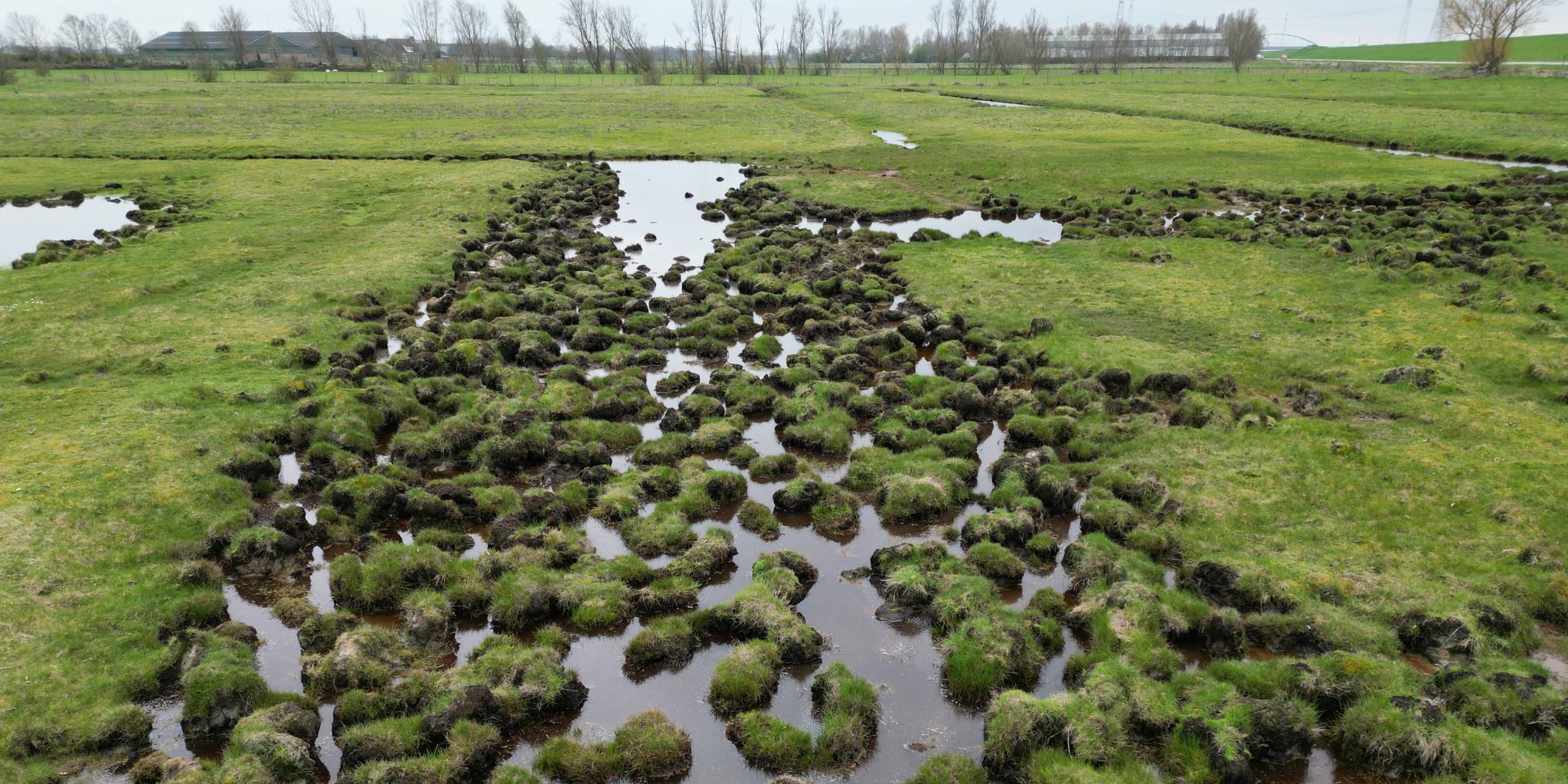
A saline meadow near Yerseke in the Netherlands, where plants grow on raised mounds called hummocks, separated by lower, largely unvegetated hollows (photo: Mingxuan Wu/NIOZ)
New research shows how natural patterns in coastal meadows redistribute salt stress, helping vegetation remain productive under increasingly saline conditions.
As climate change and sea-level rise increase salinization in coastal areas, some ecosystems may have a natural way of protecting themselves. Researchers from the Royal Netherlands Institute for Sea Research (NIOZ) and partner institutes have discovered how self-organized patterns in a coastal meadow redistribute salt stress across the landscape, creating favourable conditions for plant growth.
The study, led by NIOZ researcher Dr Mingxuan Wu and published in Science Advances on September 30th 2026, provides field evidence for a previously underappreciated mechanism through which natural spatial patterns can increase ecosystem resilience against climate-linked stress.
Some places take the stress
The researchers studied a saline meadow near Yerseke in the Netherlands, where plants grow on raised mounds called hummocks, separated by lower, largely unvegetated hollows.
They found that rainfall helps move salt away from the hummocks towards the lower hollows. As a result, the hummocks become relatively low-salinity refuges for plants, while more salt accumulates in the hollows.
“What surprised us was how much the apparently unproductive hollows contribute to the whole meadow,” says Dr Wu. “By accumulating salt, they help keep the vegetated hummocks less saline, allowing plants to thrive and produce more seeds while enhancing the resilience of the whole ecosystem.”
The effect is visible in the vegetation. Plants growing on the patterned hummocks produced more biomass and more seeds than the same vegetation in an adjacent meadow without these patterns. They also remained green and active for two to three weeks longer. Even when the bare hollows were included in this comparison, the patterned meadow showed greater vegetation activity overall.
Redistributing stress instead of resources
Until now, much of the research into self-organized ecosystems has focused on how natural patterns concentrate scarce resources such as water or nutrients in places where plants can benefit from them. The new study demonstrates a different mechanism: these patterns can also improve growing conditions by shifting salt away from the places where plants grow.
The researchers combined field measurements, experiments, remote sensing and mathematical modelling. Their model also indicates that patterned vegetation can persist under higher levels of salinity and may recover more quickly after a sudden increase in salt stress.
“Ecosystems are much better able to adjust to climate-change-induced stresses than we previously thought. Essential is that we allow these ecosystems to change naturally, adjusting their spatial arrangement. In our salty meadow system, that means developing hummock patterns”, says co-author Dr Johan van de Koppel.
A lesson for ecosystem restoration
The findings may also have practical relevance for the restoration and management of landscapes affected by climate change. Restoration often focuses on restoring species or vegetation, while the natural feedback processes that organize the spatial configuration and patterning of the landscape can be overlooked.
The study suggests that preserving or restoring these natural patterns, and the feedback processes that create them, could help ecosystems cope with stresses such as salinization. The researchers stress that further research is needed to determine how widely the mechanism applies and how it can best be used in restoration practice.
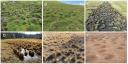
Different types of hummocks across a range of ecosystems (photos: Mingxuan Wu/NIOZ)
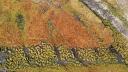
A meadow of contrasting landscape in Yerseke (photo: Mingxuan Wu).
Linked staff
Johan van de Koppel
Research Leader

Jim van Belzen
Senior Scientist

Tjeerd Bouma
Senior Research Leader
Publication:
“Self-organized hummock-hollow patterns redistribute salinity stress in coastal meadows” by Wu et al. will be published in Science Advances on 30 September 2026

Screenshot of the featured image on the Science Advances homepage