Selectively breeding sterile sugar kelp

'Selectively breeding sterile sugar kelp', a thesis by Job Cohen.
Seaweed cultivation has gained increasing interest as a sustainable resource for food production and the emerging biobased economy. But despite its potential, the economic viability of seaweed farming remains a major challenge. NIOZ PhD-candidate Job Cohen studied how cultivar development through selective breeding could help overcome this challenge. His dissertation named “Selectively breeding sterile sugar kelp” explores next steps in advancing sugar kelp (Saccharina latissima) breeding. Job Cohen is defending his thesis on 24 November at the University of Groningen.
The first chapter of Cohen's dissertation explores the potential of incorporating worldwide genetic resources into breeding programs. Sugar kelp from different regions were successfully crossed, and hybrids between geographically distant populations generally outperformed their parent lines and displayed substantial morphological variation. These findings show the potential of global resources to broaden the genetic basis of breeding programs and improve important traits.
Next, the practical challenges associated with breeding were addressed. Experiments investigated whether adjusting seeding practices could reduce differences in sporophyte density commonly observed between crosses, enabling more comparable evaluations, and whether early-stage traits could predict farm performance and accelerate breeding cycles. Differences in density persisted despite adjustments to seeding practices, suggesting that blade density may be genetically determined. Early-stage traits measured under controlled conditions poorly predicted farm performance, highlighting the influence of genotype × environment interactions.
Finally, the development of non-reproductive sugar kelp using antimitotic agents, chemicals that interfere with cell division, was explored as a potential way to mitigate ecological risks associated with introducing non-local genetic resources. Although the methods tested are not yet suitable for large-scale production, the findings provide a foundation for future research.
Together, this work reveals opportunities to expand the genetic potential of sugar kelp breeding while highlighting the challenges of developing cultivars adapted to specific environments and enabling the safe use of global genetic resources.
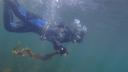
Collecting sugar kelp (Saccharina latissima) in Norway (photo: Job Cohen).
Linked staff
Karline Soetaert
Research Leader

Practical information
Job Cohen will defend his thesis on 24 November 2026 at 14:30, at the University of Groningen.
'Selectively breeding sterile sugar kelp', a thesis by Job Cohen.