Reconstructing 38 million years of surface seawater change

Cover of the PhD thesis by Katrin Hättig
The ocean and global water cycle have changed considerably throughout Earth's history. For her PhD research, Katrin Hättig used marine sediment cores recovered from the ocean floor to reconstruct these changes over the past 38 million years using the chemical composition of alkenones—organic compounds produced by microscopic algae living in the ocean. She defends her thesis on 26 May 2026 at Utrecht University.
Short summary
This PhD research investigates how the ocean and the global water cycle have changed in the past 38 million years. To do this, marine sediment cores collected from the ocean floor are used as archives of Earth's climate history. The sediments contain alkenones—organic compounds produced by microscopic algae living in the surface ocean—whose isotopic signature can be used to reconstruct past seawater conditions.
The hydrogen isotopes (δ²H) in these compounds provide a reliable indicator of the isotopic composition of surface seawater. This makes it possible to reconstruct how processes such as evaporation, precipitation, freshwater input and ocean circulation have influenced the ocean over time. When combined with other climate indicators, this approach also helps to distinguish between regional changes in the water cycle and larger-scale changes, such as variations in global ice volume.
The research further shows that signals from the ocean surface are not always transferred directly and unchanged into marine sediments. Biological activity and transport processes can modify these signals, which is important for correctly interpreting ocean-based climate archives.
Overall, this work improves our understanding of how the ocean responds to climate change. Since the ocean plays a key role in the Earth’s climate system, these findings help to better understand past climate variability and provide insights relevant for future climate change.
Linked staff

Practical information
Kattrin Hättig defends her thesis on 26 May 2026 at 10:15, in the Academy Building of Utrecht University
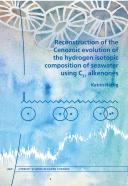
Cover of the PhD thesis by Katrin Hättig