Part III of the NIOZ 150 Colloquium Series: Atlantic ocean circulation, a dangerous tipping point for European climate?
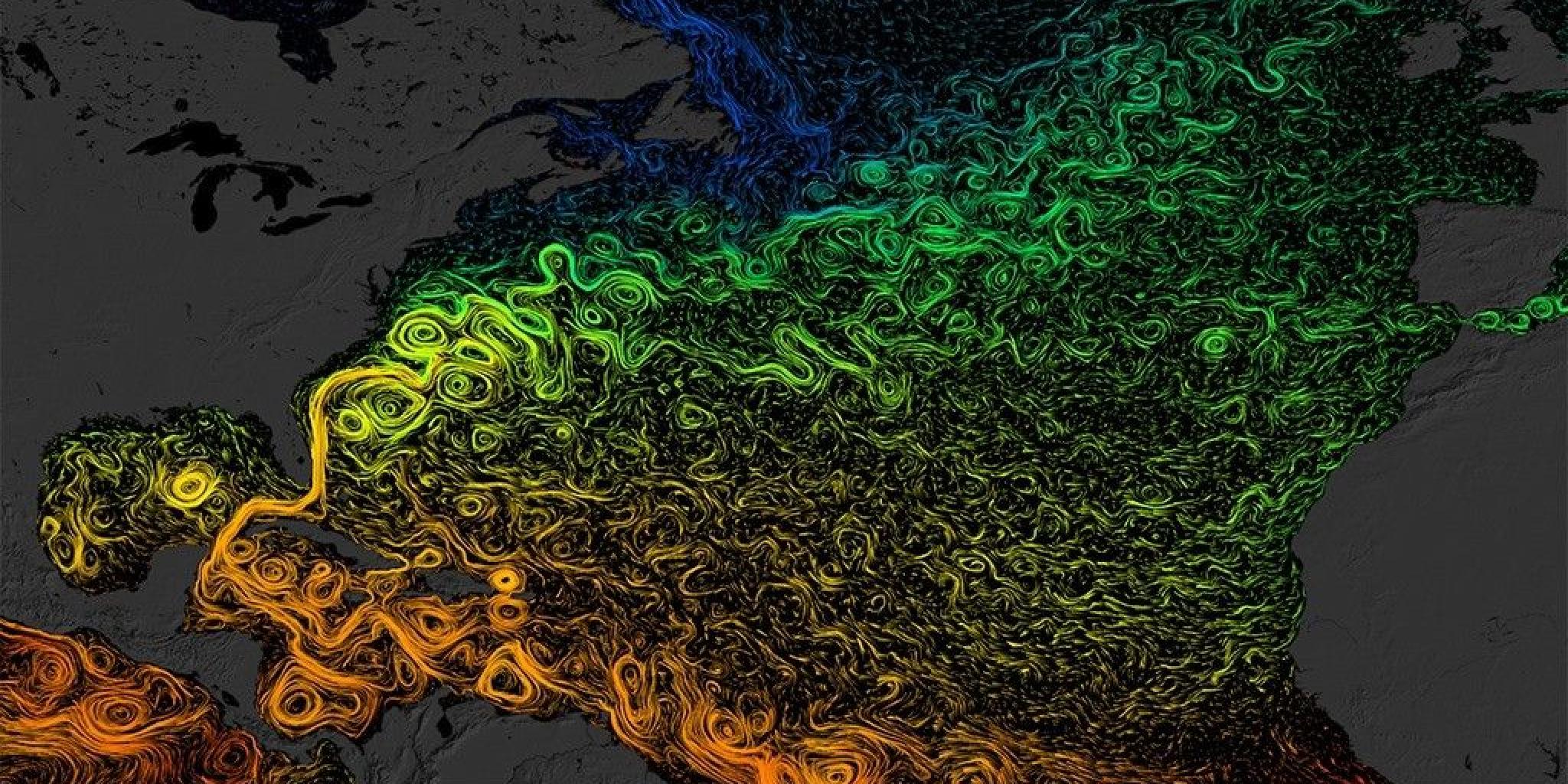
Visualization of ocean currents in the North Atlantic. The colors show sea surface temperature, where orange and yellow are warmer, green and blue are colder. (NASA Goddard Space Flight Center)
As part of the special lecture series celebrating the 150th anniversary of NIOZ, Prof. Stefan Rahmstorf joined us as keynote speaker for a discussion on one of the most important and uncertain elements of our changing climate: the Atlantic Meridional Overturning Circulation (AMOC).
Prof. Rahmstorf is Professor of Physics of the Oceans at the University of Potsdam and a senior scientist at the Potsdam Institute for Climate Impact Research (PIK) in Germany. His research focuses on ocean circulation, sea-level rise and abrupt climate change, with particular attention to tipping elements in the Earth system.
The ocean in our climate system
Prof. Rahmstorf began his presentation by explaining the fundamental role of ocean circulation in the global climate system. In recent decades, much of his research has focused on the AMOC and how this major system of Atlantic Ocean currents is responding to climate change. The AMOC transports enormous amounts of heat northwards through the Atlantic and is therefore an important regulator of climate, particularly in Europe.
A central question of the lecture was: how is climate change affecting the AMOC? Prof. Rahmstorf presented evidence from observations, climate models and numerous scientific studies indicating that the AMOC is already weakening. He discussed the characteristic “fingerprint” associated with a slowdown and presented research suggesting that the circulation has weakened by approximately 15% over the past three decades.
What would an AMOC collapse mean?
The consequences of a major weakening or collapse of the AMOC would extend far beyond the Atlantic Ocean itself. For Europe, the effects could include substantial changes in temperatures and weather patterns, with particularly strong consequences for northern Europe, including Scandinavia and the Netherlands. Prof. Rahmstorf also emphasized that some of the largest global consequences could occur elsewhere. A major shift in tropical rainfall patterns, for example, could have profound impacts on societies and ecosystems far beyond Europe.
A weakening AMOC is one concern, but the possibility of crossing a tipping point raises the stakes considerably. Looking further into the past can provide important clues about what such abrupt changes might look like. Prof. Rahmstorf further discussed Heinrich events, periods in Earth's climate history associated with major releases of ice into the North Atlantic and significant changes in ocean circulation, as examples of how dramatically the Atlantic circulation system has changed in the past.
A measuring instrument being lowered from a research vessel to collect research data (photo: Femke de Jong - NIOZ)
How do we measure the AMOC?
Following Prof. Rahmstorf's presentation, NIOZ oceanographer and AMOC-specialist Dr. Femke de Jong broadened the conversation from climate projections to observations with a presentation on how scientists measure the AMOC. Although there is broad agreement that the AMOC is expected to weaken as the climate changes, determining exactly how much it is changing is challenging.
Femke de Jong explained how scientists combine different technologies to understand what is happening beneath the ocean surface. Current meters can measure the speed and direction of ocean currents at strategically selected locations, while satellites, autonomous ocean floats, gliders and moorings provide complementary observations across large and often difficult-to-access areas of the ocean.
No single measurement can provide the complete picture. Instead, understanding long-term changes in the AMOC requires combining observations from different instruments, locations and time periods. Femke brought the discussion to a fundamental question: how do we actually measure the AMOC?
Urgency and importance of continuing monitoring of the AMOC
Measuring such a large and dynamic ocean circulation system is far from straightforward. The AMOC varies considerably over time, which makes it difficult to distinguish long-term trends from natural variability. Scientists therefore rely on a combination of different observing methods, including current meters, satellites, autonomous ocean floats, gliders and moorings.
Femke emphasized that now is a particularly important time to continue monitoring the AMOC. Maintaining these observations over long periods requires sustained investment and, crucially, international collaboration. By bringing together measurements from different countries, research institutes and technologies, scientists can build a more complete picture of how the Atlantic circulation is changing and what this could mean for our future climate.
Coming up September 17: Colloquium part IV, with Dr. Michelle L. Taylor
This colloquium was the third in a series of five celebrating 150 years of NIOZ. Through these lectures, we aim to stimulate dialogue between disciplines, connect people and ideas, and strengthen the international scientific community surrounding NIOZ.
The series brings leading scientists to NIOZ to explore some of the most important questions facing ocean science today – from restoring marine ecosystems to understanding the changing ocean circulation and its consequences for our climate.
The next NIOZ 150 Colloquium will take place on the 17th of September. Our guest is Dr. Michelle Taylor, a marine geneticist, Head of Science at Ocean Census and Senior Lecturer at the University of Essex. The theme of this day is Accelerating Ocean Biodiversity Discovery: From Exploration to Conservation.
Linked staff
Femke de Jong
Senior Scientist