ORC Funding for impacts offshore wind farms North Sea
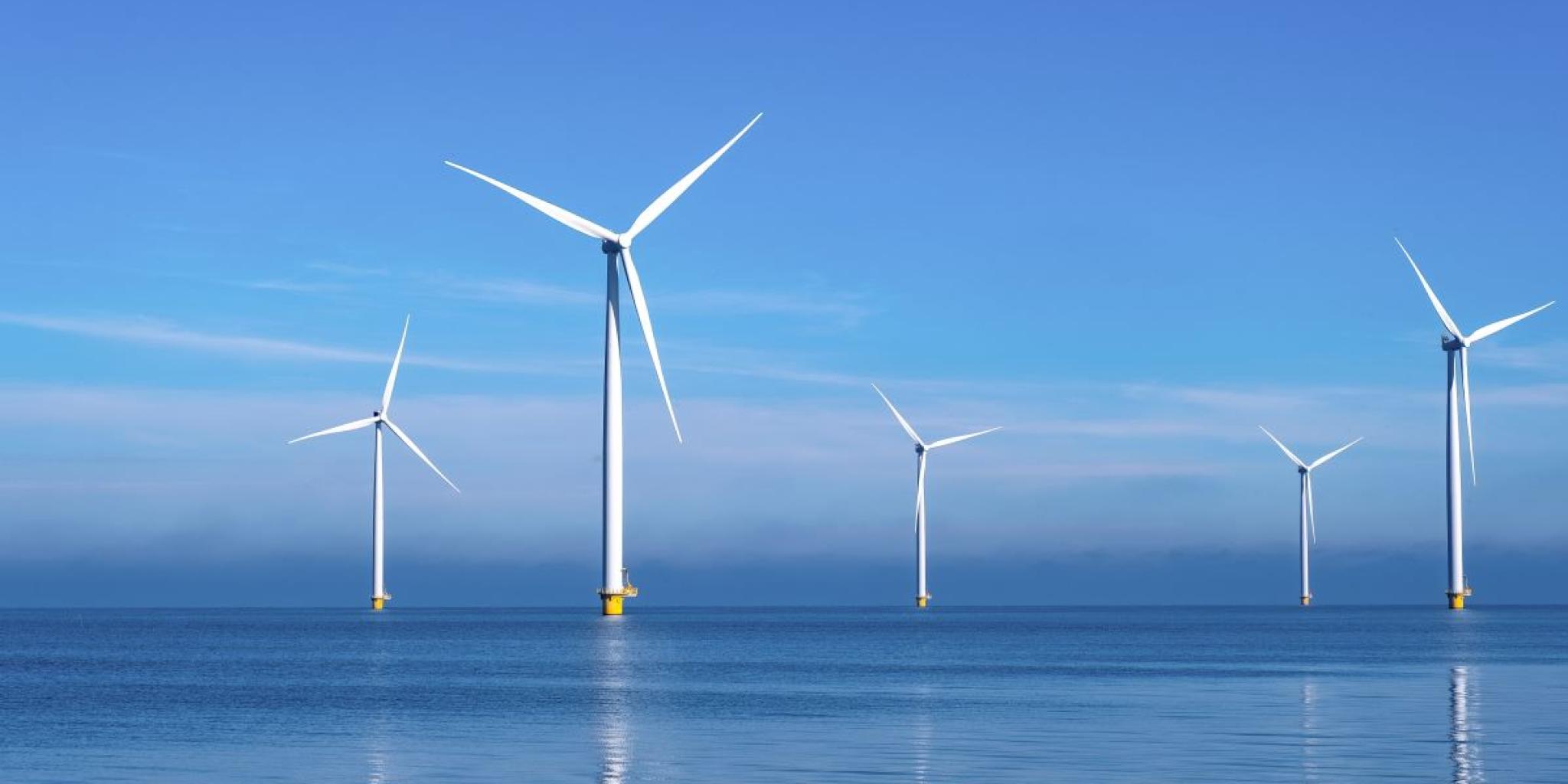
Offshore wind farm. (photo: Shutterstock)
A consortium of Dutch scientists start a five-year research project on the effects of offshore wind farms on North Sea ecology and economic activities. NWO awarded the NO REGRETS project 6.7 million euros. The program is coordinated by Myron Peck of NIOZ.
Changing ecosystem due to human activities
The construction of offshore wind farms, climate change, fishing and other human activities have a major impact on life in the North Sea: the marine ecosystem is changing with unprecedented speed and scale. The Netherlands has the ambition to expand wind energy production to 11.5 gigawatts (GW) by 2030 and to more than 70 GW by 2050. Other northern European countries have similar ambitions, generating many times more energy from wind by 2050 than they do today. The research project NO REGRETS will provide impactful scientific knowledge on the potential ecological impacts of this large-scale expansion in renewable energy generation in the North Sea.

Offshore wind farm. (photo: Shutterstock)
Understanding broad ecological impacts
Biological Oceanographer Prof. Myron Peck at the Royal Netherlands Institute for Sea Research (NIOZ) is the coordinator of the program. “Climate change and wind farms will interact to have multiple impacts on marine ecosystems. These include physical characteristics such as the flow of water, the way water layers mix, the amount of light penetrating the water and where and when nutrients are available. And these, in turn, directly affect marine life: the amount of planktonic plants and animals, the richness of bottom-dwelling consumers such as shellfish, to the health of top predators such as fish, birds and marine mammals.”
Much research has already been done on the effect of wind farms on some animal species, Peck says. “However, we lack a broader understanding such as potential changes to the whole food web - how, for example, wind farms can influence how energy moves through the system from phytoplankton to top predators. We need to make comparisons of these broader ecological aspects within, close to, and far outside of wind farms.”
In the coming years, the researchers will combine new scientific knowledge from research cruises and historical measurements to predict the potential changes of large-scale wind energy production and climate change on the productivity, biodiversity and other ecological aspects of the North Sea. Important as well is how these changes may translate to economic impacts on other sectors such as the fishing industry.
Future scenarios
Some of the work will involve computer modeling of possible future scenarios. In doing so, the researchers will be able to estimate what ecological trade-offs exist from different plans of upscaling offshore wind energy . Peck: “Right now, for example, some partners in our project have conducted modeling on the potential outcomes of shellfish farming and restoration in warmer North Sea waters expected in the future.”
An inevitable question will be what happens when the wind turbines are decommissioned after their decades of operation. “Wind farms affect marine life in several ways,” Peck says. “One way the alter the ecosystem is by providing new bottom habitats which host a greater variety of species. And as wind farm areas are closed to bottom trawling, you indirectly protect fish. So the question then is what you will destroy by removing turbines at the end of their lifespan.”
Concrete advice
Ultimately, Peck and his colleagues hope to provide the government, industry and other stakeholders with concrete advice on marine spatial planning of the North Sea. Peck: “For example, about the location of wind farms. Should you build them close to the coast or further away? And then are networks of wind farms best if they are close together, or do you spread them out? Another important sector is fishing. It is important for fishermen to know where they will be in a few decades and how they can possibly adapt in order to still be able to live off the sea in 30 years.”
Offshore wind farm. (photo: Shutterstock)
Research on routes by consortia
NO REGRETS is an acronym of ‘NOrth Sea Renewable Energy: Gaining the Required Ecological Knowledge for the TranSition’. It is a NWA-ORC project of the Blue Route (NWA 2023): Research on Routes by Consortia of the Dutch 'Nationale Wetenschapsagenda', a funding instrument of the Netherlands Organization for Scientific Research (NWO). The project involves 15 partners: 8 Dutch universities and 7 research institutes. In addition, there is collaboration with stakeholders such as Rijkswaterstaat and fisheries.
Linked staff
Myron Peck
Head of Coastal Systems