Ocean circulation patterns around Curaçao: From regional currents to coastal connectivity
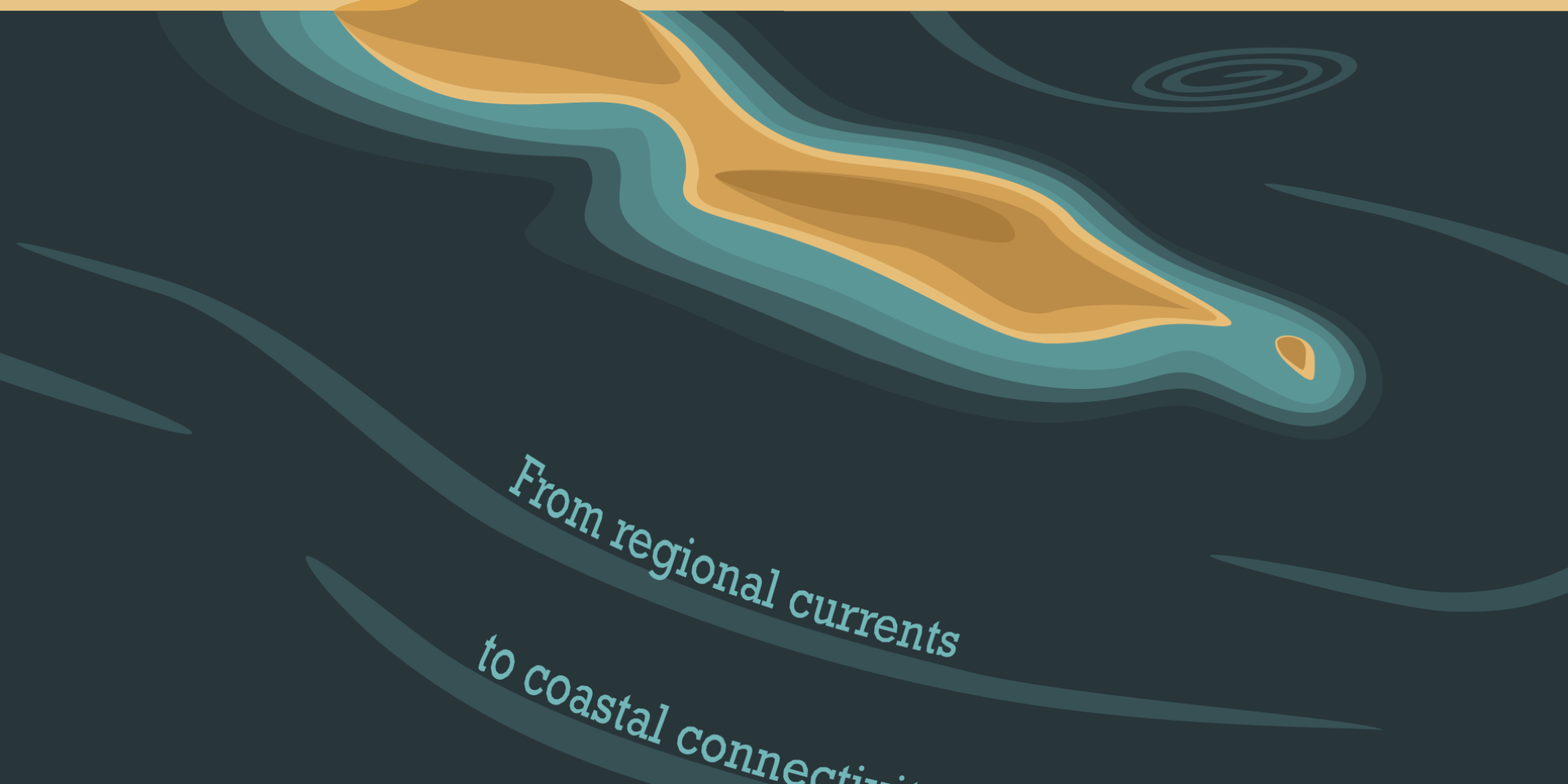
Cover of the PhD thesis Ocean Circulation Patterns Around Curaçao by Vesna Bertoncelj.
How do ocean currents shape the transport of nutrients, pollutants and other land-derived substances around islands, and what does this mean for vulnerable coral reefs? In her PhD thesis, Vesna Bertoncelj investigates the circulation patterns around Curaçao and how these influence coastal connectivity and coral reef ecosystems. Her research provides new insights that can support the protection and resilience of coral reefs in a changing climate. Vesna will defend her PhD thesis at Utrecht University on 28 May 2026.
Short summary
Ocean currents flowing around islands create local circulation patterns that control where pollutants and nutrients end up in coastal waters. Coral reefs are particularly vulnerable to these transport patterns: pollution carried by currents can reach reef areas far from its source, adding to the stress these biodiverse
ecosystems already face.
This PhD research investigates circulation patterns around Curaçao, a small Caribbean island whose southern coast is home to extensive coral reefs that have lost over half their coral cover since 1982. Using computational models, two different current regimes were identified around the island. During the dominant regime, driven by the Caribbean Current, land-derived substances are swept predominantly northwestward. During the second regime, weaker and more variable currents spread substances in all directions, potentially exposing reef areas that are otherwise protected.
These two regimes follow a seasonal cycle, providing a basis for predicting when reefs are most at risk. Crucially, the weaker current regime coincides with the wet season, combining increased rainfall-driven pollution with wider current dispersal across reef areas. Reducing land-based pollution during these vulnerable periods can help Curaçao's reefs build resilience in a changing climate.
Linked staff
Furu Mienis
Senior Scientist

Practical information
On May 28th at Utrecht University Vesna Bertoncelj will defend her thesis titled 'Ocean circulation patterns around Curaçao: From regional currents to coastal connectivity'.
Cover of the PhD thesis Ocean Circulation Patterns Around Curaçao by Vesna Bertoncelj.