Ω is not the end: drivers of marine carbonate mineral dissolution
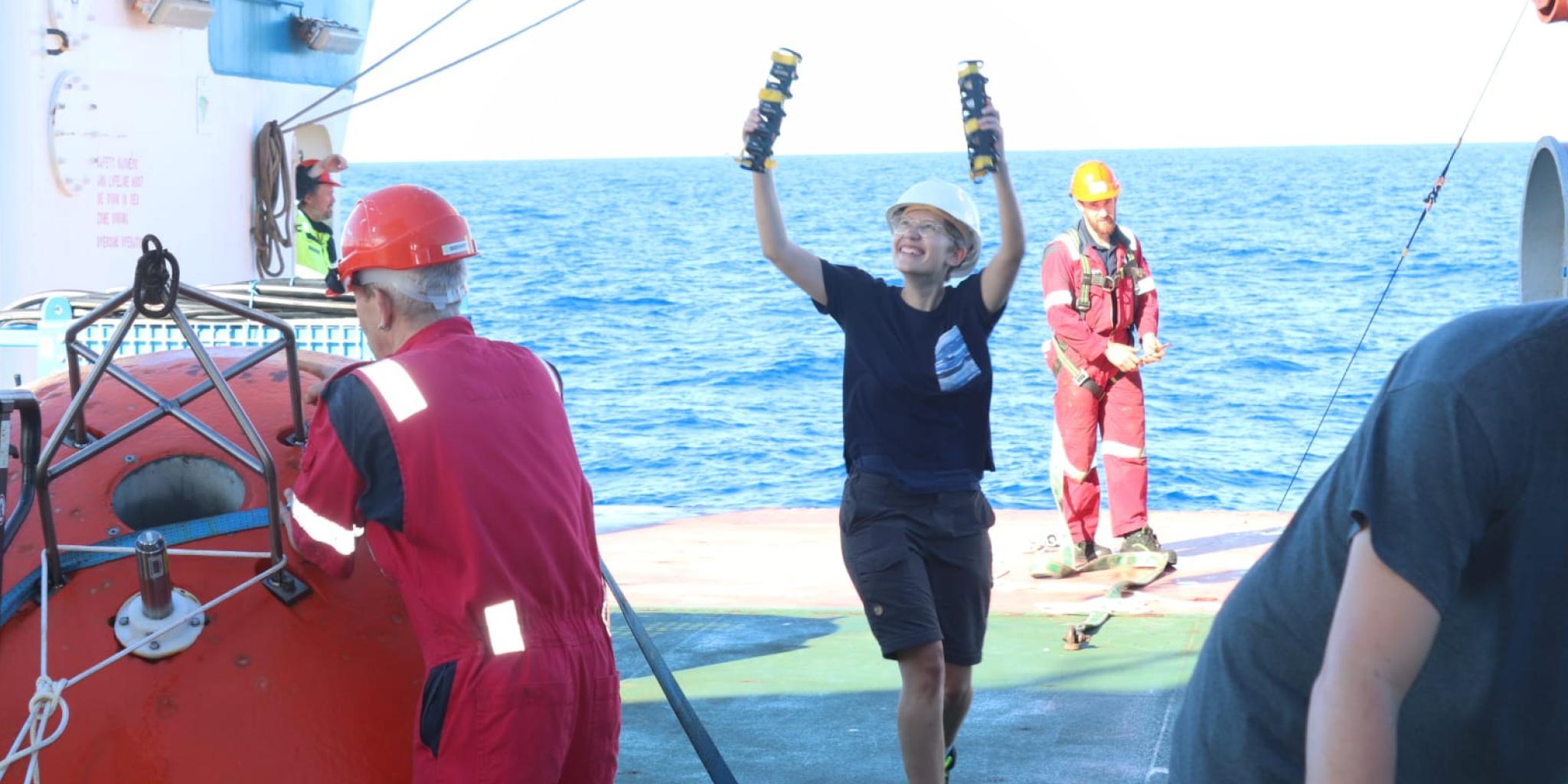
Mooring recovery by Ben Cala (photo: Brandy Robinson)
The ocean absorbs almost a third of the carbon dioxide that humans release into the atmosphere, slowing down climate change. How much the ocean can take up depends on seawater chemistry, specifically on a property called alkalinity.
Many marine organisms, such as coccolithophores, foraminifera or pteropods, build shells made of calcium carbonate, which reduces alkalinity. When they die, the shells start sinking and eventually dissolve, releasing the alkalinity back into the water.
Where in the water column the calcium carbonate dissolves is important because it determines how long it takes for the alkalinity to return to the sea surface and restore the oceans CO2-storing capacity.
Generally, a mineral is able to dissolve when the water surrounding it is undersaturated with respect to that mineral. However, there is evidence that calcium carbonate dissolution happens shallower, at depths where the bulk seawater is still oversaturated.
During this PhD project, Ben Cala investigated additional factors of calcium carbonate dissolution apart from the seawater saturation state. These results can help models to represent these processes more accurately, improving projections of the Earth’s future climate.
Linked staff
Gert-Jan Reichart
Head of Ocean Systems

Matthew Humphreys
Senior Scientist

Practical Information
Ben Cala will defend his thesis on Monday 21 September 2026 at 14:15 at Utrecht University

Cover of the thesis of Ben Cala