NWO-Science XL Award for Resolving Marine Phytoplankton–Virus Interactions
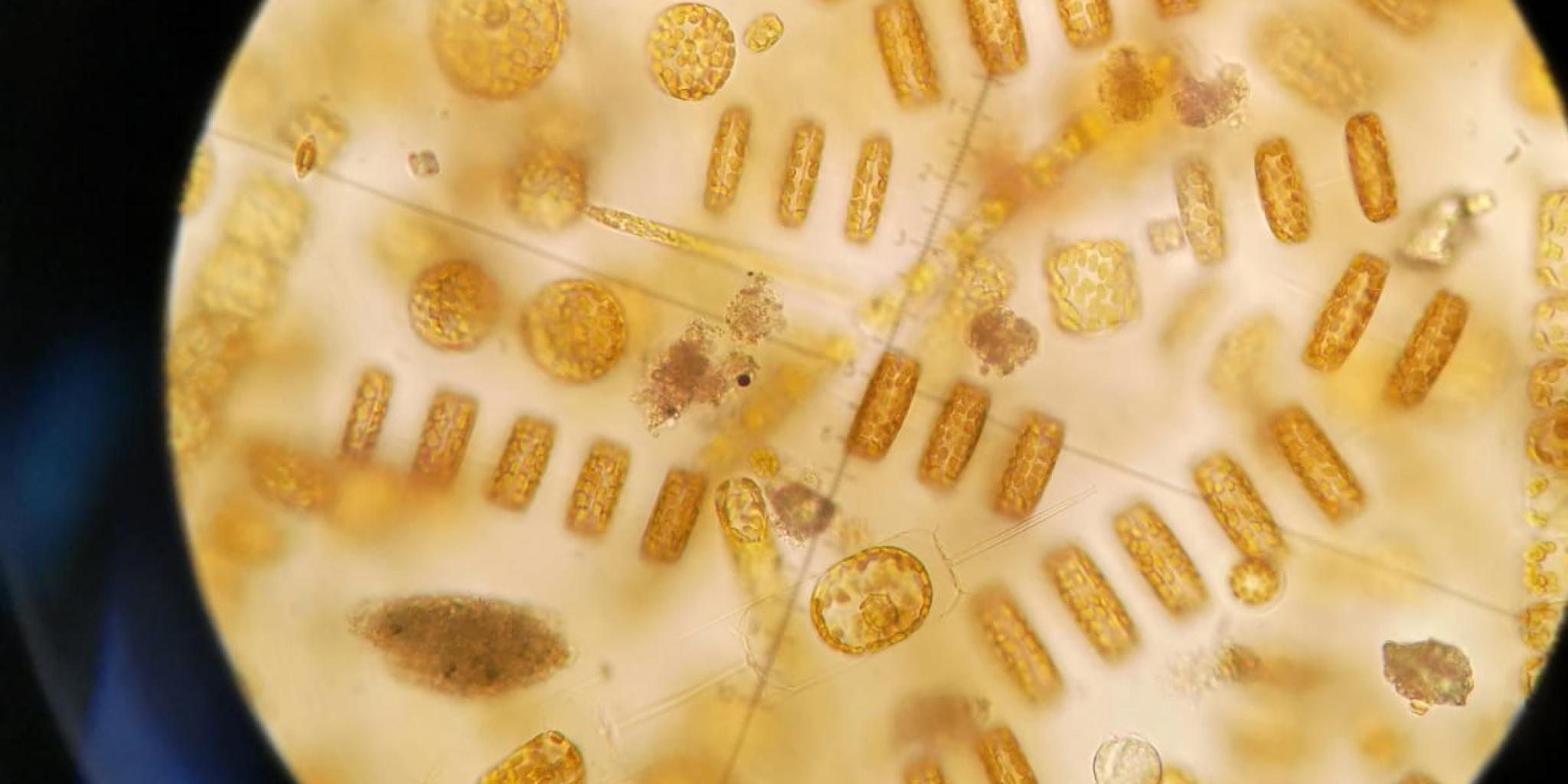
Phytoplankton under microscope. (photo: NIOZ)
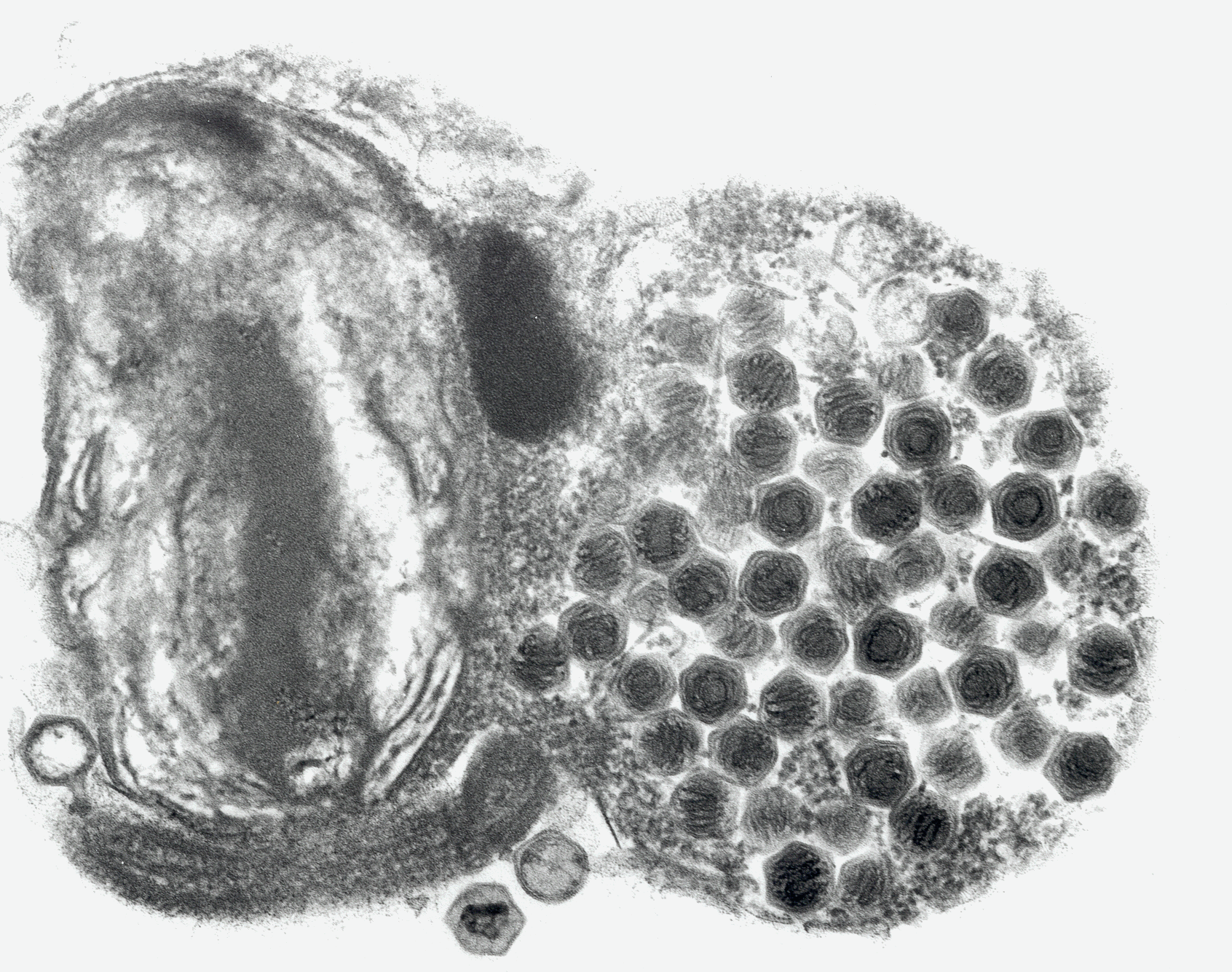
A consortium led by Prof. Dr. Corina Brussaard of NIOZ has been awarded a three-million-euro grant to study the impact of viruses on phytoplankton—tiny ocean plants. Understanding these interactions is critical, as climate change is already significantly affecting phytoplankton communities in many oceanographic regions. The project is one of 21 research consortia awarded funding through the ENW-XL Open Competition, the Dutch funding instrument for groundbreaking, collaborative, and fundamental research projects.
Phytoplankton produce half of the Earth’s oxygen, absorb vast amounts of CO₂, and form the foundation of marine ecosystems. However, they are also infected by viruses. While we have all witnessed the immense impact viruses can have on both local and global scales, very little is still known about virus-phytoplankton interactions in the oceans. Key information about the geographical distribution of major virus types, their associated hosts, traits, and temperature responses is lacking. Furthermore, the effects of marine viruses on ocean ecosystem productivity and the global oceanic carbon cycle remain poorly understood.
Groundbreaking Collaborative Fundamental Research
The PHYVIR research project aims to bridge these significant knowledge gaps by investigating virus-phytoplankton interactions through laboratory experiments, oceanic expeditions, and advanced computer modeling. The goal is to predict how marine viruses influence carbon and nutrient cycling in the oceans and, ultimately, the health of our planet.
The project seeks to elucidate virus-phytoplankton interactions from the sub-cellular level to the biosphere, and from local to global scales. This multi-faceted and synergistic approach is made possible by a multi-disciplinary team with complementary scientific expertise: Prof. Brussaard (NIOZ), Prof. van de Waal (NIOO), Dr. Wilken and Prof. Huisman (both UvA), Dr. Mende (A-UMC).
Linked staff
Corina Brussaard
Senior Research Leader

Phytoplankton under microscope

Phytoplankton under microscope. (photo: NIOZ)
Elektronmicroscope image of virus-infected phytoplankton cell