NWO grant to measure neutrinos and whale sounds
Whale acoustics
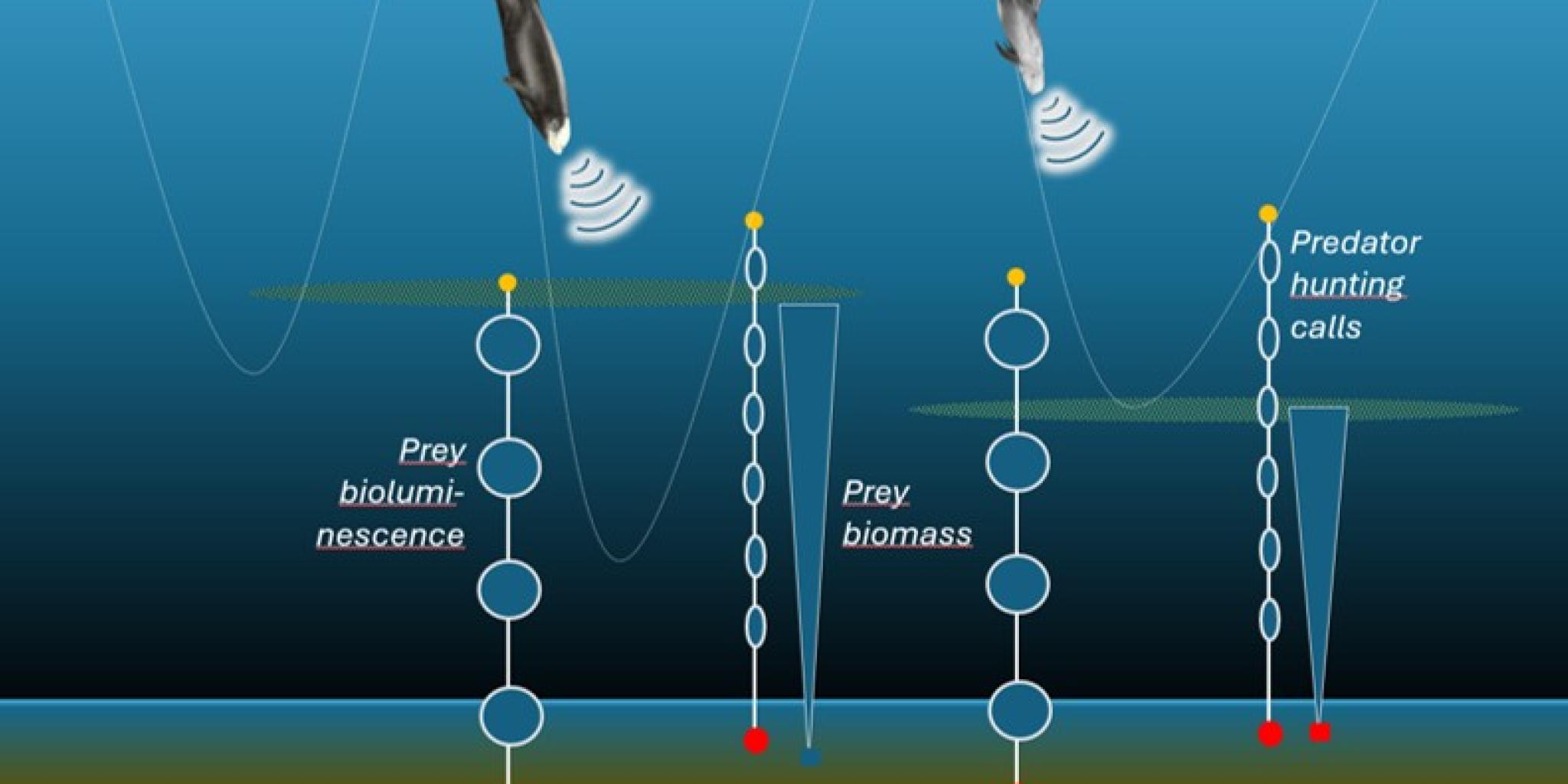
Networks of underwater microphones and light sensors in the Mediterranean Sea, which particle researchers are using to detect mysterious neutrinos, also pick up whale sounds. And the bioluminescence of their prey: deep-sea fish and squid. NIOZ researcher Fleur Visser is participating in a national project that is receiving nearly 19 million euros from science funder NWO.
On 3 November, NWO announced which projects it will fund
Opens in a new tab in the field of large-scale research infrastructure (LSRI). One of the projects involves an expansion of the KM3NeTOpens in a new tab neutrino telescope on the seabed of the French part of the Mediterranean Sea.Clicks from whales
The project is led by the National Institute for Subatomic Physics (Nikhef). It is called KM3NeT++ and NWO is now investing €11.8 million in enlarging and expanding the network with underwater microphones and biomass sensors, in addition to €6.8 million in contributions from the partners. One of the partners is NIOZ. Fleur Visser has been involved since 2023. She can detect whale clicks with the microphones. In addition, NIOZ is involved in the design and construction of anchors for deep-sea instrumentation.
The extremely sensitive light sensors, built to detect flashes of light from neutrinos from space, also measure in detail the biological light produced by life in the deep sea. In combination with echo sounders, which measure the density of deep-sea life, this creates a large, multidisciplinary measurement network – which researchers can also read in real time.
The deep sea is difficult to observe
The ecology of the deep sea is almost completely unknown because it is so difficult to observe, says Visser. 'The scale at which we will observe whale hunting is unique worldwide. This allows us to understand in more detail when and how these top predators can benefit from the deep sea in relation to the distribution and densities of their prey. Through long-term observations, we can also see how the system is changing and how this affects the balance of the ecosystem.
Linked staff
Fleur Visser
Senior Scientist
