New food source in the Wadden Sea for bar-tailed godwits
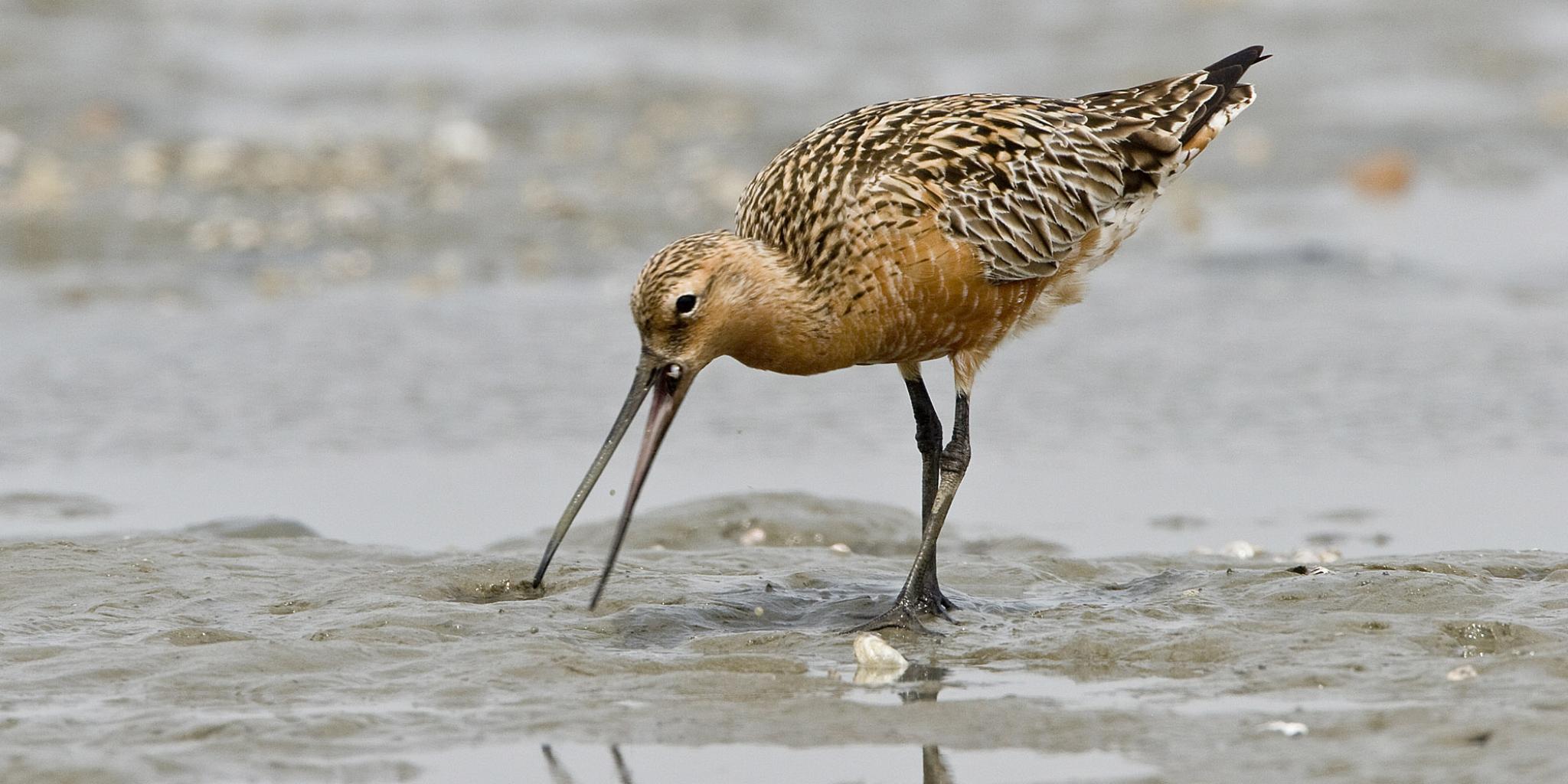
Bar-tailed godwit foraging on muddy Wadden Sea mudflats (photo: Jan van de Kam)
At present, around 40,000 bar-tailed godwits are feeding on large quantities of mud shrimps at Balgzand, near Den Helder. This impressive spectacle can still be observed from the dyke until around 20 May. Never before has it been recorded that bar-tailed godwits consume such large amounts of mud shrimps in spring. The traditional diet of these Arctic migratory birds mainly consists of worms. BirdEyes and the Royal Netherlands Institute for Sea Research (NIOZ) are offering a first glimpse of scientific research that will be published later this month.
Shallower feeding
As the bar-tailed godwits prepare for their 4,000-kilometre journey to their breeding grounds in Siberia, researchers have observed a remarkable change. Field observations and droppings analyses show that many bar-tailed godwits at Balgzand are consuming large quantities of mud shrimps (Corophium sp.). Dr Roeland Bom is one of the researchers involved. “Normally, bar-tailed godwits probe deeply into the mudflats with their long bills to catch worms. Now we are seeing them making shallower feeding movements and swallowing far more frequently.”
There is not yet a full explanation, but climate change may be affecting the seasonal availability of prey.
In a hurry
Climate change is already creating challenges for bar-tailed godwits. Earlier snowmelt in Siberia causes insects to emerge in large numbers sooner, even though these insects are a vital food source for bar-tailed godwit chicks. To keep pace with this earlier spring, the birds must migrate more quickly while also shortening their stopover in the Wadden Sea. “They arrive directly from their wintering grounds in Africa and have only a few weeks to build up sufficient reserves for the long flight to Siberia,” explains Roeland Bom. “During this period, rest and undisturbed foraging conditions are just as important as the food itself.”
Bar-tailed godwit foraging on muddy Wadden Sea mudflats (photo: Jan van de Kam)
Wadden Sea crucial for refueling
Previous research by Dr Eldar Rakhimberdiev and his NIOZ-colleagues has already shown that the success of bar-tailed godwits is often determined before they even arrive at their breeding grounds: here in the Wadden Sea, where they refuel for the next stage of their migration. Dr Bom says: “The behaviour of the bar-tailed godwits at Balgzand raises new questions about how migratory birds respond to changes in the Wadden Sea and to climate change in the Arctic. Were mud shrimps simply not available during this period in previous years? Or have other food sources become less nutritious?”
Bar-tailed godwits taking off above Wadden Sea mudflats (photo: Jan van de Kam)
10% of global population
Balgzand is a highly suitable location for bar-tailed godwits because the dyke area experiences very little human disturbance at either high or low tide. Thanks to the WATLAS tracking system — an advanced network of transmitters that reveals how birds move through the Wadden Sea — it has also become clear that the number of bar-tailed godwits at this site has increased dramatically. In May 1995, around 8,000 bar-tailed godwits gathered at Balgzand; this year there are more than 40,000. That represents over 10% of the global population. Dr Roeland Bom: “Our research also provides valuable insights for conservation and management. How can we work together to safeguard the peace and quiet at Balgzand during this crucial period?”
Large flock of bar-tailed godwits gathered on Wadden Sea mudflats (photo: Jan van de Kam)
Come and see for yourself
The researchers invite people to come and witness the swirling flocks of bar-tailed godwits for themselves. Dr Bom: “It’s a magnificent sight. From the dyke, the bar-tailed godwits can be observed very well without disturbing them. It is also where you sense the urgency. These birds are working incredibly hard for 12 hours a day to build up enough fat reserves within just a few weeks. Around 20 May, they will depart for their breeding grounds in Siberia.”
Upcoming publication
The study ‘Time-stressed Bar-tailed Godwits exploit novel prey to fuel
Opens in a new tab’ by NIOZ and BirdEyes was published in IBIS and forms part of the Waakvogels project, in which six migratory bird species reveal the state of the Wadden Sea.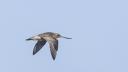
Bar-tailed godwit in flight above the Wadden Sea (photo: Jan van de Kam)
Linked staff
Anne Vorenkamp
PhD student

Allert Bijleveld
Research Leader