IVN/NIOZ winter lectures 2025/2026
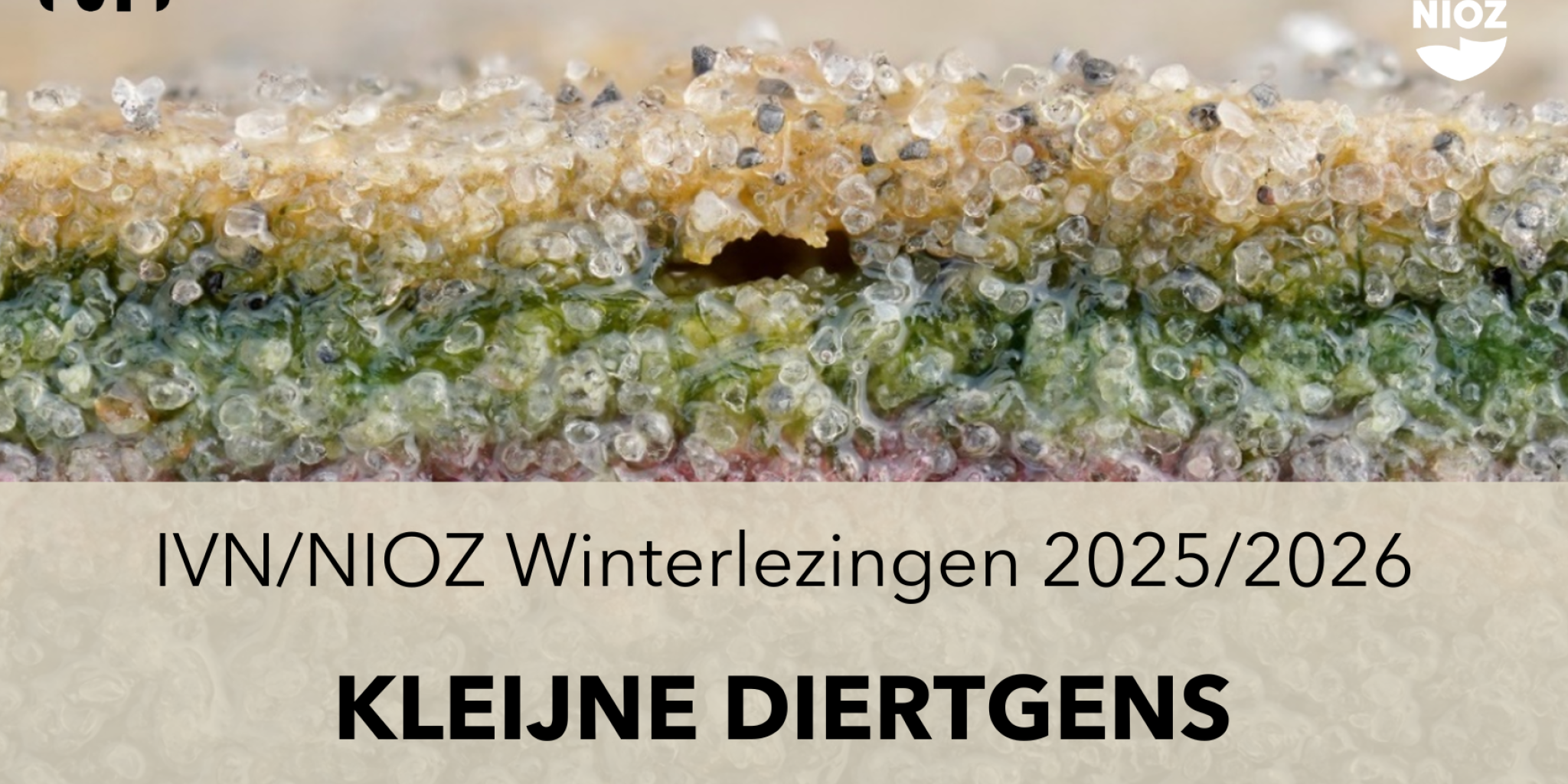
IVN/NIOZ Winterlezingen 2025-2026 - Kleijne Diertgens (photo: Wim van Egmond)
From November to February, IVN Texel, in collaboration with NIOZ, is organising a new series of winter lectures on the theme of “Kleijne diertgens” (tiny creatures). By “tiny creatures”, we are referring to the microscopic organisms that Antoni van Leeuwenhoek observed in 1674 with his homemade microscope in water from the Berkelse Meer near Delft. He was probably looking at bacteria and other microbes, making him the first person to reveal the invisible world. Now, 350 years later, we know that microbes such as bacteria, archaea, yeasts, fungi and viruses play a crucial role in all life on Earth. They control cycles, feed other organisms, work together with plants and animals, and make life possible in places we would never have expected. You can hear and see how this works in four lectures by researchers and experts.
Please note that these lectures will all be held in Dutch.
18 November 2025: Undersea water sources of life
(by Sabine Gollner (NIOZ) and Jan de Leeuw - NIOZ / IVN)
In 1977, scientists discovered that there are underwater hot springs in the deep sea that are teeming with microbes. These microbes do not derive their energy from sunlight, but from chemical compounds in the hot water. Many of these “tiny creatures” live in symbiosis with large animals, such as metre-long tube worms. The organisms found near these sources exhibit remarkable forms of evolution. There are strong indications that it was precisely these types of vents, some four billion years ago, that formed the cradle of the first life on Earth – the cradle of the single ancestor from which all current and extinct life descends.
13 January 2026: Mycorrhiza – important helpers in the soil
(by Malin Klein (Vrije Universiteit Amsterdam)
Mycorrhizal fungi live in symbiosis with almost all plant roots. They exchange nutrients with the plant and thus play a key role in ecosystems. There are different types of mycorrhizae, with different strategies and effects on plant growth and soil health. How exactly do these relationships work, and why can't plants do without them?
28 January 2026: The power of soil fungi
(by Jan Buijs)
Mycorrhizae are soil fungi that form a close partnership with the root systems of plants. This helps plants to absorb nutrients and water more efficiently and makes them more resistant to stress. This partnership between roots and fungi forms the basis for sustainable food production.
11 February 2026: Rhythm of the beach
(by Henk Bolhuis - NIOZ)
We dive into the coloured layers of cyanobacteria, often but incorrectly referred to as blue-green algae, on the beach of Schiermonnikoog and into the mysterious bacterial “fairy rings” in Guérande, France. Time-lapse videos and photographs reveal how these microscopic communities move, grow and form patterns in rhythm with their environment.
Practical information
Registration
Registration is required via Bert de Boer, email: cursussenivntexel@gmail.com. Please provide the following information:
- Name
- Number of people
- Date(s) of the lecture(s) you wish to attend
Location and time
All lectures will take place at the Buureton, Beatrixlaan 43, Den Burg.
The lectures start at 8 p.m., with doors opening at 7.45 p.m.
Linked staff
Sabine Gollner
Senior Scientist

Henk Bolhuis
Senior Scientist