Increasing seasonal fluctuations in sea level are under-reported, but could have a major impact
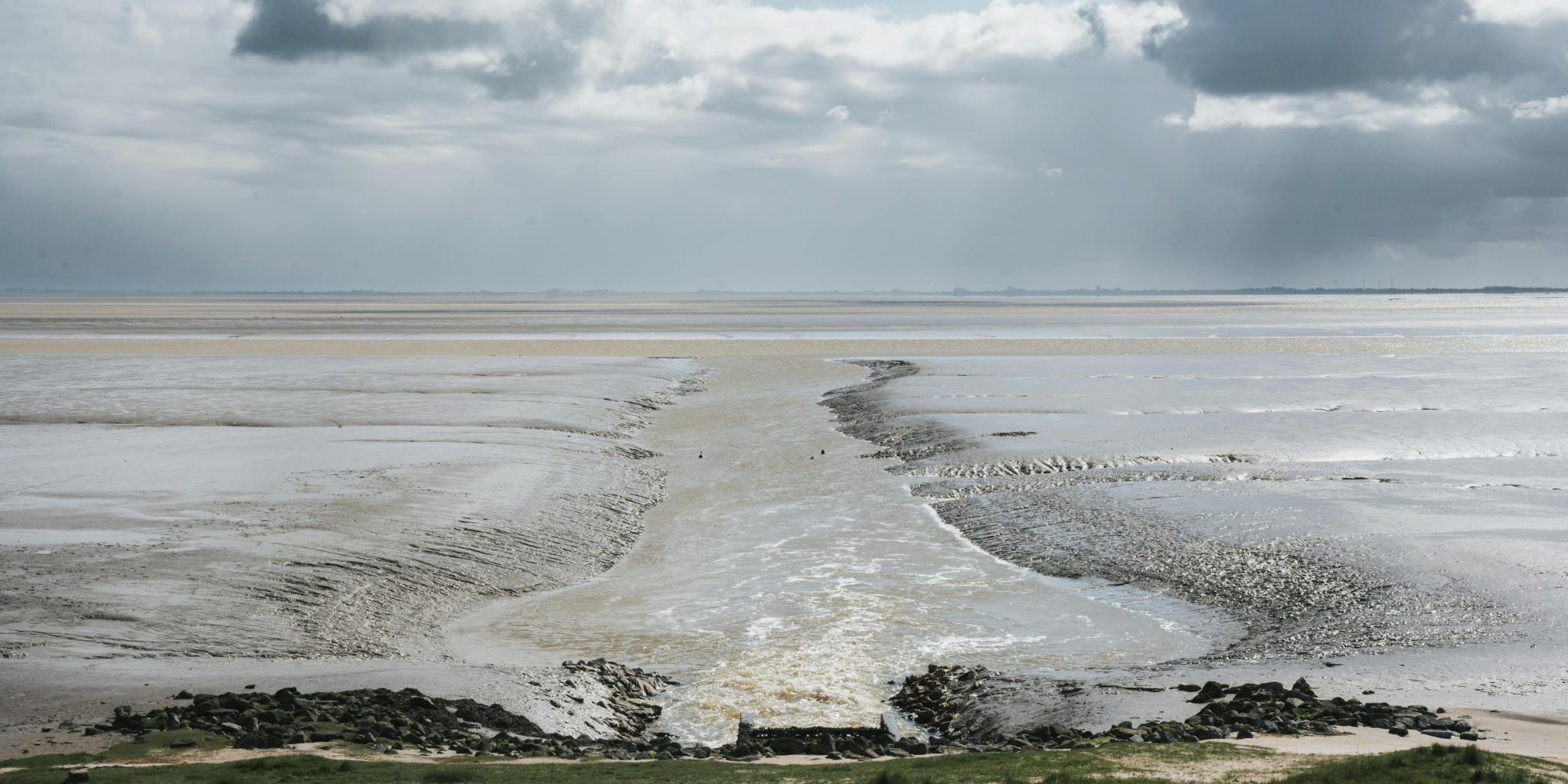
Mudflats at the Wadden Sea coastline (photo: Pexels/Jornt Hornstra)
Sea levels are rising not only on average, but also in their seasonal fluctuations. This is a lesser-known trend that could have major consequences for mudflats, salt marshes and other coastal ecosystems. Researchers from the Netherlands and Flanders describe these findings in a study published on 13 May in Nature Climate Change.
When discussing sea-level rise, attention typically centres on the increase in annual average sea level. But researchers from Utrecht University, the University of Antwerp, Royal Netherlands Institute for Sea Research (NIOZ) and Wageningen Marine Research (WMR) argue that this tells only part of the story. In many regions, seasonal fluctuations in sea level are also expected to intensify. Climate scientist Tim Hermans (Utrecht University) explains: “These seasonal variations occur on much shorter timescales than average sea-level rise, which means they can have surprisingly large impacts on coastal ecosystems.”
Submerged far longer
Coastal ecologist Jim van Belzen (NIOZ and WMR) says they were able to visualise how increasing seasonal sea-level fluctuations affect coastal areas, using a simple but revealing flooding model.
The results show that even relatively modest increases in seasonal variability can substantially alter flooding patterns in intertidal ecosystems such as mudflats and salt marshes. Areas may remain submerged far longer than the resident species are adapted to tolerate, while periods of exposure can also become significantly extended. An area that is currently underwater for only a few hours or days at a time could, in future, remain submerged for days or even weeks.
According to Van Belzen, the strongest effects are expected in intertidal zones with relatively small tidal ranges, including parts of the Mediterranean Sea and the Sea of Japan.
Far-reaching consequences
For plants and animals living at the boundary between land and sea, including benthic organisms, algae, seagrasses and salt-marsh vegetation, the timing and duration of flooding are critical. According to ecologist Greg Fivash of University of Antwerp: “Tidal ecosystems operate within very narrow wet–dry limits. When those limits shift, it affects not only where species can survive, but also how entire ecosystems function. The consequences can be far-reaching, influencing productivity, biodiversity and the resilience of the system.”
Oxygen depletion, heat and desiccation
According to the authors, increasing seasonal sea-level variability can place additional physiological stress on coastal organisms, for example through prolonged submersion, oxygen depletion in seabed sediments, or, conversely, extended exposure to heat and desiccation. The researchers therefore urge coastal managers and ecologists to pay closer attention to changes in intra-annual dynamics. Particularly in shallow coastal zones and intertidal areas, such shifts may determine whether ecosystems are able to adapt, undergo ecological change, or ultimately decline.
New dimension in sea-level research
The authors emphasise that this study represents an important first step in drawing attention to a largely overlooked climate risk for coastal ecosystems. They argue that changes in seasonal sea-level variability should be explicitly incorporated into future impact assessments, conservation planning and coastal adaptation strategies.
The paper 'Future Changes in Seasonal Sea-Level Variability Could Reshape Coastal Ecosystems', by Tim Hermans, Greg Fivash and Jim van Belzen was published in Nature Climate Change on 13 May 2026
Linked staff
Jim van Belzen
Senior Scientist