Farewell to RV Pelagia – a research vessel worth its weight in gold
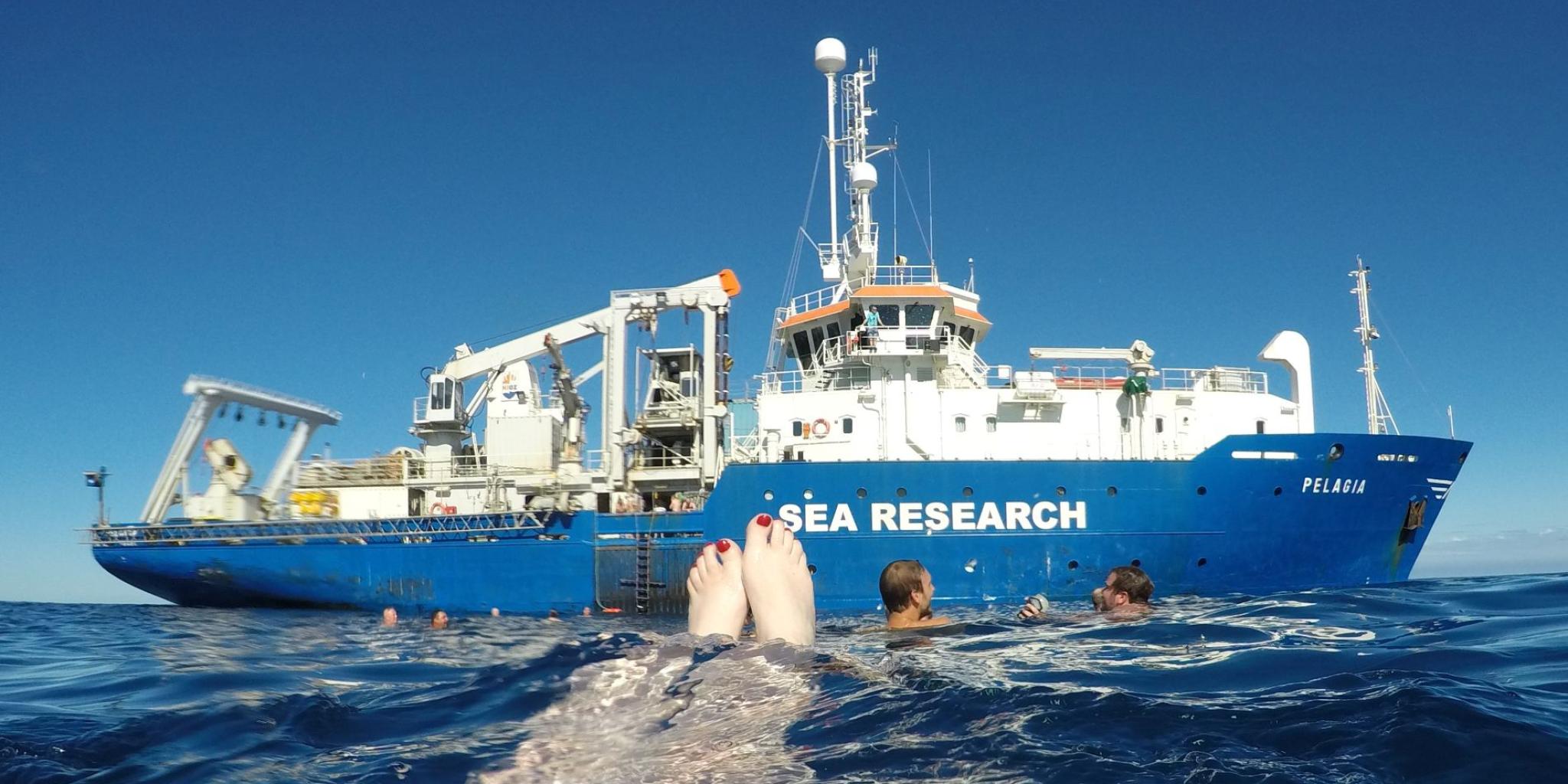
It may sound a little exaggerated: a farewell party for a ship. But for RV Pelagia, it was entirely appropriate that around 200 people gathered on 16 October to say goodbye to the ship. Since 1991, she has provided a wealth of knowledge about the seas and oceans, and countless precious memories.
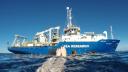
Stripped and bare of all personal touches and research equipment, RV Pelagia lies moored in the NIOZ harbour on Texel. Everyone who has a warm connection with the ship has been invited to step aboard it one last time. In the run-up to this moment, we collected memories from crew and scientists who sailed with her.
Arrow Worms that Launched a Career
‘I was lucky enough to join several cruises on Pelagia as a master’s student,’ writes Katja Peijnenburg, now Senior Researcher in Marine Evolution and Ecology at Naturalis. ‘Those expeditions focused on bottom-dwelling animals from the North Sea, which we caught with trawl nets. It was astonishing what came up in those nets! I learnt so much from that.’
Peijnenburg’s task was to collect plankton. ‘My project was all about arrow worms. The arrow worms I hauled up from the North Sea laid the foundation for my career as a biologist studying evolution in the open ocean. My research showed that there are far more undiscovered plankton species than we realised – and that plankton evolve much faster than previously thought.’
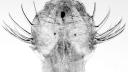
Arrow worm
27 Million Tonnes of Nanoplastic
Sophie ten Hietbrink, now conducting geochemical research at Stockholm University, joined a cruise as a student in 2021. ‘That experience left a deep impression on me. The fickle nature of the ocean became clear when, during the very first week, we were caught in a subtropical storm. I soon learnt that I could rely completely on Pelagia – she could take quite a beating.’
Ten Hietbrink collected water samples from various locations and depths. Her supervisors had developed a method to measure nanoplastics in them. Her work led to the estimate that around 27 million tonnes of nanoplastic are floating in the North Atlantic Ocean. This first-ever quantification of nanoplastics at sea made international headlines
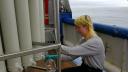
Sophie ten Hietbrink, then a student, working on RV Pelagia to find nanoplastic.
Angry fishermen
The many people who sailed on RV Pelagia experienced countless adventures. They once came across a capsized catamaran from the Volvo Ocean Race – fortunately, the crew had already been rescued. On another occasion, they were harassed by angry fishermen after a research camera became entangled in their fishing lines. And when the ship was still brand new, they even fished up a sea mine – which, luckily, did not explode.
Beyond the immense amount of scientific knowledge gathered, the vessel also offered tremendous personal growth. ‘I vividly remember my first cruise, when I was responsible for collecting plankton images with our towed frame,’ writes PhD student Pieter Hovenkamp. ‘When we finished the planned transect earlier than expected, the crew asked whether we wanted to turn back or continue in the same direction. I looked around, waiting for someone to answer, until I realised everyone was looking at me.’
‘I learnt the job aboard Pelagia’
Senior sea technician Dave Huijsman writes: ‘Thanks to Pelagia, I’ve been to amazing places – from South Africa to Iceland and many stops in between. On my first voyages, I was still training as a sea technician, providing technical support for the scientists. Back then, I always travelled with a colleague. You could say that I learnt this rather unique job aboard Pelagia. For several years now, I’ve been sailing independently.’ Kelly Kat, who has worked as a mate on Pelagia since 2018, adds: ‘The close bond within the crew is really special. It’s almost like family.’
4,000 metres of water beneath me
‘Swimming with more than 4,000 metres of water beneath me remains a unique experience,’ writes Sharyn Ossebaar, an analyst who works in a laboratory container on board conducting nutrient analyses for many scientists. Senior sea technician Jan Dirk de Visser, who provided technical support on some fifty voyages over sixteen years, recalls: ‘One of my fondest Pelagia memories is when we were lying by an ice field near Greenland in the morning. Small ice floes drifted past while we were taking water samples from different depths. The weather was grey and overcast. Then, as we sailed to the next station in the afternoon, the sun came out and we saw a group of orcas swimming by.’
A new pair of shoes
Dick van Oevelen, research leader at NIOZ’s Estuarine & Delta Systems department in Yerseke, compares the research vessel to a pair of shoes. ‘The nice thing about working on Pelagia is that everything has gradually been optimised. In that sense, I think of Pelagia as a pair of leather shoes: they wear down over time but become increasingly comfortable.’
On March 12 in 2026, the successor to RV Pelagia will be christened: RV Anna Weber-van Bosse, now in the final stages of completion in Vigo, Spain. Hopefully, this new vessel will soon feel just as comfortable as that well-worn pair of leather shoes and the beginning of a new adventure. As for all the scientific discoveries awaiting us on future expeditions in the decades ahead – we haven’t the faintest idea yet.