BBNJ Agreement enters into force to protect the high seas
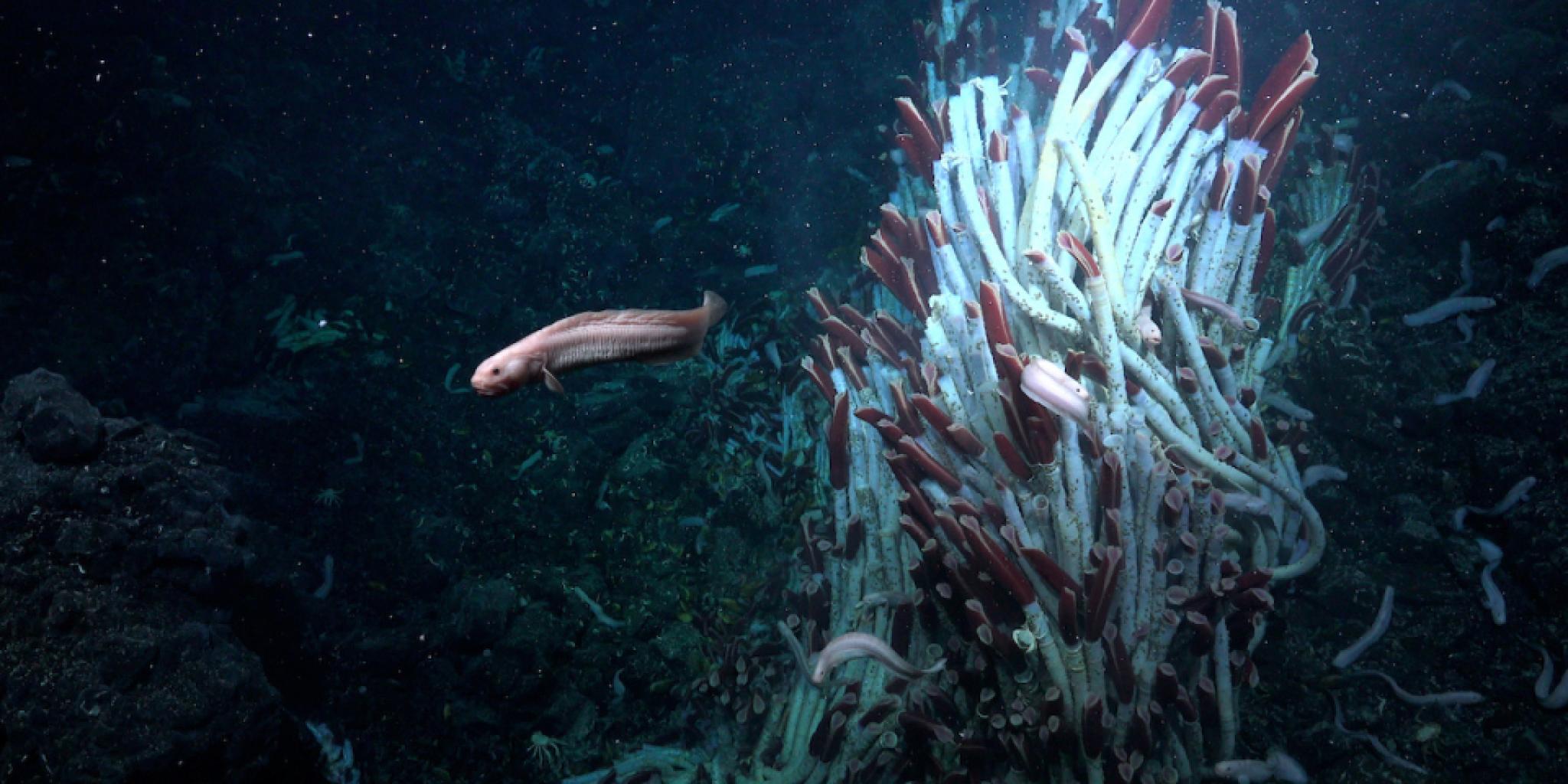
An Eelpout ventures past some Tubeworms. Photo: Schmidt Ocean Institute
Yesterday marked a historic moment for ocean governance. The
Opens in a new tab (or BBNJ Agreement, Biodiversity Beyond National Jurisdiction) was adopted, creating a long-awaited legal framework for the protection of life in the high seas. The treaty builds on the previously established UNCLOS, which is often referred to as the constitution of ocean law. While UNCLOS governs navigation, boundaries, and resource use, it offered only fragmented protection for biodiversity beyond national borders. The BBNJ Treaty now comes to close this gap.A historic step for ocean governance
Covering nearly two-thirds of the ocean, the high seas lie beyond national borders and Exclusive Economic Zones. Because this area is a global common, belonging to everyone and no one, it has long been difficult to regulate and manage sustainably. With the entry into force of the High Seas Treaty, this is beginning to change. “Much needed”, according to NIOZ director Han Dolman in an interview with NOS
Opens in a new tab. "The Earth's climate is fully dependent on a healthy ocean. And still, most of it has remained unprotected until now.” he further elaborates on nu.nlOpens in a new tab.What the High Seas Treaty aims for
At its core, the High Seas Treaty is about countries joining forces to care for the half of our planet that lies beyond national borders. It establishes a shared plan to protect ocean life and use its resources responsibly. The treaty enables the creation of ‘high seas, marine protected areas’ to safeguard vulnerable ecosystems and species. It requires environmental impact assessments before activities such as large-scale fishing or deep-sea mining. It ensures that discoveries from deep-sea life, including new medicines or technologies, benefit everyone rather than just a few.
Finally, it supports all nations, particularly developing countries and small island states, in gaining the knowledge and tools needed for ocean research and conservation while explicitly incorporating traditional and indigenous knowledge systems. Together, these elements create a framework for a fairer and science-based approach to ocean governance.
Why biodiversity in the high seas matters
The areas covered by the Treaty stretch across nearly half of the planet and host extraordinary biodiversity. They range from blue whales roaming the open ocean to microscopic cyanobacteria that help produce much of the oxygen we breathe. Yet marine biodiversity is in decline. Overexploitation, deep-sea extraction, and climate-driven changes are placing growing pressure on ocean ecosystems. As NIOZ scientist Sabine Gollner explained to NOS
Opens in a new tab, the system is like a house of cards: each species plays a particular role in the ecosystem. Removing one can destabilize the whole system. It is important for everyone that this biodiversity is protected, as we depend on a healthy ocean for our own survival.Furu Mienis, marine geologist at NIOZ, elaborated on this during her interview for Radio 1
Opens in a new tab last Saturday morning. She explained that through informed decision making, we can now collaboratively start to protect areas with an important ecological role, for example by looking at key species or migration routes. “Doing so, could improve ocean health for much larger areas” she predicts.From negotiation to implementation
Creating a legally binding framework beyond national borders is complex and innovative in international law. That is why negotiations at the UN level took nearly twenty years, finally reaching an agreement in 2023. For the treaty to enter into force, at least 60 countries needed to ratify it by adopting it into national law, as only ratifying countries are legally bound by its rules and able to participate in decision-making. So far, 83 countries
Opens in a new tab have ratified the treaty, signaling a strong willingness to cooperate for a healthier ocean.Ratification, however, takes time. Many countries signed the treaty before 2023 but have not yet completed the legal steps needed to ratify it. Signing shows political intent but is not legally binding. Ratification makes commitment formal. The Netherlands is one of the countries still in this process. According to Han Dolman, adopting the required national regulations often takes around two years. Greater political urgency could have accelerated this, he noted in his interview with nu.nl
Opens in a new tab. The hope is that the Netherlands will ratify the treaty before the first Conference of the Parties (COP) in 2027.Looking ahead
The treaty’s real impact will depend on how swiftly nations ratify it and how closely scientists engage in its implementation. For the Treaty to be effective, marine researchers are essential to guiding informed decisions, shaping effective conservation zones, and monitoring ecological responses over time. For NIOZ this means that scientists will keep shaping science that sits at the core of BBNJ actions allowing this agreement to turn from promise into a meaningful recovery for ocean life and the global systems it supports.
Photo Credit Top Image © Schmidt Ocean Institute
Linked staff
Sabine Gollner
Senior Scientist

Furu Mienis
Senior Scientist