At a time when the US government is scaling back ocean observations, understanding our ocean requires more knowledge, not less.
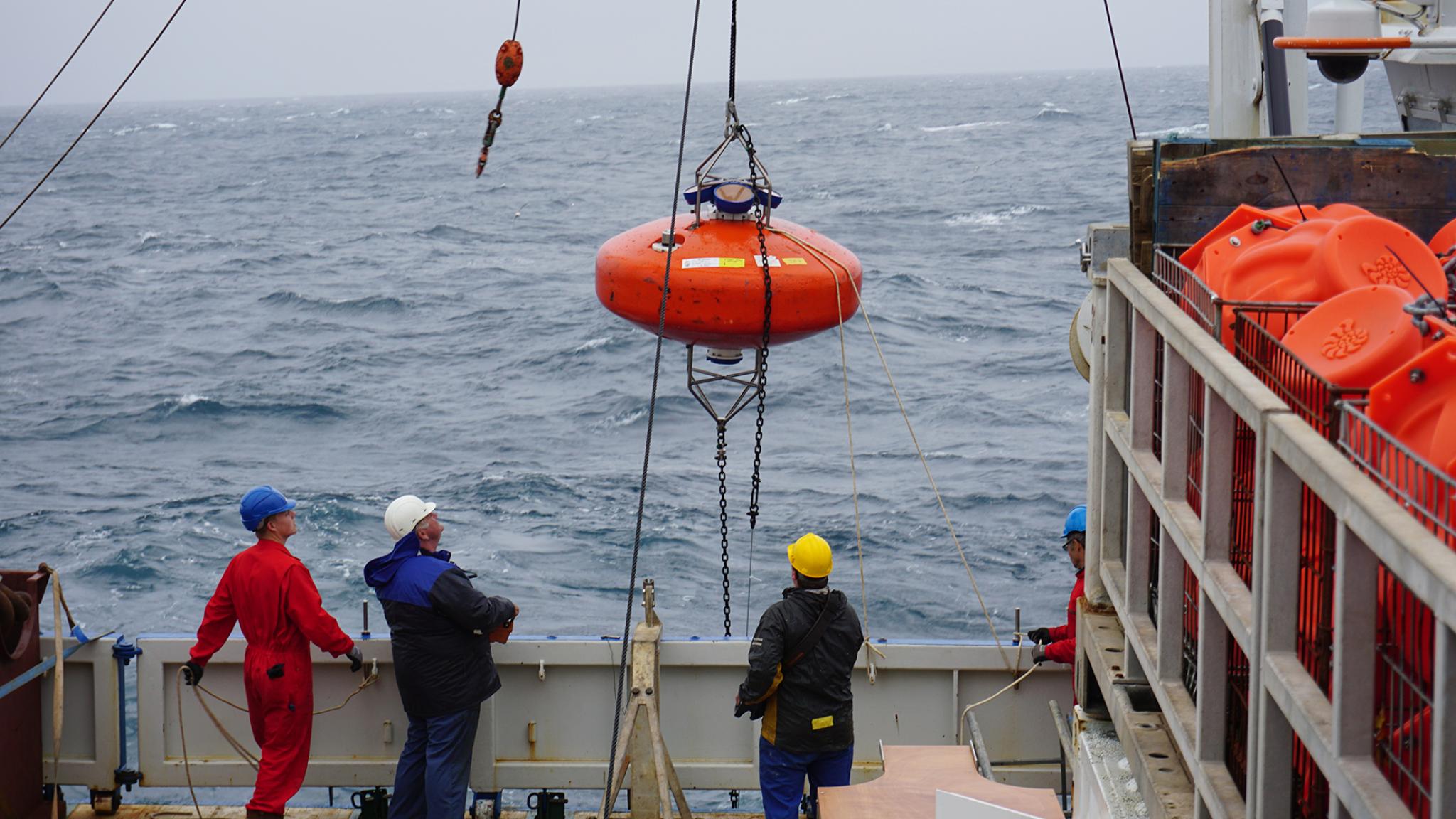
A measuring instrument being lowered from a research vessel to collect research data (photo: Femke de Jong - NIOZ)
Recent media coverage has highlighted growing concerns about the future of long-term ocean monitoring programmes. The discussion goes far beyond research infrastructure. Without measurements, we lose our ability to detect change, understand trends and improve future projections.
The timing is striking.
As we approach World Ocean Day on 8 June, those headlines remind us why sustained investment in ocean science, monitoring and international collaboration matters. On that same day, researchers, students, policymakers and stakeholders will gather in Den Helder for the National Ocean Science Conference (NOSC2026), featuring leading Dutch and international speakers and the latest insights into the state of our ocean.
This special anniversary edition of NOSC is hosted by NIOZ, together with Naturalis Biodiversity Center, Sustainable Ocean Community and Utrecht University. The conference also marks a special milestone: NIOZ is celebrating its 150th anniversary this year.
For 150 years, NIOZ researchers have been measuring and studying the sea. This week's headlines are a reminder that long-term observations are not just a scientific asset, but an essential infrastructure for understanding our changing planet.
Recent media coverage:
- New York Times article “Trump administration to dismantle the Ocean Observatory Initiative”: Trump Administration to Dismantle the Ocean Observatories Initiative - The New York TimesOpens in a new tab
- NOS article “US scraps unique ocean observing network” (in Dutch): https://nos.nl/artikel/2616907-vs-schrapt-uniek-meetnetwerk-voor-oceaan-wetenschappers-vrezen-meer-bezuinigingenOpens in a new tab
- RTL Nieuws article “Trump administration dismantles monitoring stations AMOC (in Dutch): Trump-regering ontmantelt meetsysteem voor golfstroom AMOC; groot belang voor NederlandOpens in a new tab
- NRC “Regering Trump wil meetstations in de oceaan ontmantelen, springt Europa in het gat” (in Dutch): meetstations oceaan - NRCOpens in a new tab
- Spraakmakers Radio 1 (in Dutch): Biodiversiteit in zeeën en oceanen: Wereld Oceaan Dag | NPO Radio 1 Biodiversiteit in zeeën en oceanen: Wereld Oceaan Dag | NPO Radio 1Opens in a new tab
Linked staff
Han Dolman
Institute Director
Sjoerd Groeskamp
Senior Scientist

Femke de Jong
Senior Scientist