Anja Spang Professor of Symbioses in Evolution
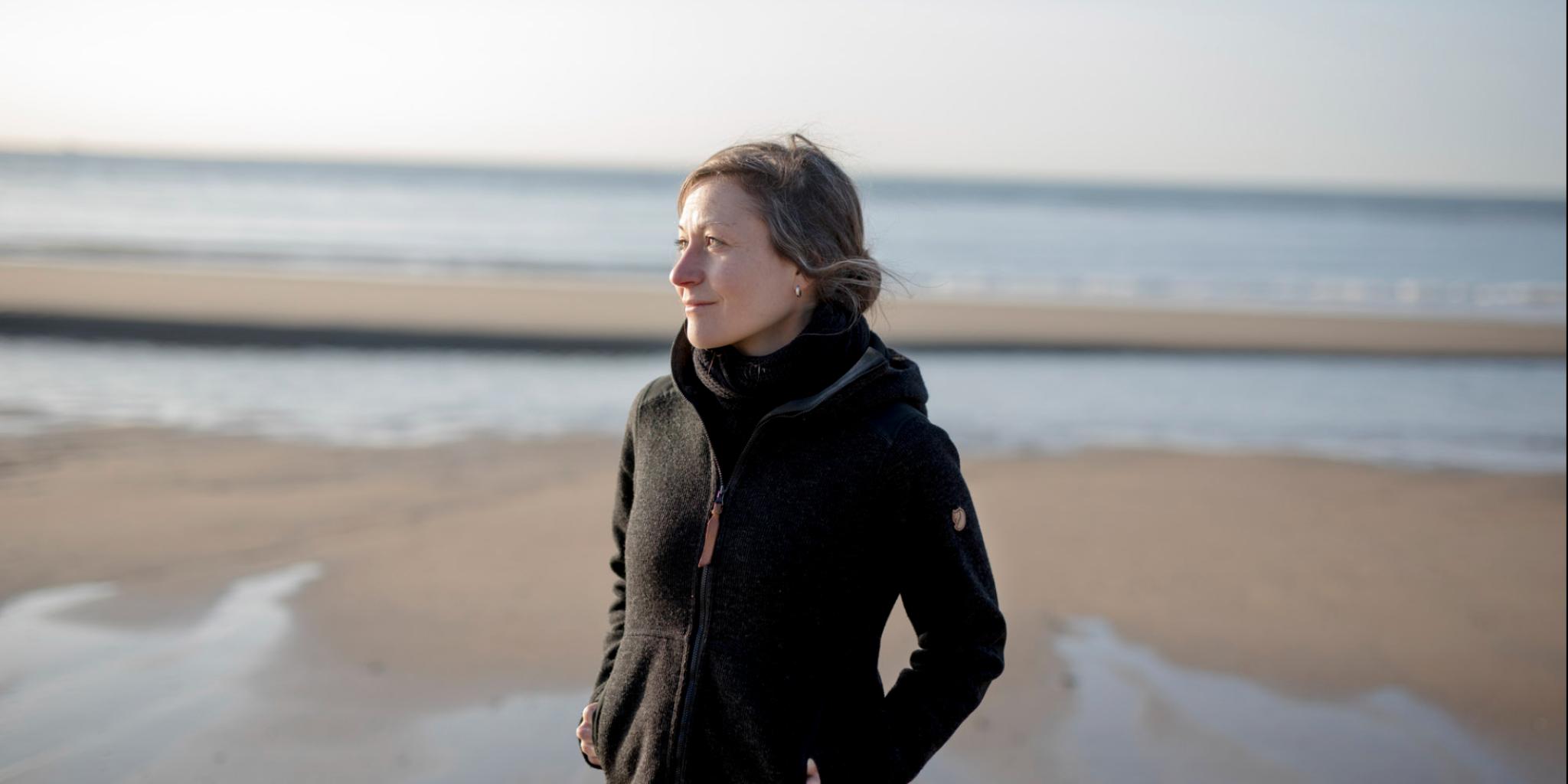
Anja Spang on the beach (photo: Anneke Hymmen)
Dr. Anja Spang, named Professor by special appointment of Symbioses in Evolution at the Faculty of Science of the University of Amsterdam (UvA), delivers her inaugural lecture on February 9th 2024, titled: ''A window into the deep history of cellular life on Earth. A tale of symbioses in evolution''. The chair was established on behalf of NIOZ Royal Netherlands Institute for Sea Research.
Anja Spang is interested in the diversity of life on Earth and how evolution is influenced by symbiosis: an association between different species that may, but do not necessarily, benefit each other. Symbiosis has played a role in major evolutionary transitions including the origin of eukaryotes, the complex organisms that contain a cell nucleus, such as fungi, plants and animals.
Relating branches
In her work, Spang hopes to improve knowledge on the deep roots of microbial life and key evolutionary transitions. “Our knowledge of the tree of life is continuously improving and many new branches have been added during recent years. I want to find out how all the various organisms relate to each other, how they have evolved through time and what their ancestors looked like. From over 3.4 until about 2 billion years ago, life on Earth was shaped by two types of microorganisms: the Bacteria and the Archaea. About 2 billion years ago, a symbiosis between at least one bacterium and one partner from the group of archaea is thought to have led to the origin of the eukaryotic cell. I would love to add new insights into the role of symbiosis in cellular evolution.”
Vital to our biosphere
Next to that Spang aims to shed light on the impact of recently discovered archaeal symbionts on the diversification of life and on the functioning of biogeochemical nutrient cycles. “Though invisible to our naked eye, unicellular organisms comprise the largest part of cells on Earth”, says Spang. “Different microorganisms produce distinct proteins and therefore have distinct roles in the environment. Together, they drive nutrient cycles and engage in symbiotic interactions that are vital to the functioning of our biosphere both on land and in the ocean. Understanding how symbionts interact with their hosts and impact them, will be crucial to elucidate the role of symbiosis in evolution and microbial food webs.
About Anja Spang
Anja Spang is a scientist at NIOZ since 2017. Prior to that, she worked as a postdoctoral researcher in Sweden for four years, after obtaining her PhD in 2013 in Vienna, regarding the ‘Genome Analyses and Comparative Genomics of Thaumarchaeota’. Spang received several grants and awards, including an ERC Starting Grant in 2020. This chair establishes new ties between the Microbiology & Biogeochemistry Department of NIOZ and the Department of Evolutionary and Population Biology at the Institute for Biodiversity and Ecosystem Dynamics (IBED). “It will facilitate collaborative research in the field of microbial evolution and ecology.” Spang is also engaged in the supervision of PhD students and master students at UvA and will be involved in teaching about Archaea.

Anja Spang on the beach (photo: Anneke Hymmen)
Linked staff
Anja Spang
Senior Research Leader

Bacterial tree of life
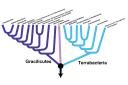
Schematic illustration of the bacterial tree of life (Credit: Anja Spang)
Depiction of the tree of life
Depiction of the tree of life including DPANN
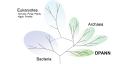
Figure: the tree of life including DPANN
IBED 2018 + UvA logo.jpg

Find more information about IBED on their website