Almost finished: the new treasure trove of NIOZ science
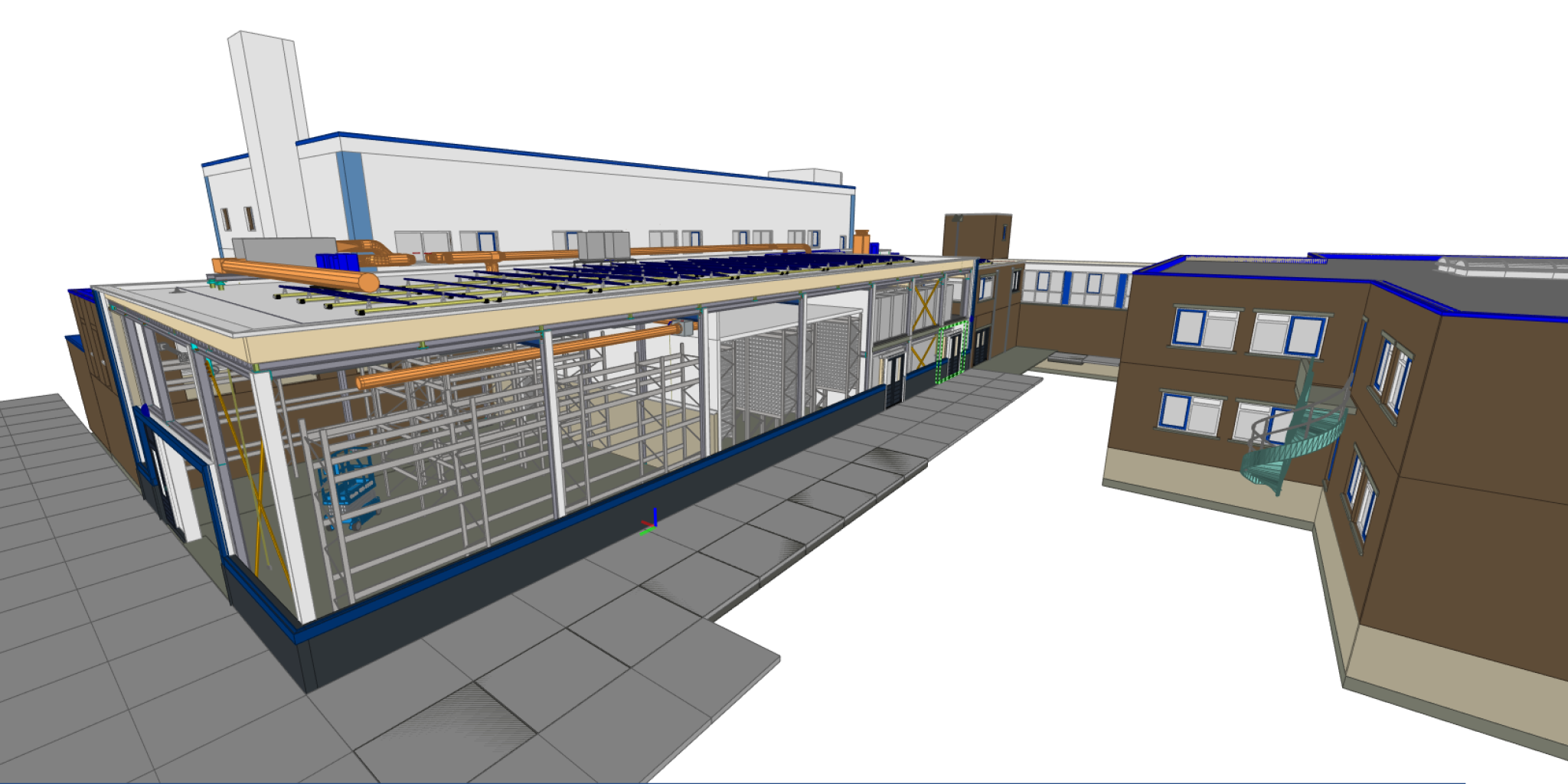
3D sight on (and in) the new storage hall
Soon, soil and water samples, deep-frozen marine organisms and crates full of instruments needed for voyages will no longer be scattered all over the NIOZ on Texel. From February, a new hall will offer 680 square metres of well-organised storage space. Our scientists will be able to use this for thirty years, thinks construction coordinator Biem Trap.
NIOZ researchers collect all kinds of things from the sea. From lugworms and jars of water to long sediment samples – soil cores – from the deep sea floor. All of this has to be stored. And they have ropes and nets and boxes full of equipment and instruments that have to be taken on expeditions. It's not ideal, but sometimes they end up in the NIOZ corridors. And scattered throughout the NIOZ are twenty freezers set to minus 80 degrees Celsius and one even set to minus 150 degrees. It's not very organised.
Neatly stored
From February 2026, that will be a matter of the past. That is when the new storage facility will be completed, attached to section H of the NIOZ building on Texel. Biem Trap: 'There is a 4.5-metre-high hall that can be filled from top to bottom with drill cores. These are used, for example, to derive information about the climate in earlier times from sediment and fossils. They will be stored in an orderly manner in the new hall at 4 to 6 degrees Celsius.' Trap is head of Facility Management at NIOZ on Texel and Yerseke. He is coordinating the construction of the warehouse, just as he has supervised many rebuilding and renovations at the institute over the past 23 years.
Capacity for forty freezers
Trap shows a 3D construction drawing that shows the entire building under construction. Each of the four research departments will have its own storage space. 'The twenty freezers will be located here on the upper floor. There is capacity for forty freezers, to ensure future-proof construction,' says Trap. 'This building will serve us well for the next thirty years, but each department will need an archivist to keep track of the collections and available space. And to organise the occasional disposal of items.' He shows a photo of a similar storage facility in Germany. 'Each drill core here has a sticker with a barcode. That track & trace code contains all the information about its origin.'
110 solar panels
The 110 solar panels on the roof are not yet sufficient to make the gas-free warehouse energy neutral. 'We purchase the extra energy from green sources,' says Trap, 'and we plan to install additional solar panels on the NIOZ site.' A sunny future, then, with a well-organised storage facility serving as a scientific treasure trove.