T-0 measurement of the first Texel notch started
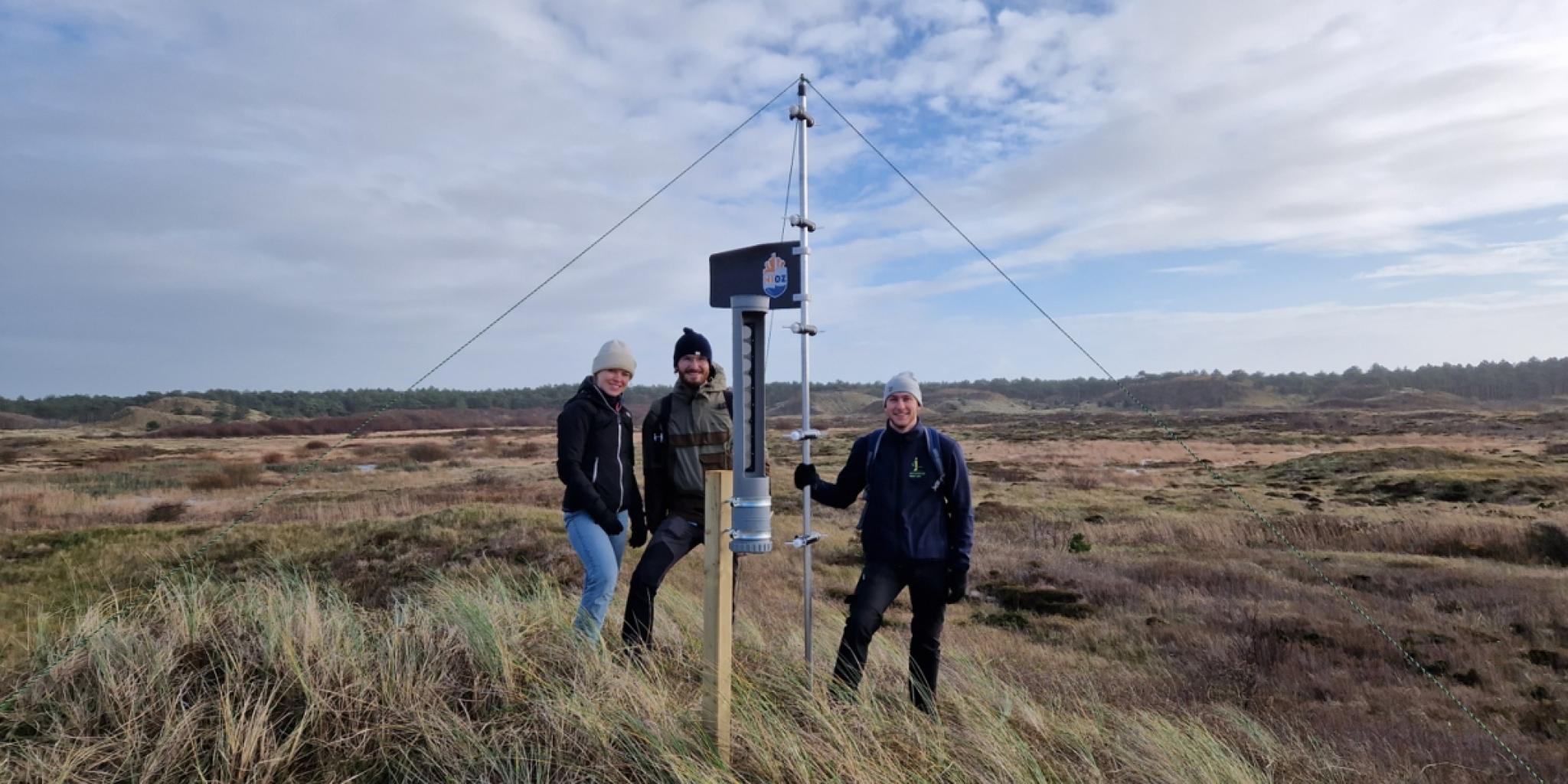
The sand trap dream team during the installation of the traps in November 2023: Evelien, Oeki, and Sjoerd. (Credit: NIOZ)
Staatsbosbeheer (the Dutch Forestry Commission) intends to create a notch in the Texel foredune; the bulldozers will start digging in February 2025. The purpose of this notch is to allow sand from the beach to pass through, thereby naturally reinforcing the dunes. Scientists from NIOZ and VU University Amsterdam are installing sand traps to measure whether this intended effect is being achieved.
The reason for this project is that the foredune at this location (near Paadje 14 on Texel) is becoming too high, too steep and, moreover, too narrow, preventing calcareous sand from reaching the grey dune area behind the foredune. By excavating a notch in the foredune, the beach sand can move freely again and be blown to the area behind the foredune. A notch is a V-shaped indentation up to a few metres above beach level; seawater cannot pass, but beach sand can be blown through. Experience shows that this will widen the front row of dunes (coastal safety), allowing it to store more rainwater (water security) and also neutralise the acidified soils of the grey dune area with lime from shell fragments.
Before the effect of the notch can be determined, we need to measure how much (more likely: how little) sand can still pass inland from the foredune in the current situation: the so-called T-0 measurement. To this end, scientists from VU Amsterdam and NIOZ have installed a large number of sand traps, which we have been using to collect and study sand since November 2023.
View of “path 14”: the natural notch just south of Pole 15; the notch has now been dug just south of this point. (Credit: NIOZ)
Prior to the T-0 measurement: where is the best place for a notch?
In order to determine the location of the notch, an extensive study of the Texel coast was carried out first. Initially, one of the possible locations was an existing shallow natural notch, just north of Paal 15. To give you an idea of how wind transport works through a notch, below are three video clips of sand transport on a windy day in January 2023 from the beach through this natural mini-notch.
View of a small natural notch from the beach:
Cookies required
Analytics and Marketing cookies are required to display this content.
Watch video in a new tabSand reaches the area behind the sea ridge, the so-called “grey dune” area:
Cookies required
Analytics and Marketing cookies are required to display this content.
Watch video in a new tabThe new notch at Paadje 14
There is already quite some experience with creating notches in the Dutch coast. All this experience has been compiled in the recently published ‘Manual for dynamising the foredune’ (link to PDF
Opens in a new tab, in Dutch). Based on this manual, a location in the foredune just south of Path 14 has been selected on Texel. A shallow “natural” notch already exists here because of a path that has been deepened by pedestrians. This natural notch, like the mini notch just north of Paal15, already allows a little sand to pass through.The desired notch has now been created by removing “only” the top two metres of sand over a width of 60 metres. Experience shows that the wind will then deepen the notch further, allowing even more beach sand to be blown through the dunes.
View of the natural notch at path 14, just south of Paal15:
Cookies required
Analytics and Marketing cookies are required to display this content.
Watch video in a new tabT-0 measurement: how much sand is already being moved?
In November 2023, scientists from VU Amsterdam and NIOZ, in close collaboration with colleagues from Staatsbosbeheer, installed a large number of sand traps in the area around the intended notch location. Until the cut is actually constructed, which is currently planned for February 2025, these sand traps will be used to study in detail how much sand reaches the area behind the foredune and what the properties of this wind-blown sediment are. As with similar aeolian (wind-blown) transport of sand in Zuid-Kennemerland National Park, we expect to observe systematic changes in grain size, grain shape and composition here.
The initial results show that the foredune receives by far the most sand and that, as expected, very little sand can pass it. The notch will certainly change that! We will then continue to monitor the effect of the notch using the same sand traps and how the passage of sand affects the vegetation in the grey dune area.
Sand traps in action on the sea ridge; a passive trap (consisting of half a drainpipe on a wooden post) and a series of active traps at different heights on a freely moving mast that are kept in the wind with the help of a wind vane:
Cookies required
Analytics and Marketing cookies are required to display this content.
Watch video in a new tab
The sand trap dream team during the installation of the traps in November 2023: Evelien, Oeki, and Sjoerd. (Credit: NIOZ)
Contact and more information
Oeki VerhageOpens in a new tab (Vrije Universiteit Amsterdam)
Prof Dr Jan-Berend StuutOpens in a new tab (NIOZ)
Visit the website of Staatsbosbeheer to read more about this project
Opens in a new tab (in Dutch)Linked staff
Jan-Berend Stuut
Research Leader

Oeki Verhage
Visiting PhD
