SIBES 2025
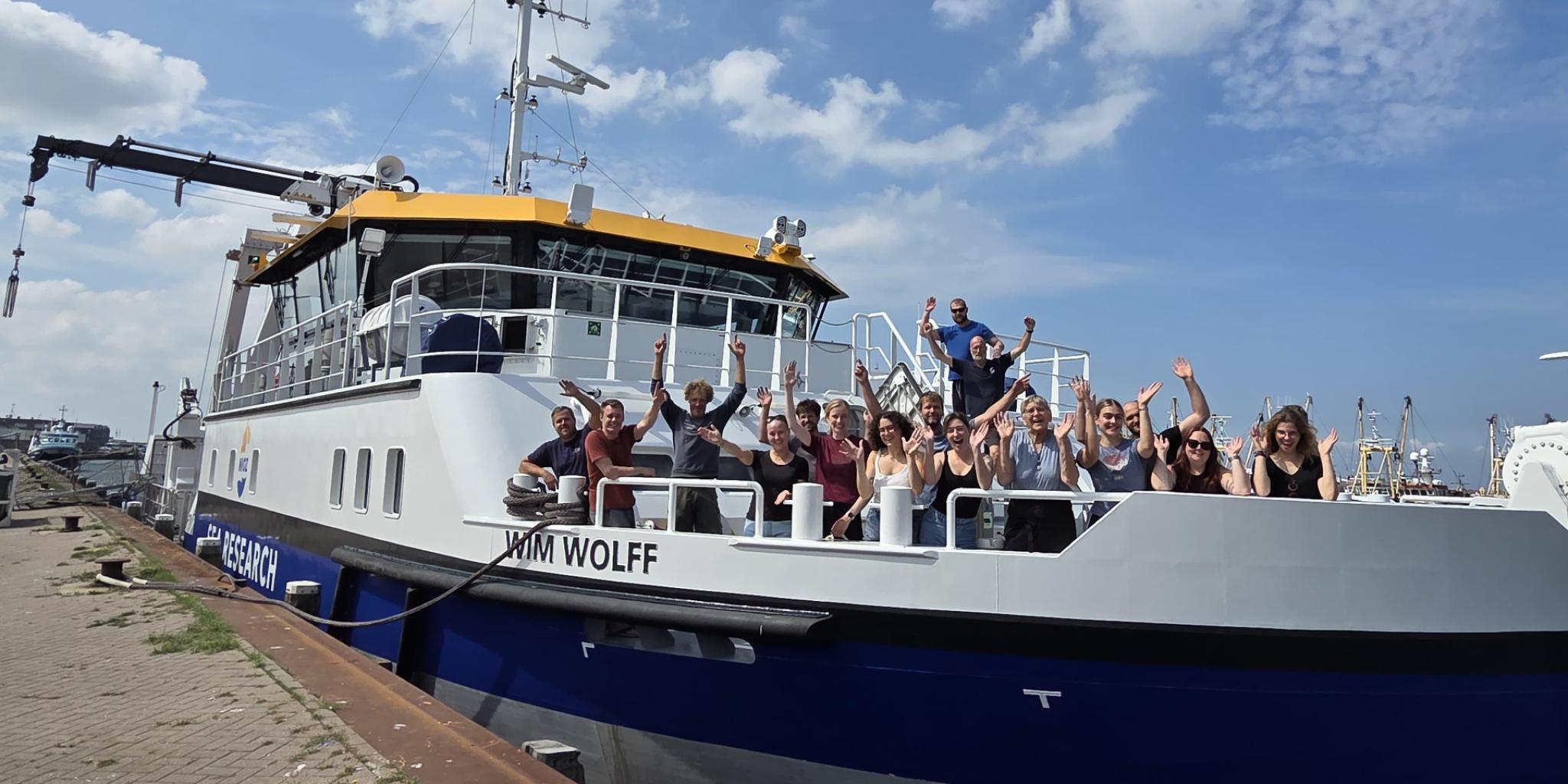
The team of week 1 of the SIBES expedition in August 2025 on the foredeck of the RV Wim Wolff (Photo: NIOZ)
What is it like to spend two weeks living and working at sea, collecting samples from the mudflats of the Dutch Wadden Sea? As part of my internship at the benthos lab, I joined the SIBES expedition aboard the Wim Wolff research vessel. Together with a dedicated team of boat drivers, volunteers, and crew, I experienced the unique rhythm of fieldwork: early mornings, shifting tides, unexpected challenges, and plenty of discoveries. From sampling benthic fauna and sediments to crossing vast tidal flats on foot, this journey offered both scientific insight and unforgettable memories.
I am Suzan de Wit, a fourth-year Applied Biology student at HAS green academy. Through my internship at the benthos lab, I had the opportunity to join this SIBES-trip. For two weeks, I was fortunate to take part in this unique fieldwork, which forms an important part of the SIBES project. Together with a team of six boat drivers, six volunteers, and four crew members, we crossed the Wadden Sea from Griend to Rottumeroog. This is my experience.
The data collected during the SIBES project is used by many researchers and students at NIOZ to map, among other things, the benthic fauna and sediment grain size of the intertidal mudflats in the Dutch Wadden Sea. In total, around 4500 sampling points are collected over a 6-week period (June, August, and September).
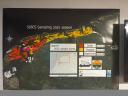
The map of the Wadden Sea showing what has been sampled (Photo: Suzan de Wit)
During the August trip, the goal was to start near Griend and sample as far east as possible. The idea was simple: The further we could get, the better. I can say it worked out quite well.
For two weeks, we lived and worked with a team of 16 aboard the Wim Wolff, with part of the crew changing halfway through the trip. Eating, working, and relaxing together created a great atmosphere on board. Thanks to the delicious meals prepared by our cook Sabine, we always had plenty of energy, and our expedition leader Dennis Mosk kept us on track with a clear and well-structured daily schedule.
Every day we went out on the water, each team charting its own route. Step by step, we moved further east. With the specialized equipment from NIOZ, developed specifically for this project, we collected sediment, benthos, and when present shellfish samples at every coordinate. Each sample was assigned a unique poskey number, processed together, and stored on the aft deck of the Wim Wolff.
At some stations, we also sampled on foot during low tide. Walkin across the mudflats while working is something truly special. You not only take samples, but also get to see and feel the type of sediment around you. On the way from one point to another, you encounter many details and organisms you would never notice from the boat.
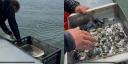
Left: Dennis sifting. Right: Dennis sifts through the sample he has taken, searching for live shells. (Photo: Suzan de Wit)
Of course, there were also challenges along the way, such as technical issues and the forces of nature. During the first two days, for example, we could not go out onto the mudflats because of strong winds reaching force 8. That meant staying on board of the Wim Wolff rocking on the waves, but we made good use of the time to prepare for the days ahead. Later, in the harbour of Lauwersoog, we faced a technical problem: the dinghies were able to continue sampling on the mudflats, but the Wim Wolff itself required repairs. Fortunately, the issue was quickly resolved in the harbour, just in time for the ship to catch the right tide towards Simonszand!
This sounds (and is) like hard work, but beside that there was also time to relax. We played games, watched films, or simply sat outside enjoying the stunning views over the Wadden Sea. On some evenings, we even took a refreshing swim during low tide, a perfect way to cool down after a long day of work.
All in all, these were two very successful weeks in which I learned a great deal about the wonders of the Wadden Sea. It is always the same sea, yet is feels different every single day. Each day surrounded by different weather, islands and views makes it special to be able to enter the water every time.

Bas and Fay sampling on the mudflats (Photo: Suzan de Wit)
About the SIBES research project
SIBES (Synoptic Intertidal BEnthic Survey) is a systematic long-term ecological time series programme for organisms that live in or on intertidal mudflats, the so-called benthos. Every year the abundances and distribution of benthic organisms is mapped across the entire Dutch Wadden Sea. The systematic monitoring data are an essential component of many studies like WATLAS
Opens in a new tab explaining how animals (birds, fish) distribute, and how their survival prospects depend on habitat use. SIBES is the largest annual sampling campaign in the world, setting the standard for the way benthic organisms are sampled on mudflats worldwide.Linked staff
Dennis Mosk
Research Assistant