NO-REGRETS aboard RV Thalassa
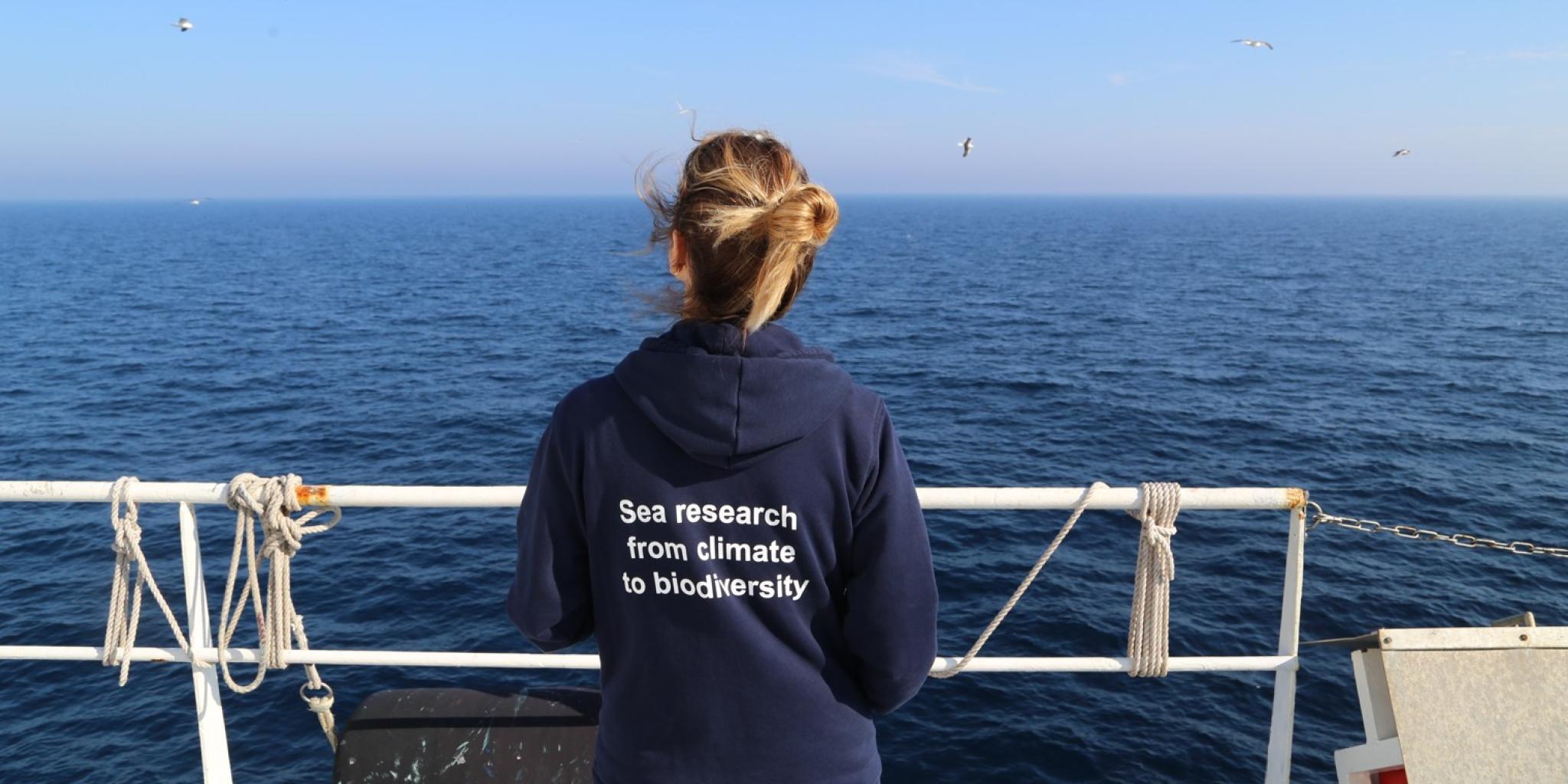
Eleonora Puccinelli waiting for temperature measuring at the incubator
The second research cruise from the project NO-REGRETS aboard R/V Thalassa will survey the Dutch North Sea through an intensive multidisciplinary programme combining water column observations, seafloor habitat mapping, fisheries acoustics, and biodiversity sampling to better understand ecosystem functioning around off-shore wind-farm areas. All blogs and photos are by Nuria Borafull.
25 June - Thalassa cruise highlights
Written by Femke Heldoorn
On the morning of June 11th we arrive in Scheveningen to board our home for the next two weeks: the Thalassa. With help from the ships crew, we load everything on board. This has some challenges, since the ship, and thus the crew, is French. Luckily we can communicate everything just fine, and everything gets set up. Since there is quite a range of different research going on, the gear varies from a CTD to an umbrella. The next day we leave the harbour to start our journey through the Dutch North Sea. The weather during the first days was a bit rough, so not everyone was feeling their best. Luckily (for me) there was a lot of work to do, which distracted from the sea-sickness. A big advantage of not being seasick is that you can enjoy the haute cuisine that we are served. We eat things like scallops, ray fin and mushroom crêpes. During the meals we also have time to get to know each other and ask about everyone’s research. It’s a very nice way to learn more about the other projects going on!
About 5 days into sailing, the weather starts to calm down, which makes the majority of the work a lot easier. Since these are the longest days of the year, there is quite a few sunny hours. When we did a zooplankton net at midnight, we could still see some light remaining from the sunset! It was so pretty that even some of the crew took pictures. During the second week we also had a barbecue with everyone. This was great fun, and a good way to try to socialize with the crew, who have been incredibly kind and helpful during this trip! During the last few days we slowly started finished and cleaning up. Hopefully we all leave the ship with good data, great Thalassa merchandise and even better memories.
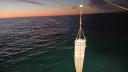
Sampling for zooplankton late in the evening (Photo: Femke Heldoorn)
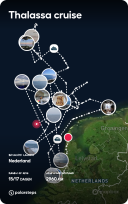
Polar steps shows route of NoRegrets cruise (Photo: Femke Heldoorn)
24 June - The sea has color and its light is reflected to the satellite
Another research day begins on board of the Thalassa and good weather continues to follow us in our journey! One of the particularities of this cruise is that we have on board a device known as ‘Ramses’ (yes we know, at first it sounds like a pharaoh). This tool allow us to analyse ocean color and light. Actually, the light that is reflected by the sea is the matter that reaches satellites!
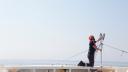
Crew member from the Thalassa assists Cleo in positioning the Ramses
Cleo is one of the PhDs from the NO-REGRETS Project and is based at NIOZ Yerseke. She analyses water samples to compare them with coloring and light reflection and the resulting satellite images. For this reason Cleo is very busy on board, collecting and filtrating water at the wet lab and collecting color and light data from the same location through the Ramses. For the device to work, the ship needs to be settled in a specific location in relation to the sun.
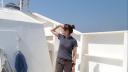
Cleo observes the direction of the sun in relation to the position of the ship and coordinates the data recording
Today we also had the chance of observing some life in the making: a fish egg happened to land on Hanna’s phytoplankton sample and revealed itself on the microscope.
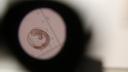
Fish egg seen through the microscope
22 June - The week begins on board
The early light of the day was covering the horizon of the North Sea when we arrived to our sampling super station at the Terschelling Transect, the largest in Dutch waters. Super stations are those moments in which the ship anchors at a specific location that holds a meaningful interests for the diverse scientists on board and large samples of data are collected from the teams, specially a significant amount of water samples. There is an orchestrated choreography around the CTD in which all scientists take their positions to refill waters. There is some charm in the teamwork spirit that is created in such moments.
It takes a team effort to collect data. That sense of collaboration is more visible on expeditions and fieldwork at sea, and it reminds us that scientific knowledge is produced collectively rather than individually.
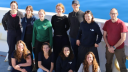
Our early career scientists on board (Photo: Nuria Bofarull)
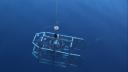
CTD being deployed during the super station (Photo: Nuria Bofarull)
21 June - Weekend aboard the Thalassa
We are on board of the Thalassa, sailing across the waters of the Dutch North Sea, around those areas that surround off-shore windfarms or where future construction is planned. It seems that good weather has decided to accompany us during our journey.The scientific team on board describes their work as a holistic approach to marine ecosystems. Indeed, the team is highly multidisciplinary and diverse, which adds an additional layer of richness to the research process that will unfold on the vessel. From bird observations to plankton, fish communities to seafloor scanning, they will explore the diverse effects and impacts of off-shore windfarms on the Dutch North Sea. This expedition is part of the NWO Project NO-REGRETS: North Sea Renewable Energy – Getting the Required Ecological Knowledge for the Transition, which has just entered its first year. The cruises we engage now seems like the starting point of a research journey that is only starting.
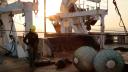
Jenny on deck during the fish deployment (Photo: Nuria Bofarull)
Linked staff
Eleonora Puccinelli
Senior Scientist

Cleo van Rijs
PhD student

Roos Kentie
Postdoc
Hanna Stegeman
PhD student
Follow updates
Follow the expedition on the NO-REGRETS LinkedIn page
North Sea Renewable Energy - Gaining the Required Ecological Knowledge for the Transition