CO2 removal? Child’s play!
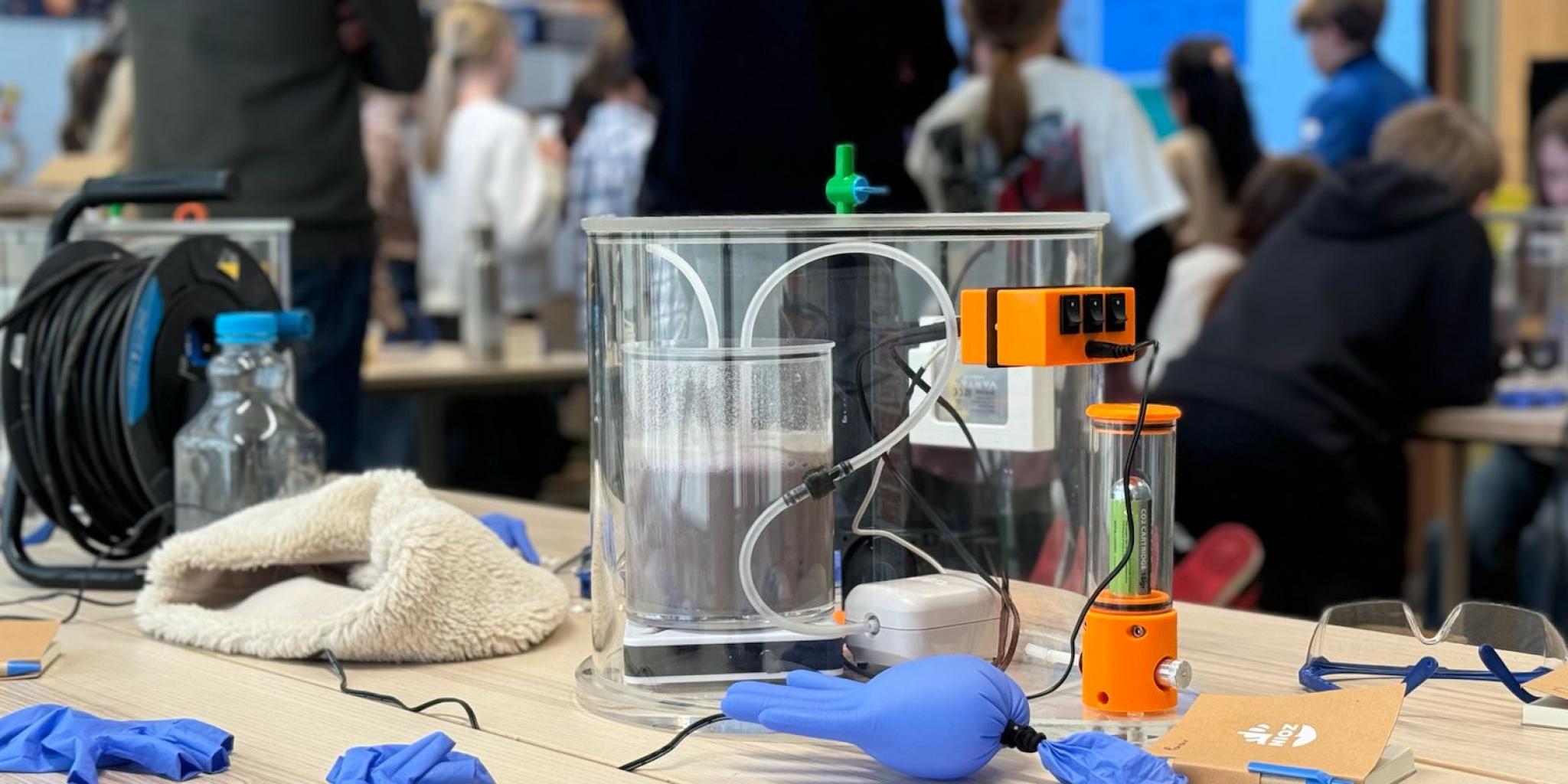
A demonstration setup with a clear tank and sensors on a table, surrounded by lab gloves and equipment, while people watch in the background (photo: Rob Buiter)
On November 18, Rick and Peter of OCS took their research to the young people. Instead of a calm start with colleagues at the coffee machine, these tireless science communicators got in line at 8:15 with loads of raucous kids to enter a primary school in Amsterdam. Which happened to be the primary school that Peter’s daughters attend. Peter: an outreach hero or just trying to impress his daughters and their friends with his science? We will never know.
Photo: Rob Buiter
The NIOZ boys had brought four ‘CO2-removal units’ that were especially built for this project by Roel in the workshop. The units were designed to illustrate the capacity of some rocks to take up atmospheric CO2 during weathering (i.e. dissolution). The catch: the units were completely disassembled, and it was up to the kids to build and test them.
The science morning, conducted with a group of 19 kids that participate in the ‘Learning Lab’ at their school, was a roaring success. With sharp insight and great enthusiasm, four groups of kids built operational CO2 removal units. Inspired and supported by Rick and Peter, held in check when needed by their teacher Allard. The kids reported the readings on the CO2 sensors in their setups to Peter, who entered them into datasheets with graphs to follow the performance of each unit in real time. Radio journalist Rob Buiter dashed to and fro between the kids to pick up the sounds and vibes for an item (click here
Opens in a new tab) for the science radio show ‘Vroege Vogels’.It turns out: sea sand is no good for CO2 removal and neither is coarse olivine, while fine olivine showed promise. The best part of this science morning, without doubt, was the engagement, enthusiasm and razor-sharp questions of 19 kids. Feels somewhat comforting, in a country led by grownups that just shout without understanding.

Photo: Rob Buiter
Linked staff
Peter Kraal
Senior Scientist

Rick Hennekam
Senior Scientist

Follow updates
Photo: Rick Hennekam
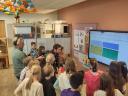
Group photo of students (photo: Rick Hennekam)