Carbon and nutrient cycles
We study how chemical, biological, and physical processes control the flow of carbon and bio-essential nutrients in the ocean. Our research reveals how these interacting processes shape the conditions for marine life and help regulate the global carbon cycle, from surface waters to deep sediments.
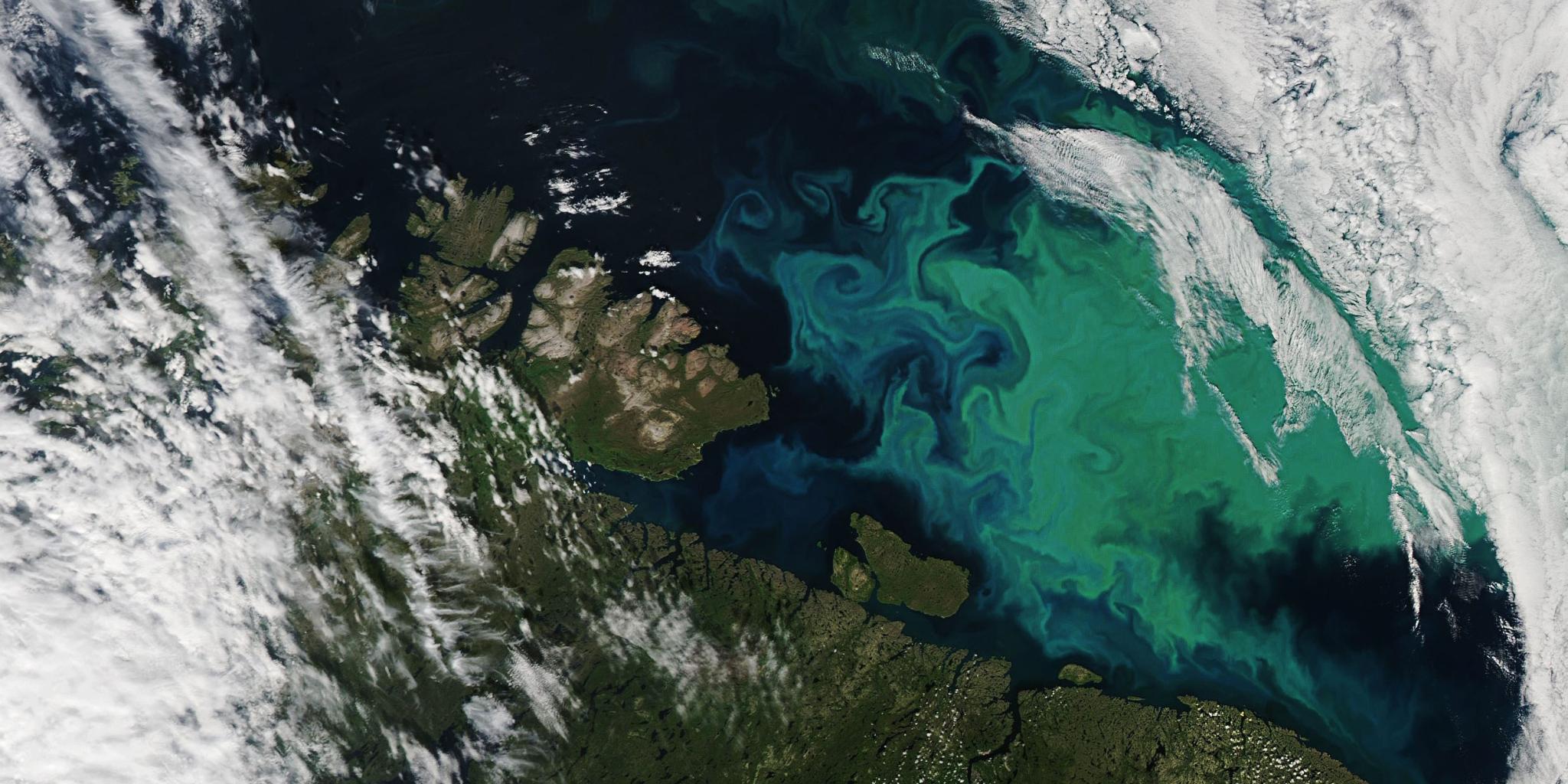
The Barent Sea from space, showing an algaeal bloom (photo: NASA)
Nutrients such as iron, nitrogen, and phosphorus are essential for all life in the ocean. In sunlit surface waters, their availability controls the growth of CO₂-absorbing microscopic algae. Algae form the base of the marine food web by using sunlight’s energy to convert CO2 into biomass. This process not only sustains marine ecosystems but also helps to drive the oceanic uptake of atmospheric CO2. We study how carbon and key nutrients cycle through water, ecosystems, and sediments — how they are stored, transported, and released. We combine measurements and experiments at sea and in our laboratories to study these interconnected cycles, both today and over geological timescales.