Utilizing estuaries
Estuarine ecosystems provide products and services to humankind. Most well-known are fish and shellfish, but also seaweed. Additionally, estuarine ecosystems also remove nutrients and waste products from the water and provide safety by buffering waves. With our research, we study the many ways that humans benefit from estuaries.
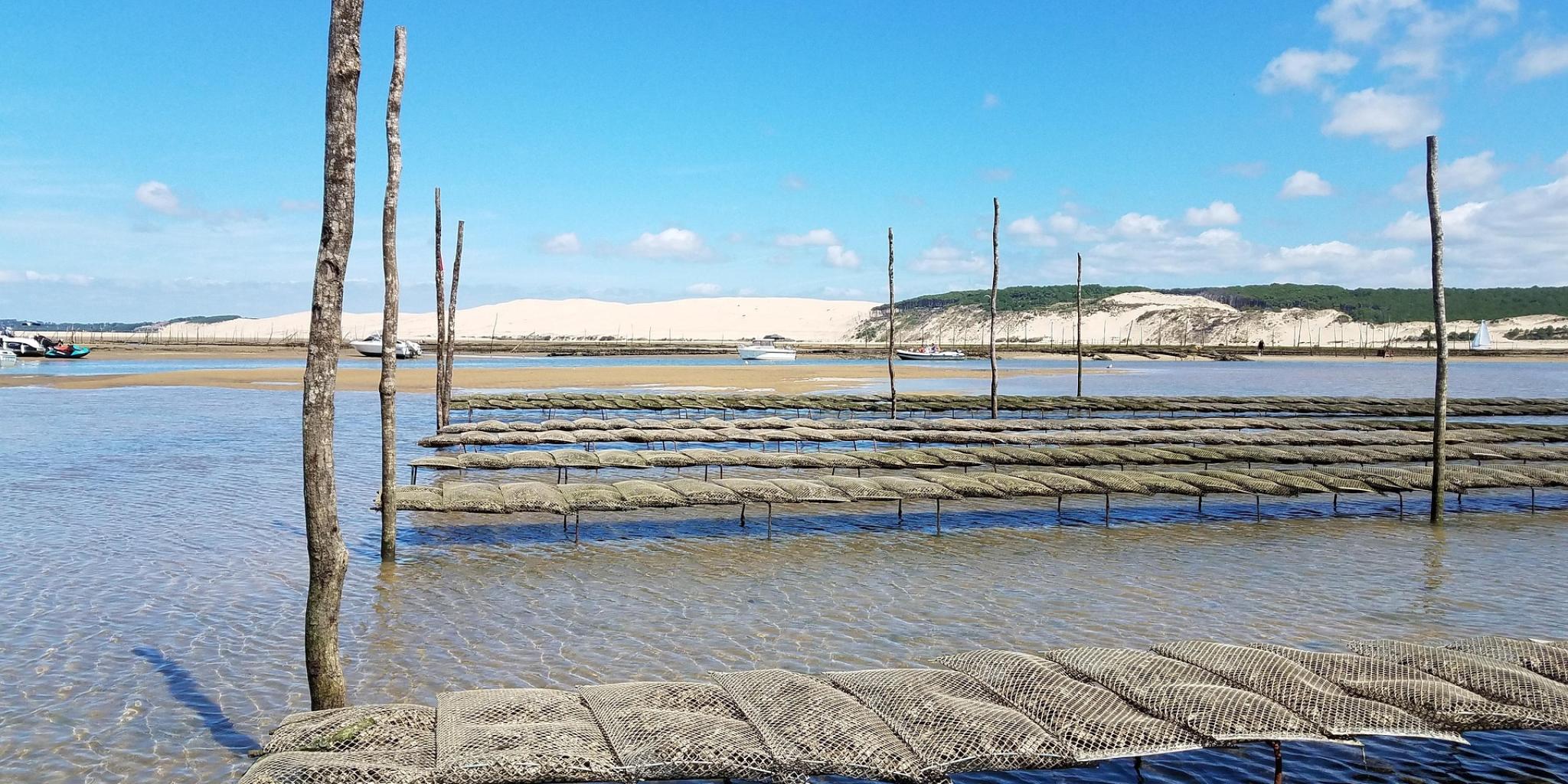
Arachon basin
Estuarine vegetation can help us defend our coast. Plants attenuate the waves that threaten our dikes, both with their leaves and stems, but also because of the elevated foreshore they build. Because coastal vegetation typically traps sediment, they help keep the shore elevation up with sea level, making their defence value sustainable. We aim to provide the key-knowledge as needed to translate the idea to practice.
Providing the ever-increasing human population with sustainable food and energy is an enormous challenge. Agricultural lands are over-exploited, freshwater is becoming scarce, the energy transition requires alternatives to fossil fuels. Humanity is turning to the oceans and seas in its search for future food and energy. At the Seaweed Centre, we are investigating the various possibilities to use seaweed as a sustainable and nutritional bioresource. As an example, seaweed can play an important role in the supply of future protein needs while simultaneously assisting in regenerating healthy ecosystems.
Our work also relates to important issues around understanding how human influence alters the marine environment, and how we may better mitigate and protect biota and environments. This includes extensive work on marine structures such as wind farms and oil platforms, which can provide a substrate for benthic animals. As well as better appreciation of food webs and feeding connections in marine environments.