Restoring estuaries
Intertidal ecosystems are being lost at alarming rates, for the most due to human activities. As intertidal ecosystems provide many functions and services, such as coastal protection, carbon sequestration, and provide habitat to many species, it is essential to restore them. We develop a range of innovative techniques to help restore valuable intertidal ecosystems.
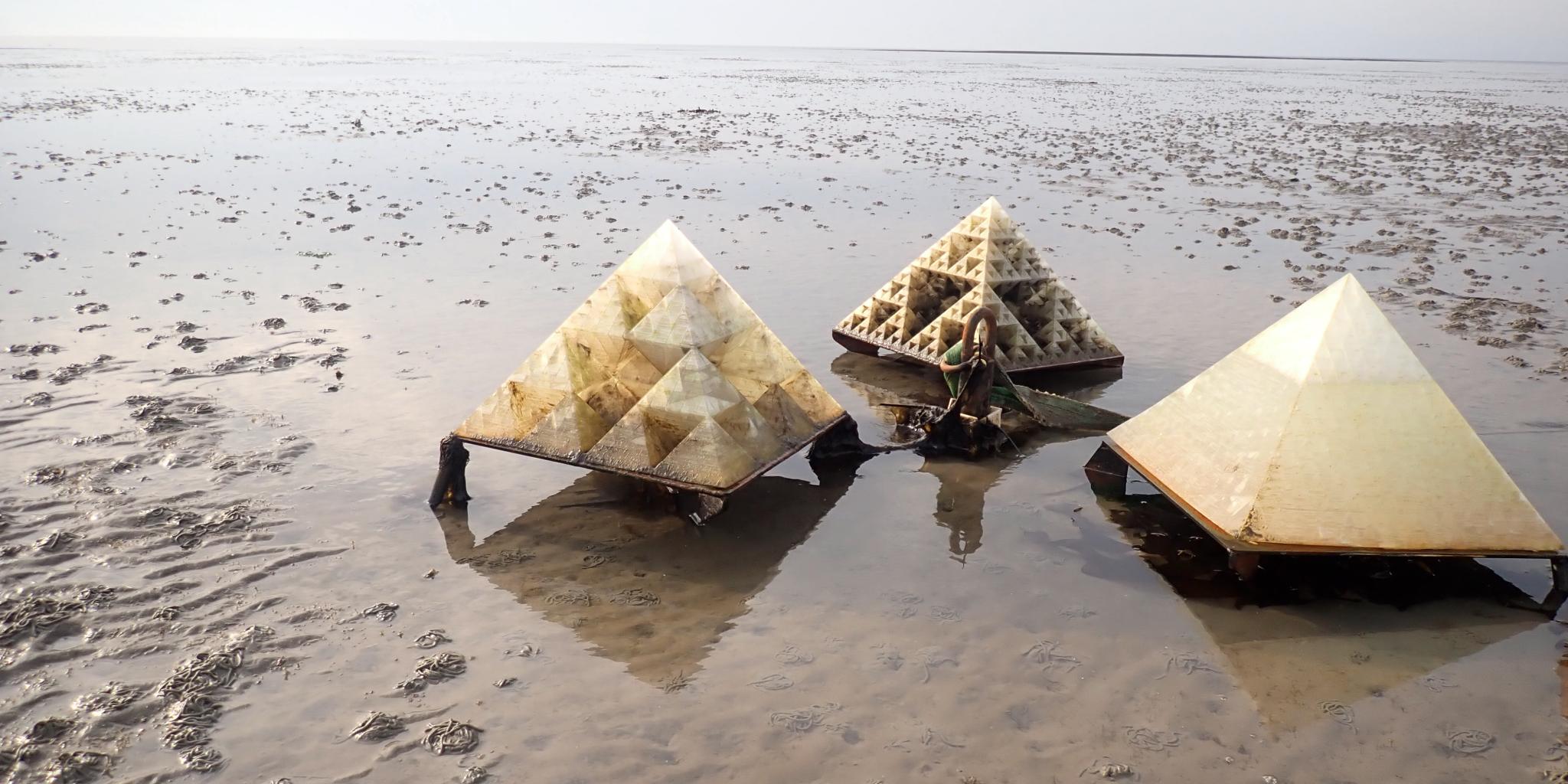
Artificial reefs
We work across a range of areas in ecosystem restoration, using many methods to help provide a basis for the recovery of entire ecosystems, which in turn can help in buffering wave action and improve the safety of coastal communities.
We use satellite and airborne data, combined with big data analysis, in order to support nature-based solutions, by mapping of key variables and increasing our understanding of the functioning of tidal systems. To assess the potential of saltmarshes and other nature-based solutions for flood defence and erosion risk management, we need to understand how foreshores develop and how stable they are. We work on artificial reefs and how bivalve beds provide a home for many intertidal species, and form an important basis for the marine food web.
In temperate estuaries, mussels and oysters are the most prominent reef-forming organisms. They consume algae and play a role in nutrient and carbon cycles. Our work also includes how, for example, seagrasses can mitigate against pathogens, and their potential use in bioremediation alongside shellfish production.