Virtual reality
In a ‘digital twin’ we combine virtual reality technology with ecological models. This provides a lifelike glimpse of what the past was like, or what the future will bring.
When model predictions of coastal and marine landscape formation are combined with modern visualisation technology, it becomes possible to depict how the ecosystems that we are restoring will look like in the future. Or to give lifelike depictions of the implications of management choices. It becomes possible to visualise what high-biodiversity, natural systems looked like in the distant past, before humans started to shape the landscape. NIOZ is actively developing models and technology t/to realize this. Two examples of these digital twins can be found below.
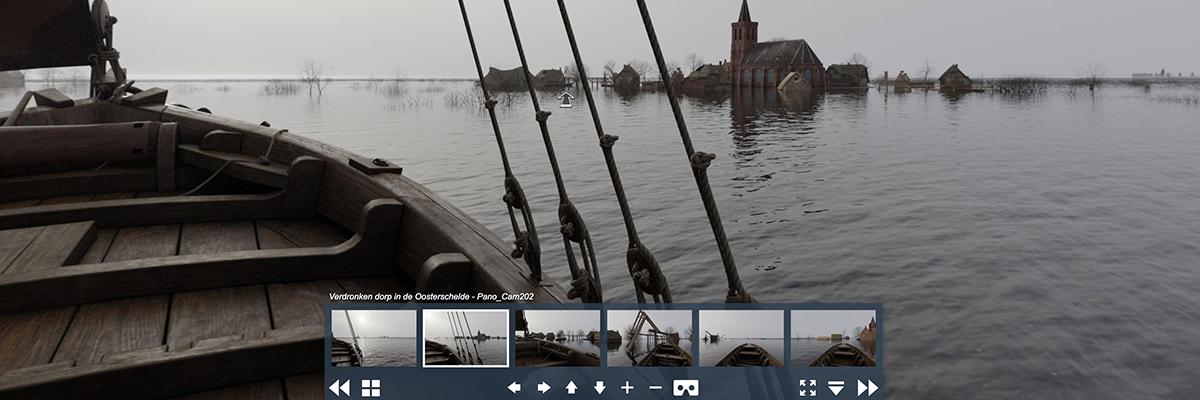
Drowned land of the Scheldt Delta
This 3D tool shows the changes that occurred during the ‘drowning’ of a village in the Scheldt Delta in the 16th century.
More information via Johan van de Koppel
A still from the virtual environment "The Drowned Land of the Scheldt Delta". (credits: NIOZ)
Ecosystem restoration in VR
A 3D depiction of the practice and results of the restoration of a healthy estuarine ecosystem using Biodegradable Elements for Starting Ecosystems (BESE) to help restore populations of keystone species such as mussels and seagrass. In collaboration with Bureau Waardenberg.
More information via Jim van Belzen

A virtual environment showing coastal restoration possibilities and their effects (image credit: NIOZ)