Code Blue
Harmonised ocean model results for a blue sustainable eutrophication management of the North-East Atlantic Ocean an Baltic Sea
Code Blue will address major knowledge gaps in the North-East Atlantic Ocean and Baltic Sea for eutrophication. It will apply a multi-model approach combined with unique historic forcing data sets to identify the importance regionally of different drivers for eutrophication (excess nutrient inputs, climate change) and test proposed nutrient (N, P) input ceilings under a warming climate. The work supports efforts by regional seas conventions, EU framework directives and national governments to improve marine water quality, and will test the impact of future conditions on selected blue economic activities like aquaculture.
Duration

Logo CodeBlue
Project description
The ministers of the bordering countries of the North-East Atlantic Ocean and the Baltic Sea have agreed to follow recommendations from dedicated conventions regarding maximum nutrient inputs to their coastal waters, with the aim of achieving good environmental status. These conventions require up-to-date environmental information and knowledge, which can only be derived from robust, coherent, accessible, and applicable data sets that provide the relevant spatiotemporal resolution necessary to support science-informed, efficient, and sustainable policy-making in a changing environment.
However, existing datasets do not meet these criteria. Indeed, eutrophication assessments show that the measures implemented in the North-East Atlantic Ocean and the Baltic Sea so far have not been uniformly effective. Knowledge gaps exist around the impact of climate change on eutrophication and the interaction with nutrient reduction policies, potentially undermining current management actions and future policy plans. In this context, Code Blue's driving questions are: a) at the scale of the North-East Atlantic Ocean and the Baltic Sea: Has climate change been a significant factor compared to anthropogenic nutrient loads in establishing present-day eutrophication? Will the "Maximum Allowable Input" of nutrients be sufficient to resolve the eutrophication issue in a changing climate?; b) at the local scale: How will the implemented measures affect blue economy activities, such as aquaculture and local management in Code Blue’s specific coastal areas?
As marine pollution transcends national maritime borders and regional seas, it is essential to address the lack of a common conceptual approach between the North-East Atlantic Ocean and the Baltic Sea. Code Blue will tackle well-identified knowledge gaps by establishing a strong, dedicated network across the distinct conventions. The project will create a robust, coherent, accessible, and applicable data set to provide up-to-date environmental information that directly addresses urgent requests and ongoing management discussions, and a way forward in eutrophication management considering environmental changes. In this regard, Code Blue aims at providing guidelines and policy briefs that go beyond the current state of the art to improve large- and regional-scale eutrophication assessments for the future. Importantly, Code Blue will consider the long-term aspects of biogeochemical cycles, such as nutrient storage in ...
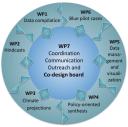
Code Blue Diagram
Project leader
Sonja van Leeuwen
Scientist

Project team
Johan van der Molen
Senior Scientist

External project leader
Elin Almroth-Rosell
Opens in a new tabProject Coordinator
External project members and interns
Kenny Larsen
NIOZ