Where river meets the sea, PhD defense by Guangnan Wu on 17 April 2026
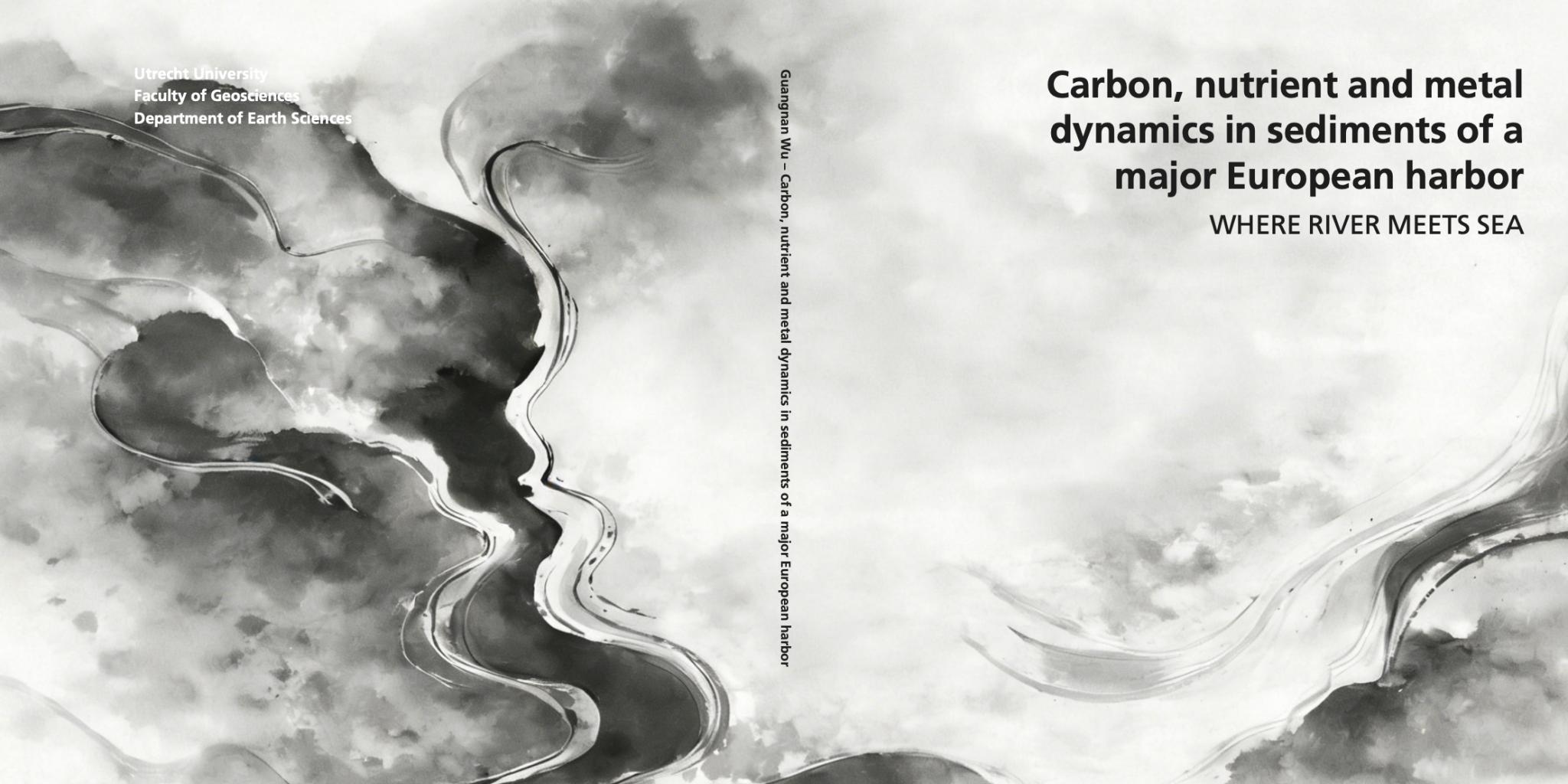
Comver dissertation Guangnan Wu 17 April 2026
Estuaries, located at river mouths, are important for storing carbon and trapping nutrients and pollutants. These environments are increasingly affected by man-made perturbations such as dredging and climate change with associated saltwater intrusion. Furthermore, the reuse of the dredged material is also gaining popularity globally, while the related environmental impacts are poorly studied.
In this thesis, field measurements, laboratory experiments and modeling are combined to investigate how carbon, nutrients and heavy metals dynamics respond to such perturbations in sediments of the Port of Rotterdam. Dredging exposes previously buried sediment to oxygen, which rapidly changes its chemistry and can lead to the release of greenhouse gases, nutrients and contaminants. The findings show that while the chemical properties and sensitivity of carbon and metal pools vary in the harbor area, dredged sediments show high CO2 emission rates. In the waterways, dredging disturbs microbial CH4 consumption and thereby boosts CH4 release from the sediment. In addition, saltwater intrusion under climate change may release phosphorus from sediments and affect coastal water quality.
The results provide important process-based insights that can support more sustainable sediment management in ports and estuaries.
About this thesis
Thesis title: Carbon, nutrient and metal dynamics in sediments of a major European harbor where river meets the sea
Candidate: Guangwan Wu
Supervisor: Gert-Jan Reichart
Co-supervisor: Peter Kraal
Linked staff
Gert-Jan Reichart
Head of Ocean Systems

Peter Kraal
Senior Scientist

Practical Information
Guangnan Wu will defend his thesis on 17 April 2026 at 14.15, in the Academy Building of Utrecht University
Front of the dissertation of Guangnan Wu of 17 April 2026