Vidi grant for studying how whales hunt in deep sea
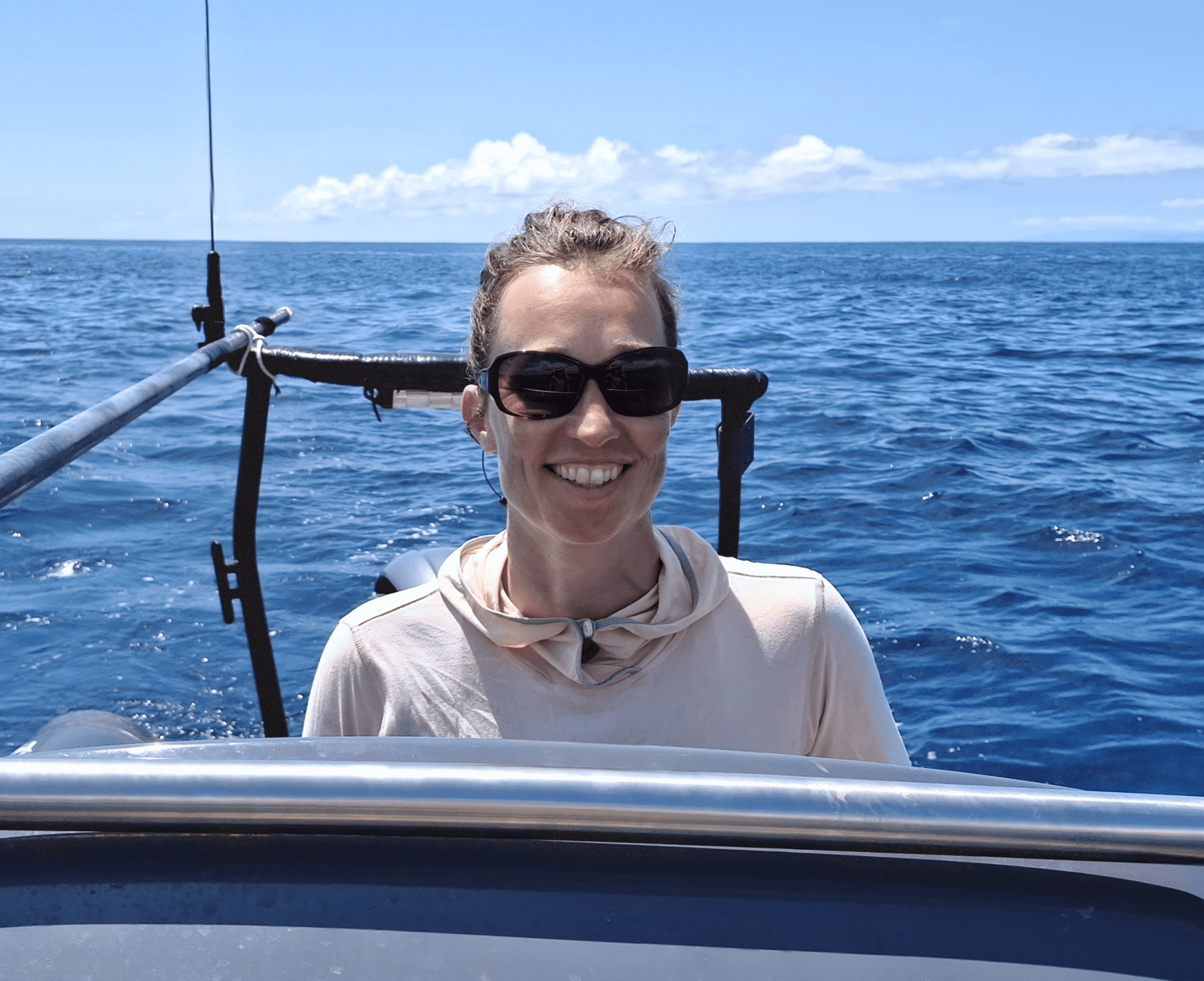
Fleur visser on the Nephin. (photo: NIOZ)
NIOZ scientist Dr. Fleur Visser has received a prestigious NWO-Vidi grant to study how, when and where toothed whales, large mammalian top predators, hunt in the deep-sea. This Vidi grant enables Fleur Visser and the other 101 laureates to develop an innovative line of research over the next five years and further expand their own research group.

Fleur Visser stands on the bow platform of a small boat at sunset. (photo: NIOZ)
“Because the deep sea holds extreme and unique conditions, we expect its predatory interactions to be very different from what we know from terrestrial systems and shallow seas. Together with our collaborators and the Vidi project's postdoc and PhD, we will investigate how toothed whales hunt for deep-sea squid across four deep-sea ecosystems in the North Atlantic and Mediterranean Sea.”
Tracing top predator-prey interactions into the deep sea
The deep sea is the Earth’s largest and most data deficient ecosystem. While forming pivotal roles in ecosystem function, interactions between deep-sea top predators and their prey remain largely unobserved. This challenges not only our fundamental understanding of deep-sea systems, but also their conservation. In this project, Fleur Visser investigates how interactions between toothed whale top predators and their deep-sea cephalopod prey are shaped by the unique selective pressures of the deep ocean. In addition, she will develop novel approaches for multi-trophic deep-sea research, and indicators for deep ocean conservation.
NWO Talent Programme
NWO awarded 102 leading researchers from the Science (ENW), Applied and Engineering Sciences (AES) and Social Sciences and Humanities (SSH) domains, as well as Health, Research and Development (ZonMw). Together, they received Vidi grants of in total 86,7 million euros.
T NEXT he NWO Talent Programme gives researchers the freedom to pursue their own research based on creativity and passion. The NWO Talent Programme encourages innovation and curiosity. Curiosity-driven research contributes to and prepares us for tomorrow’s society. That is why NWO focuses on diversity in terms of researchers, domains and backgrounds. Together with the Veni and Vici grants, Vidi is part of the NWO Talent Programme.
NWO selects researchers based on the academic quality and innovative character of the research proposal, scientific and/or societal impact of the proposed project and the quality of the researcher.
Linked staff
Fleur Visser
Senior Scientist
