Third National Ocean Science Conference brings marine science community together on World Ocean Day
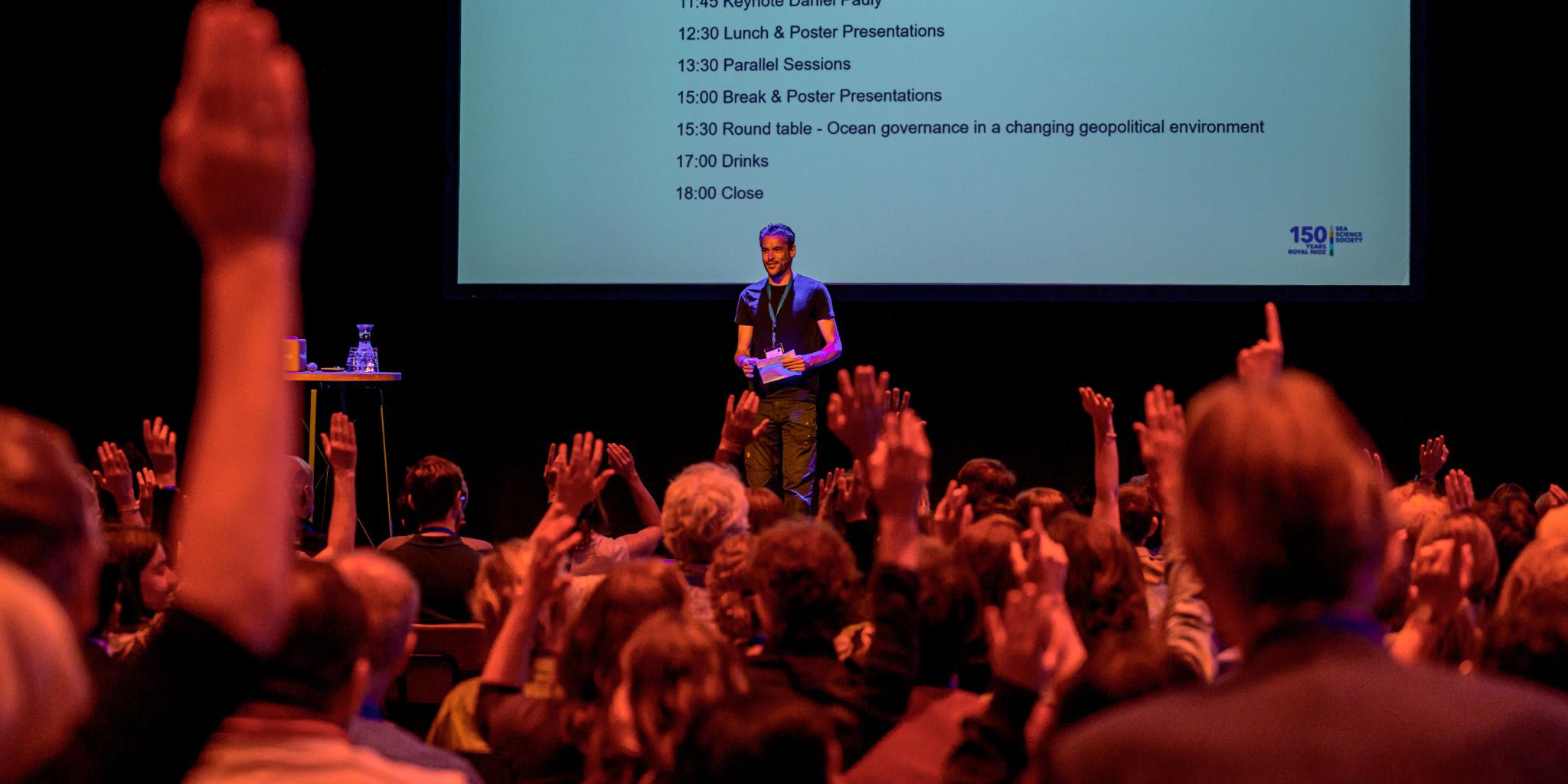
Moderator Sjoerd Groeskamp on National Ocean Science Conference of 8 June 2026 (Photo: NIOZ/Roel Ovinge)
On 8 June, researchers, policymakers, students, and marine professionals gathered in Den Helder for the National Ocean Science Conference (NOSC), held in celebration of World Ocean Day. This year's conference was particularly significant as it was combined with the 150th anniversary of NIOZ. The conference was organized in collaboration with Naturalis Biodiversity Center and the Sustainable Ocean Community at Utrecht University.
The event opened with a welcome address by moderator Sjoerd Groeskamp and NIOZ Director Han Dolman. The opening session was followed by two inspiring keynote speeches that set the tone for a day focused on innovation and the future of ocean science.
Perspectives from leading ocean scientists
The first keynote lecture was held by Helen Czerski (University College London) entitled Seeing the Sea: Our Changing Attitudes to the Physical Nature of the Ocean. In her presentation, Czerski explored how our perception of the ocean shapes our relationship with it, emphasizing that humans are citizens of an ocean planet and that understanding the ocean's physical processes is fundamental to understanding life on Earth. Drawing on the latest developments in ocean science, she reflected on how stories from the past can help shape future conversations about the ocean and its role in society.
“Nothing on this planet is as it is without the ocean. Even if we don’t go there, we all have a personal connection to the ocean. It’s our life support system. These are the stories we need to start telling.”
Helen Czerski talks at the National Ocean Science Conference on 8 June 2026 (Photo: NIOZ, Roel Ovinge)
Participants also attended a screening of The Trap, Portrait of Time by filmmaker Threes Anna. The short, wordless documentary portrays Sieme Gieles, who has emptied and cared for the NIOZ fish fyke for many decades. He struggles with passing on his craftsmanship to newcomers and having to let go his lifelong passion for his profession in a changing world.
The second keynote lecture was delivered by Daniel Pauly (Institute for the Oceans and Fisheries, University of British Columbia), one of the world's most influential fisheries scientists. In his presentation, Fifty Years of Fisheries and Marine Research: A Personal Account, Pauly reflected on the experiences that shaped his scientific career and the major developments in aquatic research over the past five decades.
Daniel Pauly presenting at the National Ocean Science Conference on 8 June 2026 (Photo: NIOZ, Roel Ovinge)
Interactive workshops
Three interactive workshops provided opportunities for discussion and collaboration across disciplines during the conference.
The first workshop, Maximizing the Impact of Marine Science Communication, focused on how researchers can effectively engage with policymakers, stakeholders, and the broader public.
In the second workshop, Future Sea Levels & Nature-Based Approaches, discussions centred on the potential of nature-based solutions to strengthen coastal resilience.
The third workshop, The Value of Long-Term Marine Monitoring for Science, Policy and Conservation, emphasized the important role of sustained observation programmes in understanding marine ecosystems and supporting evidence-based decision-making.
Small groups discussing during workshop on the Impact of science communication (Photo: NIOZ/Roel Ovinge
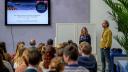
Femke de Jong and Allert Bijleveld present workshop 3 during National Ocean Science Conference (Photo: NIOZ/Roel Ovinge)
Ocean governance in a changing geopolitical environment
A round table discussion explored the geopolitical challenges facing the ocean and international ocean governance. Bringing together perspectives from international law, government policy and marine conservation, the discussion highlighted the growing need for international cooperation in a rapidly changing world. Topics included the role of the United Nations Convention on the Law of the Sea (UNCLOS), the implications of climate change for ocean governance, and the opportunities and challenges presented by the new Biodiversity Beyond National Jurisdiction (BBNJ) Agreement.
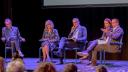
Panel discussion on Ocean Governance (Photo: NIOZ/Roel Ovinge)

Participants at the National Ocean Science Conference (Photo: NIOZ/Roel Ovinge)
Poster presentations
One of the central parts of the conference programme was the poster session, which provided researchers and students with an opportunity to present their latest work and exchange ideas with colleagues from across the Dutch marine science community. The presented posters covered themes including human influence on the ocean, ocean observations, climate change, and blue economy.
Thank you to everyone who joined us in celebrating ocean science and building on the future of our seas.

Poster presentation National Ocean Science Conference 8 June 2026 (Photo: NIOZ/Roel Ovinge)