Scientists discover deep-sea microplastic hotspots driven by fast-moving underwater avalanches
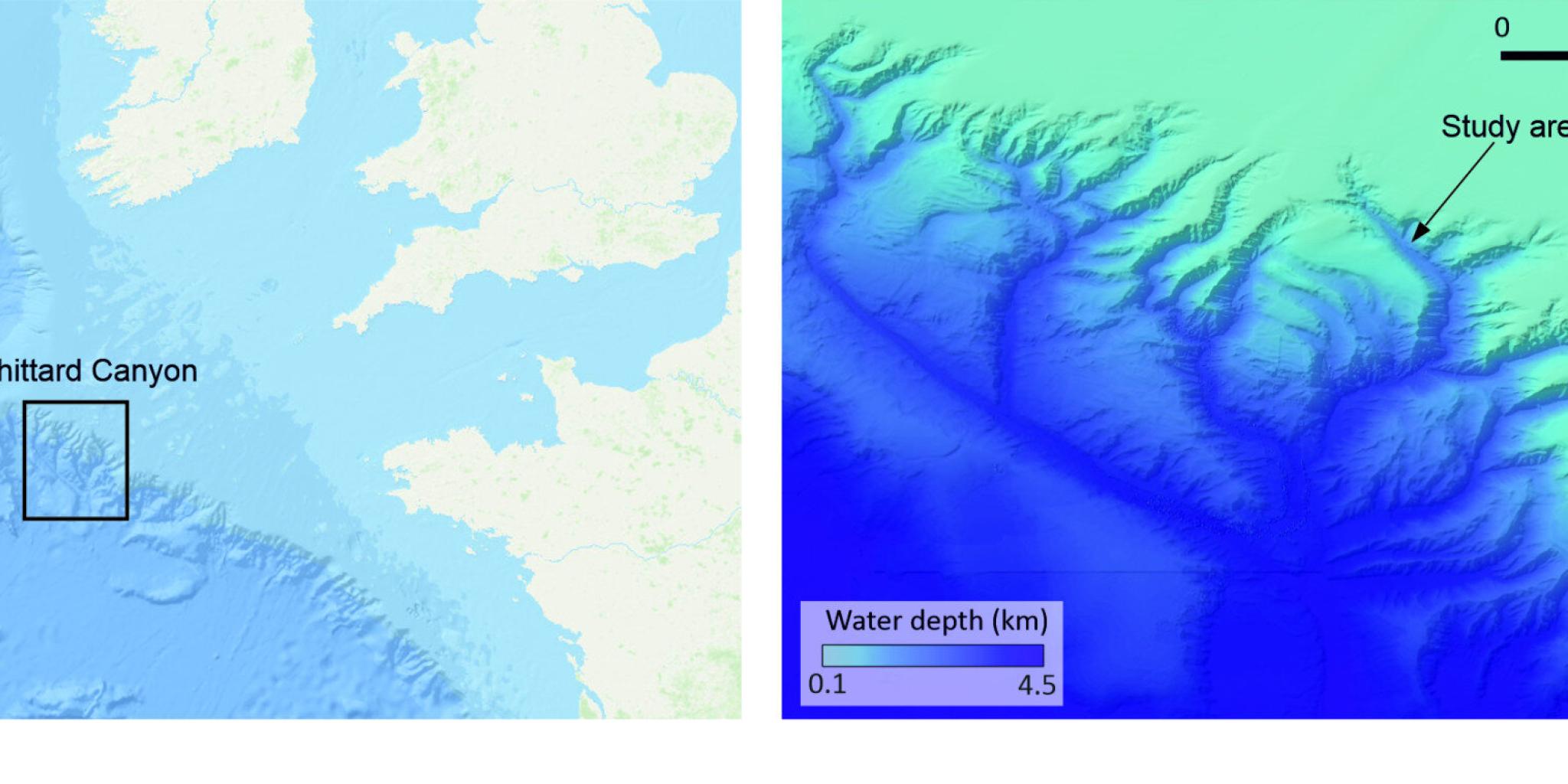
A geographic map on the left and an ocean depth map on the right showing water depth in kilometers.
Fast-moving underwater avalanches, known as turbidity currents, are responsible for transporting vast quantities of microplastics into the deep sea, according to new research.
The findings, published in the journal Environmental Science and Technology
Opens in a new tab, show that these powerful flows could be capable of traveling at speeds of up to eight meters per second, carrying plastic waste from the continental shelf to depths of more than 3,200 meters.Only 1% of ocean plastic is visible
Over 10 million tonnes of plastic waste enter the oceans each year. While striking images of floating debris have driven efforts to curb pollution, this visible waste accounts for less than 1% of the total. The missing 99% – primarily made up of fibres from textiles and clothing – is instead sinking into the deep ocean.
Turbidity currents spread microplastics across the seafloor
Scientists have long suspected that turbidity currents play a major role in distributing microplastics across the seafloor – The University of Manchester were among the first to demonstrate this through their research on ‘Microplastic Hotspots’ in the Tyrrhenian Sea, published in the journal Science
Opens in a new tab. However, until now, the actual process had not been observed or recorded in a real-world setting.Turbidity currents spread microplastics across the seafloor
The latest study conducted by The University of Manchester
Opens in a new tab, the National Oceanography Centre (UK), the University of Leeds (UK), and the Royal Netherlands Institute for Sea Research provides the first field evidence showing the process.The findings pose a significant threat to marine ecosystems and highlight the urgent need for stronger pollution controls.
Microplastics as carriers of harmful substances
Dr Peng Chen, lead author on the study at The University of Manchester, said “Microplastics on their own can be toxic to deep-sea life, but they also act as ‘carriers’ transferring other harmful pollutants such as PFAS ‘forever chemicals’ and heavy metals, which makes them an environmental ‘multistressor’ which can affect the entire food chain.”
Research in the Whittard Canyon
The research focused on Whittard Canyon in the Celtic Sea, a land-detached canyon over 300 km from the shore. By combining in-situ monitoring and direct seabed sampling, the team were able to witness a turbidity current in action, moving a huge plume of sediment at over 2.5 metres per second at over 1.5 km water depth. The samples directly from the flow revealed that these powerful currents were not only carrying just sand and mud, but a significant quantity of microplastic fragments and microfibres.
Textile fibres as the main source
Further analysis found that the microplastics on the seafloor are mainly comprised of fibres from textiles and clothing, which are not effectively filtered out in domestic wastewater treatment plants and easily enter rivers and oceans.
A threat to deep-sea ecosystems
Dr Ian Kane, Geologist and Environmental Scientist at The University of Manchester, who designed and led the research, said: “These turbidity currents carry the nutrients and oxygen that are vital to sustain deep-sea life, so it is shocking that the same currents are also carrying these tiny plastic particles."
Submarine canyons as global plastic hotspots
“These biodiversity hotspots are now co-located with microplastic hotspots, which could pose serious risks to deep-sea organisms.
“We hope this new understanding will support mitigations strategies going forward.”
“The role of canyons acting as important pathway for the transport of matter including plastics from shelves to the deep sea has been emphasized in this study”, says dr. Furu Mienis of the Royal Netherlands Institute for Sea Research. “During several expeditions within the NWO funded BYPASS? Project we were able to sample sediment along the Whittard Canyon axis to depths over 3000 m water depth. At all sites plastics were observed in the sediments. With thousands of canyons incising the continental margins globally, many more of these deep-sea plastic hotspots deposition areas are to be expected.”
The need for policy and future research
Dr Mike Clare of the National Oceanography Centre
Opens in a new tab, who was a co-lead on the research, added: “Our study has shown how detailed studies of seafloor currents can help us to connect microplastic transport pathways in the deep-sea and find the ‘missing’ microplastics. The results highlight the need for policy interventions to limit the future flow of plastics into natural environments and minimise impacts on ocean ecosystems.”The study team are now focussing on efforts to better understand the effect that microplastics have on marine organisms, for example sea turtles and deep-sea fauna.

Credit: Environmental Science & Technology (2025). DOI: 10.1021/acs.est.4c12007
Linked staff
Furu Mienis
Senior Scientist