Researchers: gas extraction Ameland has ecological impact
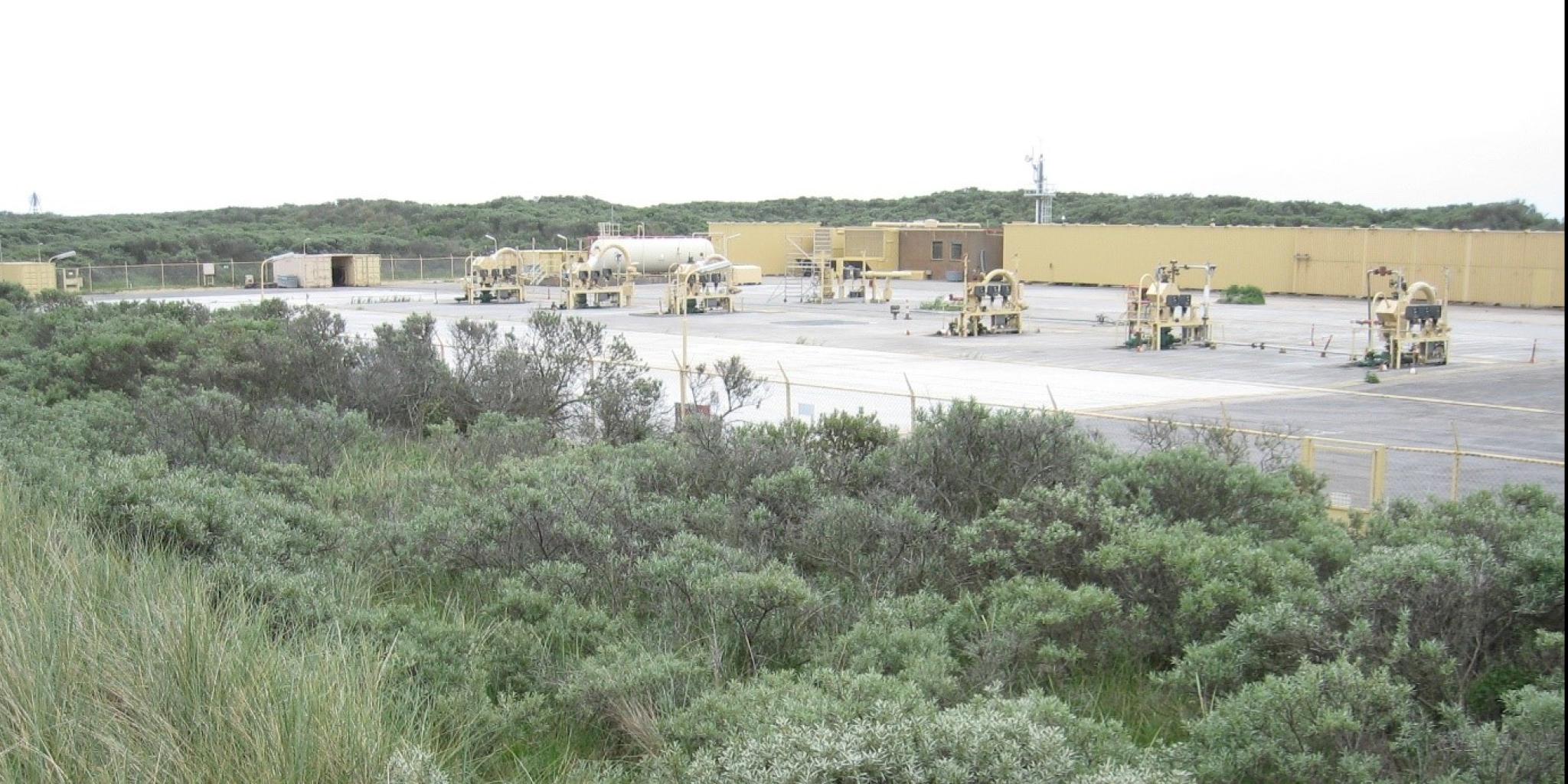
Gas extraction site on Ameland. (photo: Bruno Ens)
Gas extraction under Ameland has ecological impact. This is the conclusion of researchers Martijn van de Pol (James Cook University) and Allert Bijleveld (NIOZ) together with several colleagues in an article in the journal De Levende Natuur. For this, they combined the results of several studies on gas extraction in the Wadden Sea. Moreover, the signalling function of the current monitoring programme according to the ‘hand-to-tap’ principle is too limited, the researchers conclude.

Gas extraction site on Ameland. (photo: Bruno Ens)
Gas extraction on Ameland takes place under the salt marshes and mud flats and has been monitored since the 1980s. If there are indications of significant effects on nature, the government must take action by reducing or even stopping gas extraction. This is known as the “hand on the tap” principle.
Nests flooded more often
For the article, the authors collected several studies on the consequences of gas extraction in this area in order to obtain an overall picture. One of the studies shows, for example, that the chances of flooding of the nests of various breeding birds on the salt marshes have increased significantly due to land subsidence. Nests of lesser black-backed gulls, for example, flood eight times more often due to gas extraction than without it. Abnormalities have also been found on the mudflats. The mudflats are muddier, the sand is finer and the composition of soil animals is changing. For example, deeper-living species, such as sandworms, are increasing, while shallower-living mud snails and mud shrimp are declining. It is striking, to say the least, that the wader species that eat these animals, such as the black-tailed godwit and redshank, are declining in the gas extraction area.
When in doubt, don't do it
‘Due to the great natural dynamics of the Wadden Sea system on the one hand and the many other human influences – from global warming to dredging – on the other, it is extremely difficult to demonstrate the effects of gas extraction,’ says Bijleveld. The government's monitoring programme can therefore mainly demonstrate major effects and thus only fulfils a limited signalling function: once an effect has been clearly demonstrated, there is a good chance that considerable damage to nature has already been done. This also means that not detecting the effects of gas extraction through this monitoring does not necessarily mean that there are no ecological effects. "If only “possible effects” are found, these must be taken extra seriously. And the studies we have collected do indeed point in that direction.
Moreover, the precautionary principle applies: when in doubt, don't do it. At least until it has been demonstrated that the effects are not caused by gas extraction," says Bijleveld.

Nesting of the sandwich tern on Ameland. (photo: Johan Krol)
Relevant for new gas extraction sites
It is not the case that as soon as gas extraction stops, land subsidence and damage to nature will also stop immediately; these processes are much slower. Even if the government turns off the gas tap using the “hand on the tap” principle, the potential consequences of gas extraction will continue to have an impact for some time to come, according to the authors. The article is therefore not only relevant to gas extraction at Ameland-Oost. Decisions on permits for new gas extraction, such as at Ternaard, should also take this information into account. ‘It is important to have all the facts clear so that it can be determined whether the legal conditions for gas extraction in the Wadden Sea are being met,’ says Bijleveld.

Nests of sandwich terns on Ameland (top) that have been flooded (bottom). (photo: Johan Krol)
Linked staff
Allert Bijleveld
Research Leader

Taking soil samples during SIBES

Taking soil samples during SIBES. (photo: Kees van de Veen)