Ocean treaty: 30% of the oceans protected in 2030
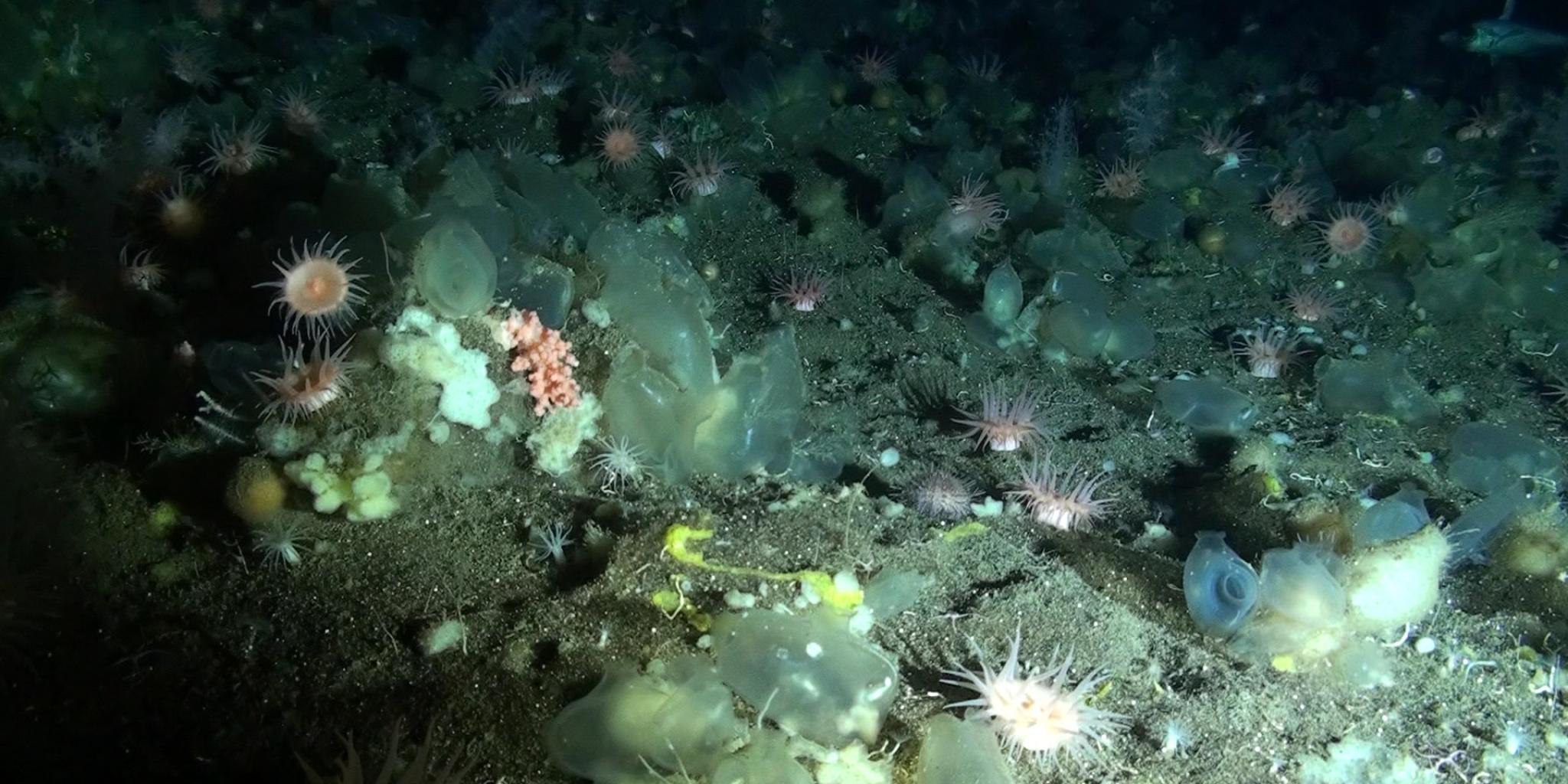
Deep sea at 600m depth Mid Atlantic Ridge showing coral (photo: NIOZ)
Researchers at NIOZ welcome the UN treaty on ocean protection signed last night after many years of negotiations. By 2030, 30% of the seas must be protected. So far, only 1.2% of the sea is protected.
Dr. Furu Mienis, oceanographer: "Through this agreement, we can make global agreements to protect biodiversity and countries have the ability to hold each other accountable. By protecting specific areas in international waters that are hotspots of life, such as deep-sea reefs, we can ensure that species and populations are conserved. This will also ensure that important ecosystem services they provide can continue, such as the habitat they provide for other species, carbon storage and nutrient circulation."
Dr. Sabine Gollner, marine biologist: "The deep sea - the sea deeper than 200 meters - comprises 95% of the habitable space on our planet. In the 19th century it was still thought that no life is possible in the deep sea, but now we know that thousands and thousands of different species live there, and new ones are discovered every day. The treaty plays an important role in protecting the biodiversity of our ocean for now and future generations."
NIOZ director and climate scientist Prof. Han Dolman: "Designating protected areas requires knowledge of the ocean system. Protected areas are bench marks to determine how a well-functioning system works and how a system can recover after disturbance. So they are perfect research sites. This treaty comes at an excellent time when the research community is already joining forces in the UN Decade of Ocean Science for Sustainable Development
Other Dutch media on this topic
- VN-akkoord is 'feestje voor de oceanen', maar 'geen tijd te verliezen' (nos.nl)Opens in a new tab
- Landen maken afspraken om oceanen te beschermen | NOS JeugdjournaalOpens in a new tab
- Opening NOS 8-uur Journaal 5 maartOpens in a new tab
- Geen verbod op mijnbouw in zee, tot teleurstelling van onderzoekers (nos.nl)Opens in a new tab
- Mijnbouw in de diepzee (Nieuwsuur)Opens in a new tab
- Historisch VN-verdrag: 30 procent van de oceaan moet in 2030 beschermd zijn (nos.nl)Opens in a new tab
- De Perstribune: Jack Plooij - 05 maart 2023 - NPO Radio 1 Gemist | NPO Radio 1Opens in a new tab
- NOS Radio 1 Journaal over het belang van oceanen nav verdrag (vanaf 2:05:06)Opens in a new tab
Linked staff
Furu Mienis
Senior Scientist

Sabine Gollner
Senior Scientist

Gert-Jan Reichart
Head of Ocean Systems