Marine microbes are our link to 'System Earth'
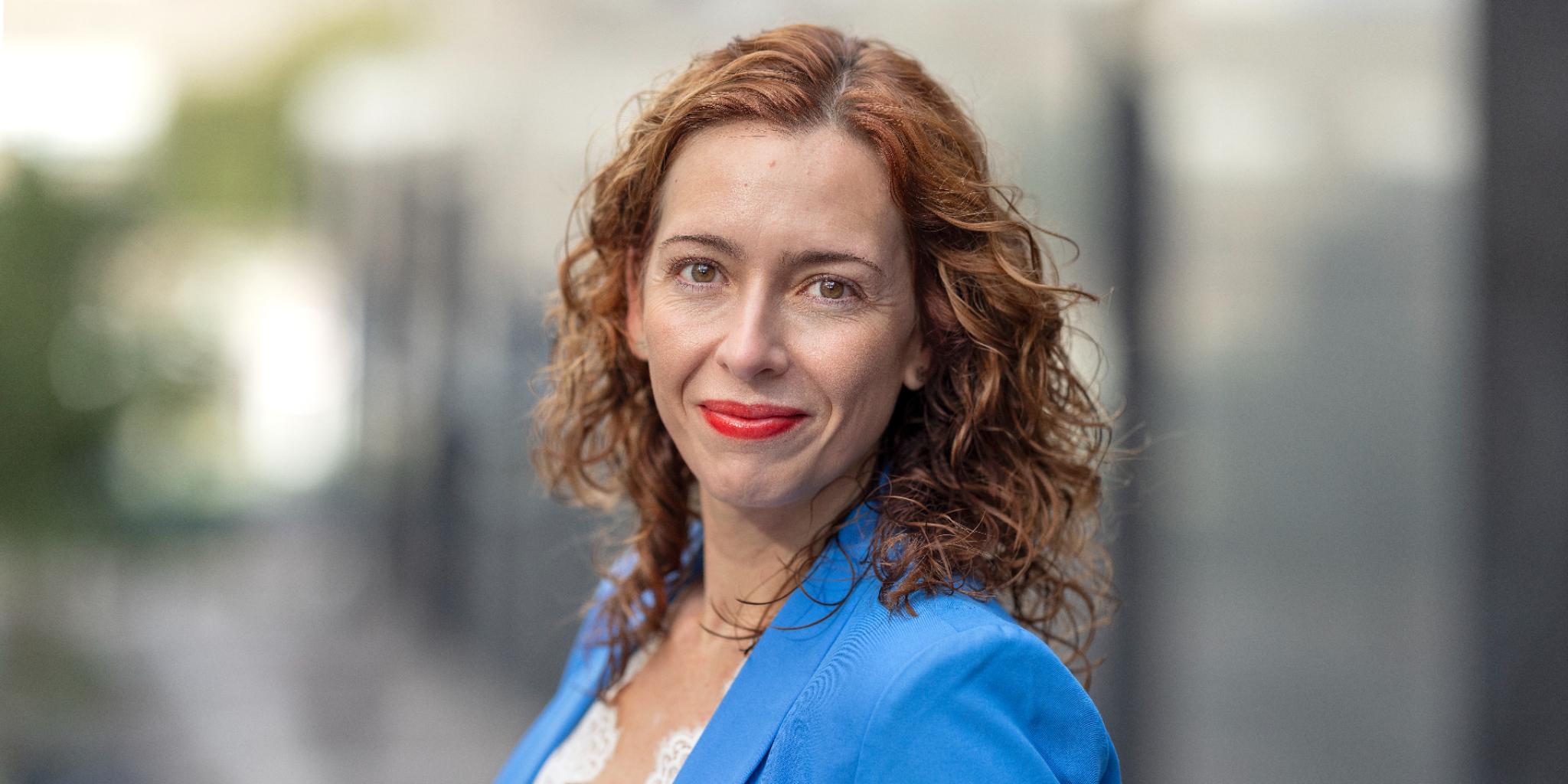
Portrait of Laura Villanueva. (photo: NIOZ)
They produce half of all the oxygen in the oceans and the atmosphere, they eat a lot of greenhouse gases, but under oxygen-free conditions, they also produce methane and other greenhouse gases. In other words, bacteria and other marine microbes are a cornerstone of climate and all life on Earth. “You might even call marine microbes the key players in the entire System Earth”, Professor Laura Villanueva states in her inaugural lecture as professor of Marine Microbiology at Utrecht University, which she will give on Thursday 14 November at Utrecht University.
More microbes than the stars in the universe
“If you know how many microorganisms live in the ocean and how important they are, it is actually quite strange how little attention they get,” Villanueva believes. “The number of stars in the universe is an estimated ten sextilion: a one with twenty-two zeros. The number of marine bacteria and archaea alone is already an estimated ten million times more: a one with twenty-nine zeros. Add to that the marine viruses, and that becomes even a one with thirty zeros. Add to that, that these microbes are responsible for up to half of all the oxygen we breath!” It is Villanueva’s way of stating that marine microbes matter, both in quantity and quality.
The skin of microbes
In her scientific work, in Utrecht University and also at NIOZ on Texel, Villanueva has special attention for the membrane lipids, or ‘the skin’, around microbes. “Just like humans get goose bumps when it's cold or start sweating when it's warm, the membrane of a microbe reacts to the environment and to temperature. As it gets warmer, the fatty acid composition of the membrane changes a bit, to prevent it from becoming 'too fluid', preventing the microbe from functioning normally.”
Fossil indications of climate
That changed membrane composition at different temperatures also allows Villanueva and colleagues to look at fossil microbial lipids, preserved deep in the sediment, indicating the temperature at which the microbes producing them lived. “Along with other indicators of temperature, these fossil lipids of microbes are an important tool in reconstructions of past climates,” she argues.
Microbes will manage
Concerns that the changing climate threatens microbes are far from Villanueva's mind. “No matter how much the environment changes, microbes will manage; they are survivors. In fact, microbes can partially compensate for the changes we as humans bring about. Although we are now causing problems with our emissions from burning fossil fuels much faster than microbes can solve them.”
Gaia hypothesis
Villanueva also does not hesitate to pitch in a somewhat controversial term among scientists. “The Gaia-hypothesis, from the British scientist and environmentalist James Lovelock, looks at the Earth as a self-regulating system. To some ‘hardcore betas’, that Gaia-hypothesis was leaning toward esotericism. But leading American biologist Lynn Margulis, among others, has made ‘Gaia’ scientifically accepted again. I find the idea that Gaia is a self-organizing system very inspiring and of great beauty. In any case, it makes me study microbes, especially those in the marine systems with great enthusiasm. It is very important that we understand the key role these single-celled organisms play in the balance between living nature and the rest of the planet we live on.”
Linked staff
Laura Villanueva
Head of Marine Microbiology & Biogeochemistry

Practical information
Laura Villanueva gave her inaugural lecture 'Ocean’s hidden heroes: Adaptation and evolution of marine microorganisms' on 14 November 2024 at 16.15, at Utrecht University.

Portrait of Laura Villanueva. (photo: NIOZ)