Machine learning provides a more complete picture of zooplankton and the food web
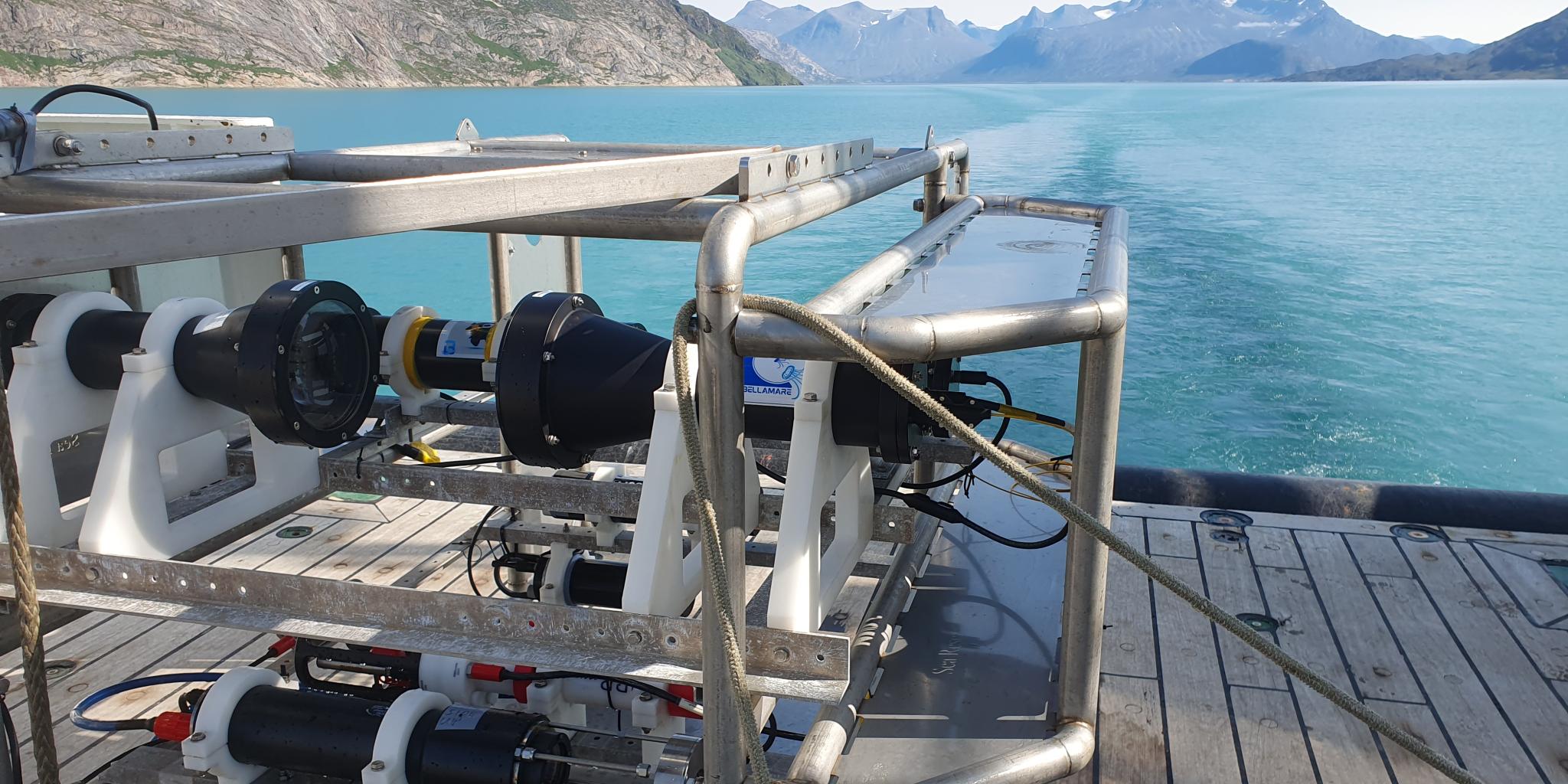
Two plankton cameras, the CPICS (Continuous Particle Imaging and Classification Sensor, below) and ISIIS (In Situ Ichthyoplankton Imaging System, above), during fieldwork in Greenland (Photo: NIOZ)
Instead of using traditional plankton nets, PhD candidate Pieter Hovenkamp studied zooplankton using modern underwater cameras. In the North Sea and in Greenlandic fjords, he collected vast quantities of in situ images. Machine learning was then used to identify the plankton species on these images. Plankton plays a crucial role in underwater ecosystems; intensive monitoring helps us to better understand how the various species respond to factors such as climate change, both now and in the future. Pieter Hovenkamp will defend his thesis on 27 November at Utrecht University.
Zooplankton are the animals in the sea that cannot swim against the current, ranging from small crustaceans and larvae of bottom-dwelling animals up to the jellyfish you find on the beach. Zooplankton is a vital link in the marine food web and is sensitive to environmental change. How will zooplankton respond to this change, and how will that affect fish, seabirds and marine mammals?
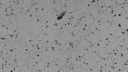
A photograph of fish larvae, filamentous algae and various other small organisms, taken using the ISIIS on the Dogger Bank, North Sea, 2023 (Photo: Pieter Hovenkamp, NIOZ)
In his PhD research, Pieter Hovenkamp used images to observe zooplankton. With novel underwater microscopes, half a billion zooplankton images were collected and Artificial Intelligence (AI) was trained to classify them. These techniques were applied in two areas heavily affected by climate change: the North Sea Dogger Bank and Greenlandic fjords. In both areas, zooplankton communities contrasted sharply between different parts of the water column.
A novel feature of these instruments is that such contrasts can be linked to meter-scale physical properties of the water. And also, small jellyfish were captured, an understudied part of the food web that is difficult to observe with traditional sampling. The developed AI methods give a more complete picture of the planktonic food web, and provide a solid framework to scale up automated monitoring of zooplankton in the North Sea in the coming years.
Pieter Hovenkamp will defend his thesis 'An image of contrasts: Applying in situ imaging and machine learning to study fine-scale distribution patterns of marine zooplankton in a changing environment' at Utrecht University on 27 November 2026 at 14:15 hrs in the Academiegebouw.
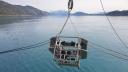
To collect data, the frame is towed underwater behind the ship in a fjord in Greenland (Photo: Pieter Hovenkamp, NIOZ)
Linked staff
Dick van Oevelen
Research Leader

More information
Cover of the thesis of Pieter Hovenkamp