Latest and possibly final IPCC warning: Effective climate policy is more urgent than ever
To have a fifty-fifty chance of meeting the 1.5-degree Paris target, in early 2020 the world could still emit 500 gigatons of CO2. Now, three years later, only 380 gigatons of that remains. As a result, in almost all scenarios, we exceed the 1.5 degrees of warming between 2030 and 2035. Ten years earlier than expected in the IPCC's 2014 Fifth Synthesis Report (AR5). Nevertheless, it is still possible to limit warming to 1.5 degrees by the end of the century with at most a limited overshoot. That is the conclusion of the IPCC's sixth synthesis report (AR6) presented today, to which researchers from the Royal Netherlands Institute for Sea Research (NIOZ) and the Netherlands Environmental Assessment Agency (PBL) contributed intensively.
Decisive moment for 1.5 degrees
The world was already 1.1 degrees warmer in the past decade than in 1850, with warming over land (1.6 degrees) significantly faster than over the oceans (0.8 degrees). To be on course for the 1.5-degree Paris target, global greenhouse gas emissions must be more than 40% lower in 2030 than in 2019 and about 70% lower in 2040, before reaching net zero around 2050. For "well below 2 degrees", the necessary reductions compared to 2019 are 20% in 2030, nearly 50% in 2040 and net zero around 2070. Methods to remove CO2 from the air play a role in almost all scenarios. The reductions are technologically feasible. Reducing global emissions by half by 2030 is possible with measures that cost less than $100 per ton of CO2 reduction, the IPCC notes.
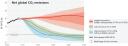
Scenarios of CO2 emission reducation leading to different levels of global warming. Source: IPCC AR6 synthesis, 20 March 2023, IPCC.ch
All the science on climate brought together in synthesis report
The IPCC Synthesis Report provides an overview of all scientific knowledge on climate to policymakers. In recent years, three underlying sub-reports have appeared as well as three special reports. This new synthesis report brings all the knowledge from them together in a well-organized way. In the coming years, this synthesis report will form the basis for new climate plans by governments.
Climate change and sea level rise increasingly visible
Much more than at the time of previous climate reports, the effects of climate change are already clearly visible. In recent years, extreme precipitation, drought and heat waves have become more frequent. Sea levels have risen by 20 centimetres since 1900. Co-author of the report Aimée Slangen, and sea level researcher at NIOZ: "It is clear that the sea level will continue to rise well beyond 2100 at a rate strongly determined by greenhouse gas emissions from now on. Due to sea level rise, extreme water levels, which now occur once a century, will become ten to fifty times more frequent on the Dutch coast after 2100 than they are today. The synthesis report emphasizes that adaptation to climate change and sea level rise is possible in several ways, but without rapid mitigation of further warming, it will be like trying to empty the ocean with a thimble."
Every 0.1 degree of warming counts
The report shows how inevitable and urgent limiting climate change is, but also that policies to adapt to a warmer and more unpredictable world are inevitable. Co-author Detlef Van Vuuren (researcher of climate scenarios at PBL and professor at Utrecht University): "The decisions taken in the near future will largely determine whether we meet the Paris goals. Without a substantial tightening of policy, this will be the last IPCC report in which reaching 1.5 degrees is still possible. Should this goal not be met, however, it is still true that we must maximize our efforts. Every 0.1 degree counts."
Current policies are still largely insufficient
Since the Paris Agreement in 2015, many countries have formulated additional climate policies to limit warming to 2 degrees. But according to the best estimate, with current policies the world is heading for about 3 degrees (2.2 to 3.5) warming in 2100. That leaves the Paris goals (well below 2 degrees, preferably 1.5) still out of reach. So there is both a lack of ambition (countries' current goals are still insufficient) and a lack of implementation (countries do not yet adequately carry out what they have promised). A rapid tightening of policies is necessary. The IPCC warns that with every 0.1 degree on top of 1.5 degrees of warming, the risks of weather extremes such as heavy rainfall, drought and heat waves increase. Disruption of fragile ecosystems (such as warm-water corals and polar regions) is at risk, while more than 3 billion people live in areas considered particularly vulnerable.
Short-term emission reductions in all sectors
This sixth report series from IPCC is the first after the conclusion of the Paris Agreement. Greenhouse gas emissions were higher than ever in absolute terms over the past decade (2010-2019), although increases levelled off, thanks in part to current policies. Effective, faster and fair climate policies are needed in the coming years to put the world on a safe course. This will require reducing greenhouse gas emissions in all sectors in the short term. Speed is also needed to avoid stranded assets as much as possible: investments in fossil plants and infrastructure that must be dismantled ahead of their intended life cycle.
Hopeful developments
Several hopeful movements have taken place in recent years. Solar and wind energy, more efficient energy use, electrification, green infrastructure in urban areas, reforestation and reducing food waste are technically well feasible, are becoming cheaper and can count on broad public support.
Major health gains from climate policy
An important side effect of the energy transition is that air pollution decreases significantly when less oil, gas and coal is burnt. As a result, climate policy is welfare-enhancing. The economic value of health gains from cleaner air alone is probably comparable to the cost of climate policy. The report shows that policymakers, industry and society can work together to make change and ensure a sustainable future for all.
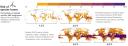
Scenarios of biodiversity loss as a result to global warming. Source: IPCC AR6 synthesis, 20 March 2023, IPCC.ch
Linked staff
Aimée Slangen
Research Leader

Aimée-Slangen_foto-Henny-Boogert_1200x600px.jpg

Aimée Slangen contributed intensively the IPCC's sixth synthesis report (AR6), presented today.