Investigating paleotemperature proxies based on archaeal hydroxylated tetraether lipids
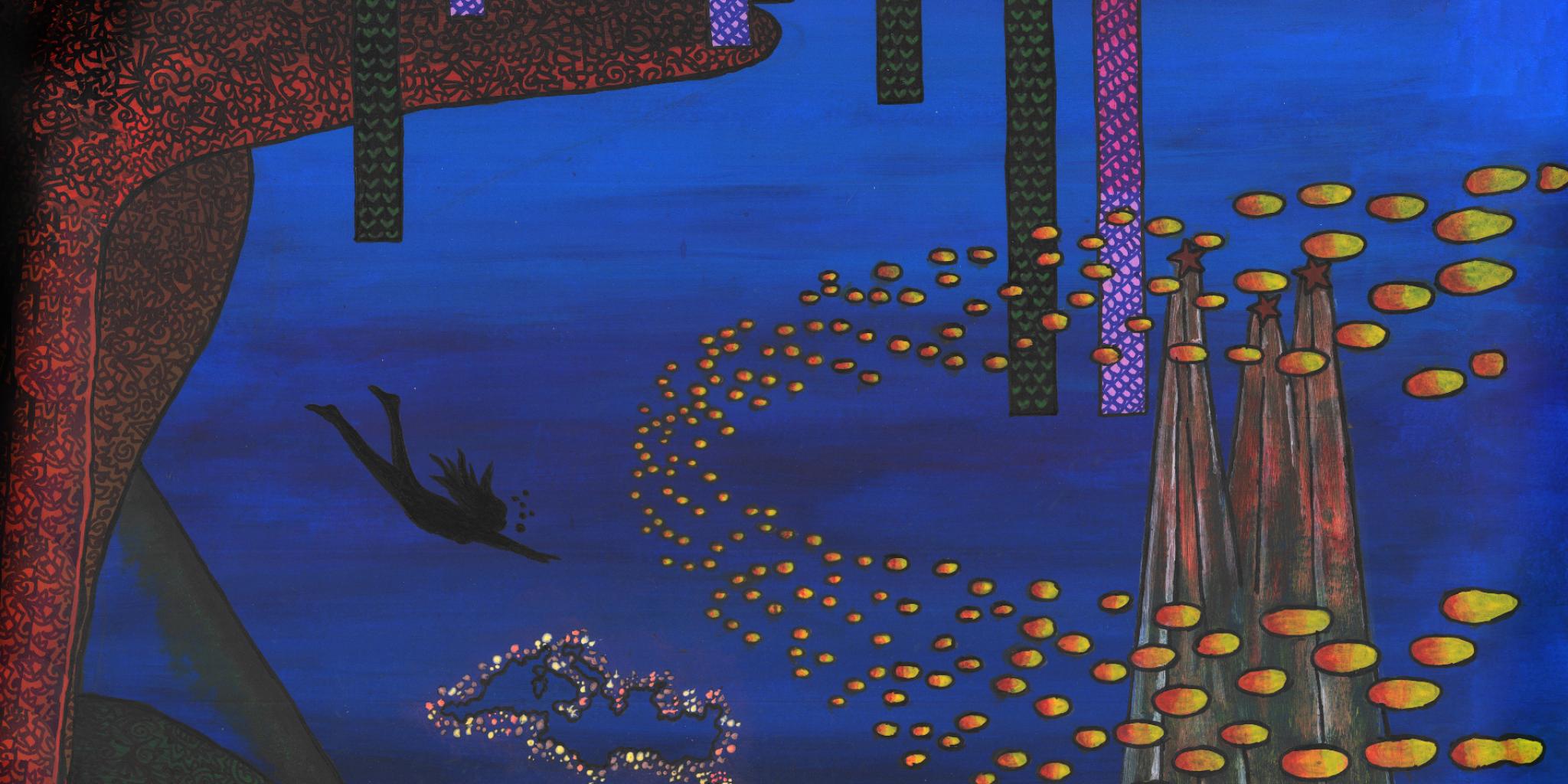
Phd cover Devika Varma. (photo: Devika Varma)
Understanding past sea surface temperatures (SSTs) is crucial for reconstructing Earth's climate history. Devika Varma has focused her PhD research project on specific biomolecules produced by archaea, called OH-isoGDGTs,as SST proxies. By evaluating various proxies across marine and terrestrial environments, the research highlights their reliability, limitations, and environmental influences. On 3 March, she will defend her PhD Thesis at Utrecht University.
Short summary
Understanding past sea surface temperatures (SSTs) is key to uncovering Earth's climate history. This research investigates biomolecules called OH-isoGDGTs, produced by archaeal microorganisms, as indicators of past SST, so-called proxies. Several such proxies, including %OH, RI-OH, RI-OH’, and a newly developed proxy, TEX86OH, were tested across diverse marine and terrestrial environments to evaluate their reliability and limitations.
Globally, OH-isoGDGTs without cyclopentane rings showed a strong link to temperature, while those with one or two rings were influenced by water depth. TEX86OH, a new proxy, was developed for reconstructing SSTs in polar environments, where it demonstrated enhanced sensitivity. Laboratory experiments with microbes producing OH-isoGDGTs showed that some proxies, such as RI-OH and RI-OH’, increased with increasing growth temperature, while others, such as %OH, showed inconsistent patterns, underscoring the complexity of physiological controls on these molecules.
In rivers and soils, OH-isoGDGTs were less abundant compared to that in the marine environment, which could lead to overestimation of SSTs in marine areas near river mouths. In semi-enclosed seas like the Mediterranean, %OH and TEX86OH was observed to be influenced by water depth, reflecting changes in OH-isoGDGT abundance in microbial communities inhabiting different water depths. In contrast, the low abundance of OH-isoGDGTs in the Red Sea limited their use in that region.
Sediments from Chilean and Angola margins showed similar records of TEX86, RI-OH and RI-OH’ proxies between deep and shallow sites, suggesting these molecules mainly come from upper ocean layers. Future research should refine these proxies and explore microbial adaptations in OH-isoGDGT producers.
Practical information:
- Title: Investigating paleotemperature proxies based on archaeal hydroxylated tetraether lipids
- Supervisor: prof. dr. ir. Stefan Schouten
- Co-supervisor: prof. dr. Gert-Jan Reichart
- Date: 3 March 2025, 14.15
- Location: Academy Building of Utrecht University
Linked staff
Gert-Jan Reichart
Head of Ocean Systems

Phd cover Devika Varma

Phd cover Devika Varma. (photo: Devika Varma)