Disentangling the golden floating rainforest: insights into Sargassum
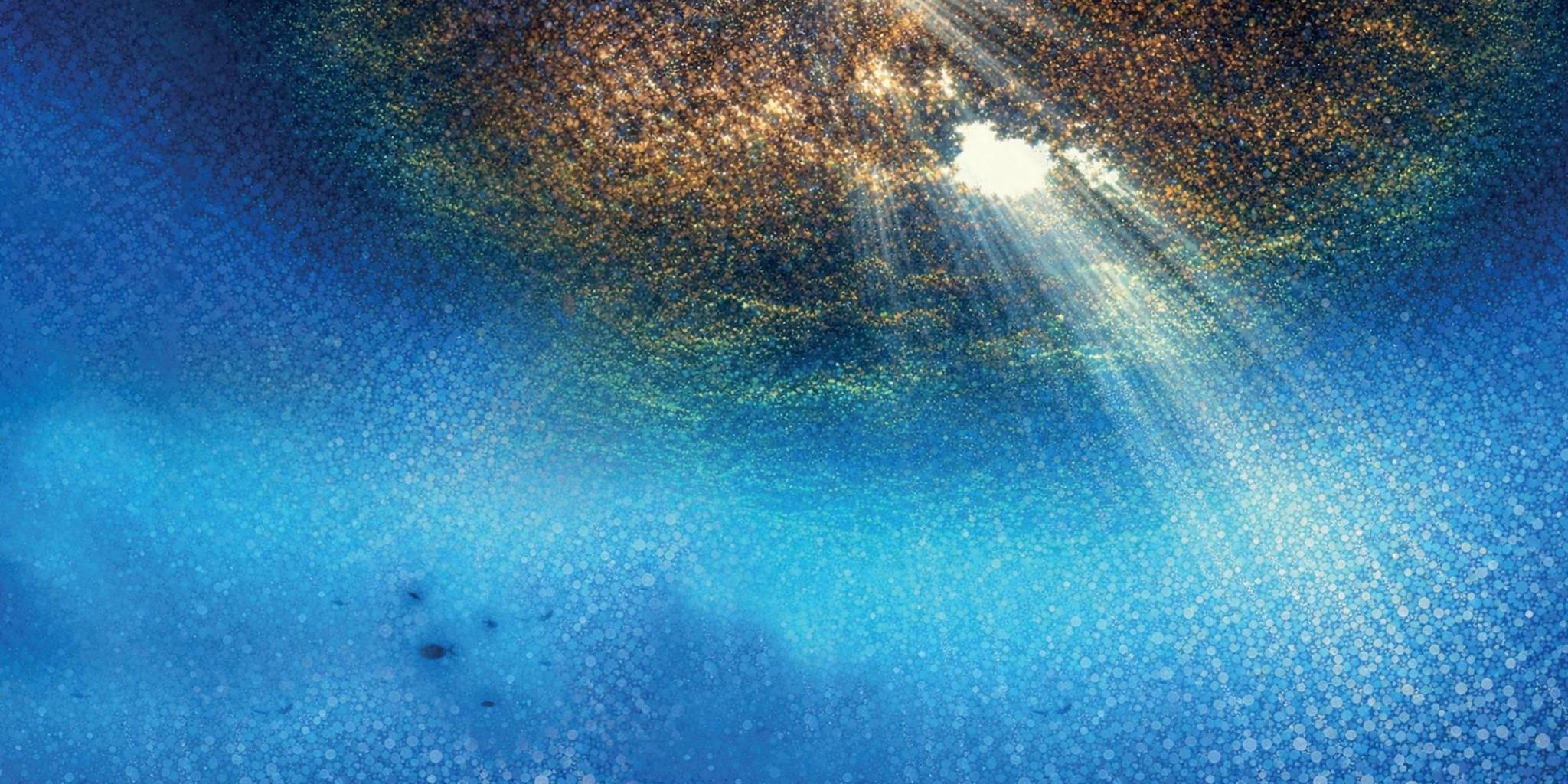
Cover photo of the PhD thesis by Tom Theirlynck
Since 2011, Sargassum has been accumulating yearly in a tropical Atlantic region now known as the Great Atlantic Sargassum Belt, the world’s largest macroalgal bloom. In his PhD thesis, Tom Theirlynck aimed to characterize the genome and microbiome of Sargassum and elucidate how this Sargassum holobiome responds to nutrient variations in its environment. He defended his thesis on May 6th 2026 at University of Amsterdam.
The brown macroalga Sargassum spends its entire life cycle floating in the Atlantic Ocean, forming large rafts that create important habitats and biodiversity hotspots for attached and mobile fauna and microbial communities. Since 2011, Sargassum has been accumulating yearly in a tropical Atlantic region now known as the Great Atlantic Sargassum Belt, the world’s largest macroalgal bloom. When Sargassum washes ashore, it suffocates coastal benthic communities and poses serious health risks. The underlying drivers of Sargassum’s sudden explosive growth remain poorly understood, but nutrient inputs from rivers, Saharan dust and equatorial upwelling are leading hypotheses.
Theirlynck's thesis aimed to characterize the genome and microbiome of Sargassum and elucidate how this Sargassum holobiome responds to nutrient variations in its environment. Through multi-omics techniques, a core set of genes and metabolic pathways of Sargassum was identified. Structural members of the Sargassum eukaryotic and bacterial communities were characterized, and ecophysiological studies were conducted to better understand Sargassum’s responses in nutrient uptake, photosynthesis and growth. Nutrient additions also affected microbiome structure, likely due to nutrient limitations of epiphytes or changes in the microbial food web. These findings highlight that Sargassum is much more than the macroalga itself; it is a living ecosystem that can be better understood using a multi-omics approach.
Linked staff
Linda Amaral-Zettler
Senior Research Leader
Henk Bolhuis
Senior Scientist
