Antarctic sea is loaded with unknown viruses
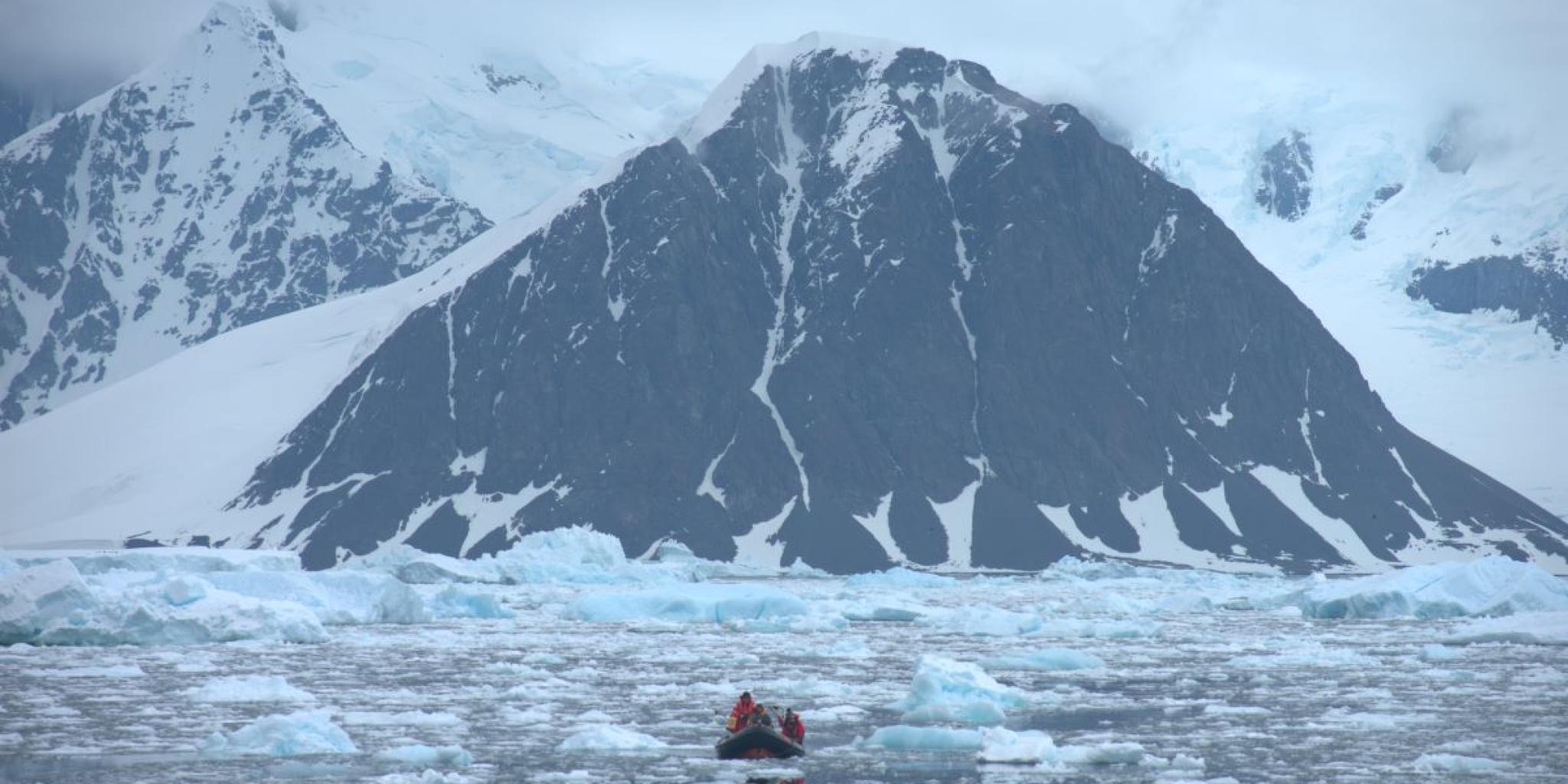
Dramatic landscape surrounding the sampling site. (photo: Andy Lines)
Out of thousands of marine viruses that were discovered in Antarctic waters in the past two years, 75 percent was new to science. That is shown in a paper that was published in Nature Communications on 24 October 2024, by NIOZ PhD candidate Gonçalo Piedade and colleagues. “This project has identified an enormous number of pieces in the important jigsaw of viral ecology and, therefore, in the circle of carbon in the oceans and the climate system”, says Professor Corina Brussaard of NIOZ and the University of Amsterdam.

Out on the boat in another morning of sample collection. (photo: Ella Wesdorp)
Key role
Giant viruses
Flow of carbon and nutrients
By killing the single-celled algae and bacteria, viruses redirect the flow of carbon and nutrients, Brussaard explains. “They determine whether the carbon that is captured by algae may sink to the bottom of the ocean, stay in the food chain through grazing, or end up as dissolved organic matter by viral infection which stimulates microbial degradation and recycling. If we want to understand what global warming does to that system, we need to know who the players are in the first place.”
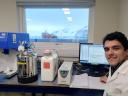
Quantifying microbial abundances using flow cytometry with a view of the RV Laurence M. Gould. (photo: Ella Wesdorp)
Linked staff
Corina Brussaard
Senior Research Leader

Dramatic landscape surrounding the sampling site

Dramatic landscape surrounding the sampling site. (photo: Andy Lines)